


Reading time: approximately 5 minutes
The question isn’t whether sweat damages beaded bracelets – it does, over time. The question is how much, how fast, and what you can actually do about it without making wearing a bracelet in summer feel like a maintenance project.
The short answer: most natural stone bracelets handle summer wear reasonably well if you develop two or three simple habits. The cord is the vulnerable point, not the stone. And some stones are more affected by sweat than others – knowing which is which means you can wear the right bracelet on a hot day without second-guessing every choice.
What Sweat Actually Does to a Beaded Bracelet
Sweat is more chemically complex than plain water. It contains salt, urea, lactic acid and trace minerals – and that combination affects bracelet materials differently than water alone. The salt is the most relevant factor: it’s mildly abrasive over time and can leave a residue on stone surfaces that dulls the polish if it’s allowed to build up and dry repeatedly.
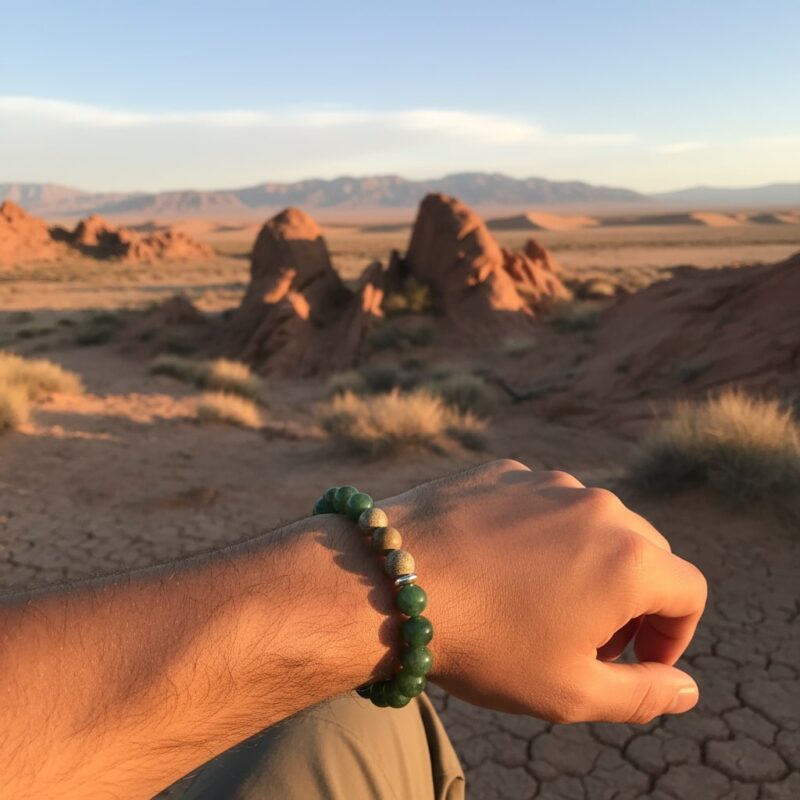
The cord problem
The elastic cord running through the beads is more vulnerable than the stone itself. Sweat – particularly the salt component – accelerates the degradation of elastic cord over time. The cord loses elasticity, develops micro-tears at the stress points where it passes through bead holes, and eventually snaps. The same process that makes shower exposure damaging applies to repeated heavy sweat exposure, just more gradually. A bracelet worn through daily workouts in summer will need restringing sooner than one worn casually. The elastic bead bracelet guide covers cord lifespan and restringing in detail.
The stone surface
Polished stones can develop a dull film from dried sweat residue. This is reversible – a wipe with a soft damp cloth removes it – but if it’s allowed to accumulate over weeks it becomes harder to shift. Porous stones like lava rock absorb sweat into their surface structure, which can trap residue more deeply and affect color over time. Dense, non-porous stones like black onyx and tiger eye are much more resistant to this effect.
Which Stones Handle Summer Better
Resilient in heat and sweat
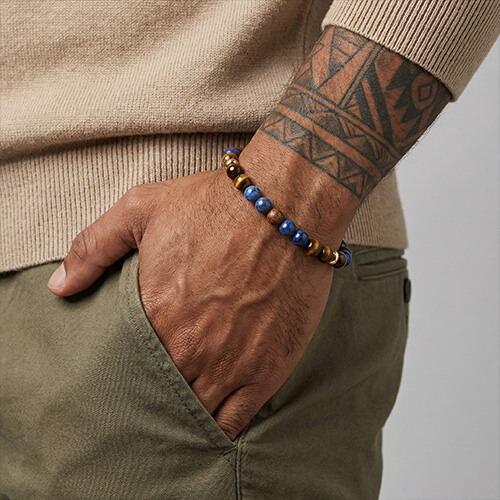
Black onyx is the most resilient bracelet stone for summer wear. Dense, non-porous, polished – sweat sits on the surface and wipes off cleanly. The dark color also means any residue film is less visible until you clean it. Tiger eye behaves similarly: its quartz structure makes it resistant to surface absorption. Hematite handles sweat well at the stone level, though repeated exposure can eventually dull the metallic finish.
Moderate care needed
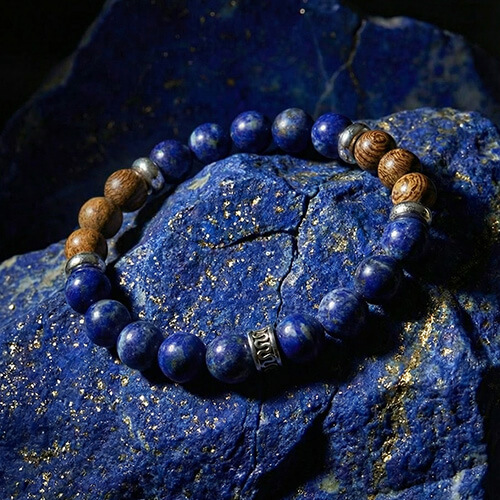
Lapis lazuli is softer (Mohs 5-6) and contains calcite that’s slightly reactive to acidic sweat over extended exposure. It’s fine for casual summer wear but less suited to heavy physical activity. Malachite is softer still (Mohs 3.5-4) and more porous – it handles incidental sweat but shouldn’t be worn through workouts. Both benefit from a quick wipe after warm days.
Remove before physical activity
Lava rock is the most vulnerable summer stone: its porous surface absorbs sweat readily, trapping salt and organic compounds in a way that affects both appearance and smell over time. If you wear lava rock bracelets, summer workout days are the clearest reason to take them off and leave them off until you’ve showered. For everything sweat does relative to water, see the related guide on showering with natural stone bracelets – the same principles apply, amplified by heat.
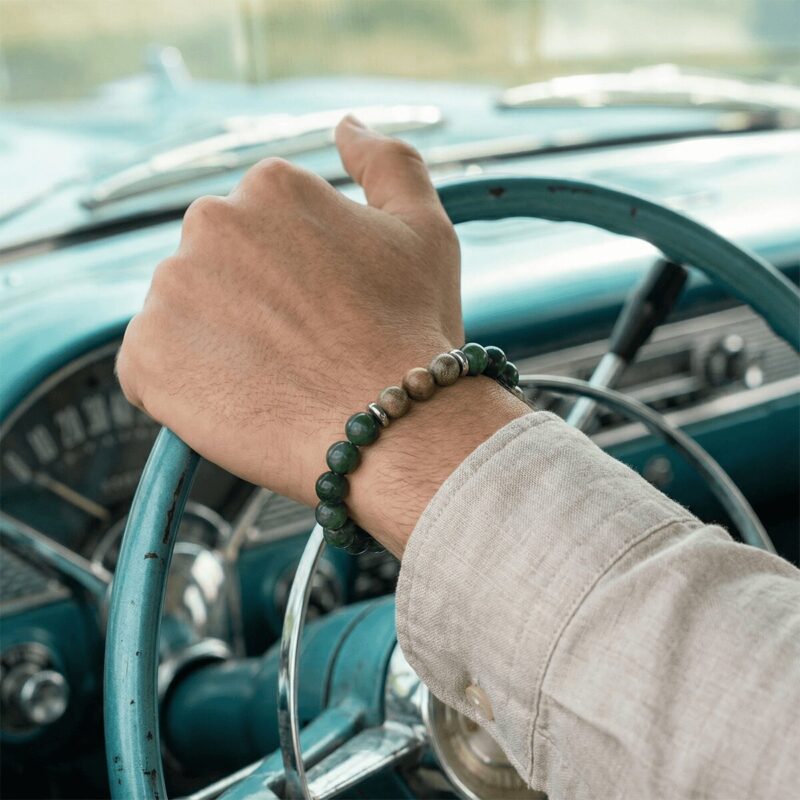
What Heat Does Independently of Sweat
Temperature itself is less of a concern than people expect for most natural stones. Gemstones are geological materials – they formed under conditions far more extreme than anything a summer day produces. The practical heat risks for bracelets are more specific:
Direct sun on the wrist
Prolonged direct sun exposure can fade some dyed stones – howlite is the most common example, since naturally white howlite is often dyed to imitate turquoise or other stones. Natural, undyed stone color is stable in sunlight. If you’ve bought a bracelet with unusually vivid, perfectly uniform color and aren’t sure if it’s natural or dyed, sun exposure over a season will usually reveal the answer by fading.
Heat and cord
High heat softens elastic cord and reduces elasticity faster than normal temperature wear. A bracelet left on a car dashboard or in a hot bag in direct sun is more at risk than one worn on the wrist – body temperature is self-regulating, ambient heat in enclosed spaces is not. Store bracelets away from direct sun and heat sources when not wearing them.
Three Habits That Make Summer Wear Easy
Wipe after warm days. A soft dry cloth after any day involving significant sweat removes surface residue before it dries into a film. Takes ten seconds. The difference in how the bracelet looks over a summer is significant.
Take it off for workouts. Not because one session will destroy it – it won’t. But the cumulative effect of gym sessions in summer is the fastest route to needing restringing. Leave the bracelet on a shelf for an hour rather than exposing it to a sustained sweat session.
Let it air dry if it gets wet. Whether from sweat, rain or accidental water contact, pat dry with a cloth and let the bracelet air at room temperature before putting it away or back in a drawer. A bracelet stored slightly damp degrades cord faster than one stored dry. Full care guidance is in the bracelet care guide.
When to Restring After a Summer of Wear
End of summer is a natural point to check cord condition. Signs that restringing is needed: the bracelet sits looser than it did in spring, you can feel roughness where the cord emerges between beads, or the cord looks discolored at those points. A local jeweler can restring most beaded bracelets for a small fee. The stone beads are unaffected – only the cord wears. If the bracelet has sentimental value or you’ve grown attached to the particular bead combination, restringing gives it another season or two of wear rather than replacing it. For more on what causes beads to change appearance over time, see why stone beads change color.
Summer-Ready Picks
For hot-weather wear, the most resilient choices in the collection are black onyx and tiger eye – dense stones that handle surface sweat without absorbing it. Browse the full men’s bracelet collection – all pieces handmade in Israel, sizes 17-22cm.
Mr. Woodini was founded in 2018. We design eco-accessories built from materials with a story – recycled wood temples, natural stone beads, handcrafted construction. Our guides are written from direct experience: sourcing stones, testing daily wear, and building pieces by hand. Learn more about us.