


Reading time: approximately 7 minutes
The elastic snaps before the stone fades. That’s the honest answer to most bracelet care questions – mechanical wear is the real risk, not the water itself. But some stones are more water-sensitive than others.
The Short Answer
No – you should not shower regularly while wearing a natural stone bracelet. Occasional incidental water contact won’t destroy a bracelet, but consistent shower exposure shortens its lifespan significantly. This isn’t about the water itself being harmful in a single exposure. It’s about cumulative damage. Every shower adds moisture, heat, soap residue and mechanical stress to the cord. Over weeks and months, these combine to degrade a bracelet that could otherwise last years. The fix is simple: take the bracelet off before you shower, put it in a consistent spot, put it back on afterward.
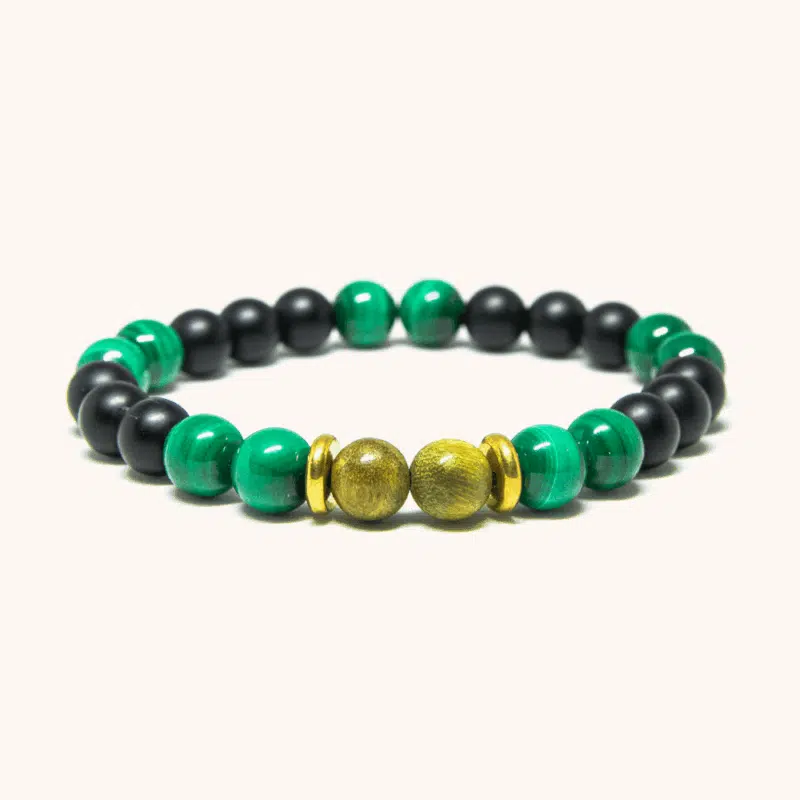
Malachite and Black Agate Beaded Bracelet (8mm)
What Actually Happens to Stone Bracelets in Water?
When a natural stone bracelet gets wet, several things happen simultaneously. The beads absorb some moisture at their surface – for polished, dense stones like black onyx this is minimal, but for porous stones like lava rock or howlite the stone can absorb enough water to affect its appearance over time. Heat from shower water opens the pores of porous stones slightly, allowing more absorption than cold water would. Soap and shampoo residue then gets trapped in those open pores and is difficult to rinse out completely. As the stone dries, that residue can leave a dull film that accumulates with each wash.
Why Is the Cord the Real Problem?
The cord is usually the weakest point in a beaded bracelet, and water is its primary enemy. Most beaded bracelets use elastic cord – either round latex-core elastic or flat elastic ribbon. Both types degrade when regularly exposed to water, heat and soap. The degradation is gradual: the cord starts losing elasticity, then small microtears develop at stress points where the cord passes through the bead holes, then the cord snaps unexpectedly. A bracelet worn in the shower two or three times a week might last six months before the cord fails. The same bracelet kept dry might last two or three years. The difference is purely care habits. The good news: restringing is a simple, inexpensive repair – the beads themselves last indefinitely.
Which Stones Are Most Water-Tolerant?
Black onyx is one of the most water-tolerant natural stones used in bracelets – dense, polished and non-porous, brief water contact won’t harm it though soap residue can dull the finish over time. Tiger eye is similarly dense and handles incidental moisture reasonably well. Lava rock is at the opposite end: its porous surface absorbs water readily and can trap soap and chemicals. Howlite is also porous and can absorb moisture unevenly, leading to color changes. According to the GIA gem encyclopedia, stone porosity is determined primarily by crystal structure – and porous stones require significantly more protective care than dense ones.
| Stone | Water Tolerance | Main Risk | Recommendation |
|---|---|---|---|
| Black Onyx | Good | Soap dullness over time | Remove before showering |
| Tiger Eye | Good | Cord degradation | Remove before showering |
| Lava Rock | Poor | Soap absorption, color change | Always remove |
| Howlite | Poor | Color fade, absorption | Always remove |
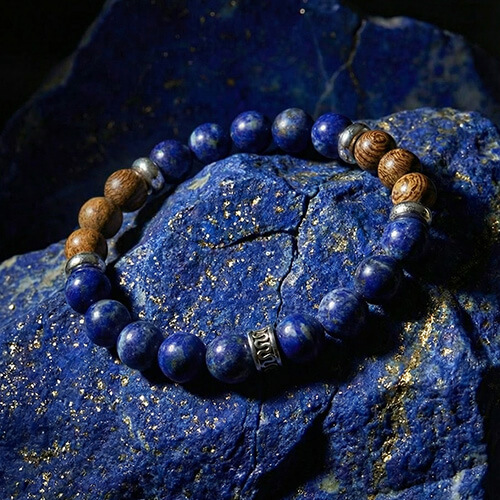
| Lapis Lazuli | Medium | Gold fleck dulling | Remove before showering |
What Do Soap and Chemicals Do?
Water alone is less damaging than water combined with soap, shampoo or conditioner. Soap residue that dries on a polished stone leaves a film that dulls the natural luster – on a bracelet worn in the shower daily, this builds up faster than any cleaning routine can address. Shampoo and conditioner – particularly conditioning formulas – can soften elastic cord. The silicones in many conditioners coat the cord fibers and reduce elasticity over months rather than immediately. Perfume and cologne should be applied to skin first, never directly to a bracelet. Spray before putting the bracelet on, not after. Full care guidelines are in the bracelet care guide.
What to Do If Your Bracelet Gets Wet?
Take it off immediately after, pat dry with a soft cloth, and lay it flat to air dry completely before wearing or storing. Do not use a hair dryer – heat accelerates cord degradation. Room temperature air drying is sufficient. For porous stones that may have absorbed soap, a gentle rinse with plain lukewarm water followed by thorough drying is appropriate. If the bracelet looks duller after getting wet, a gentle wipe with a slightly damp cloth (no soap) followed by dry buffing with a soft cloth can restore surface luster on polished stones.
When Should You Restring?
Signs it’s time: the bracelet is noticeably looser than it used to be, you can feel roughness in the cord at the bead holes, it has had regular water exposure for more than a year, or the cord looks discolored where it emerges between beads. A local jeweler can restring most beaded bracelets for a small fee in minutes. The beads themselves last indefinitely – natural stone doesn’t deteriorate with normal wear. Restringing gives the bracelet a full reset and many more years of use.
Natural Stone Bracelets Built to Last
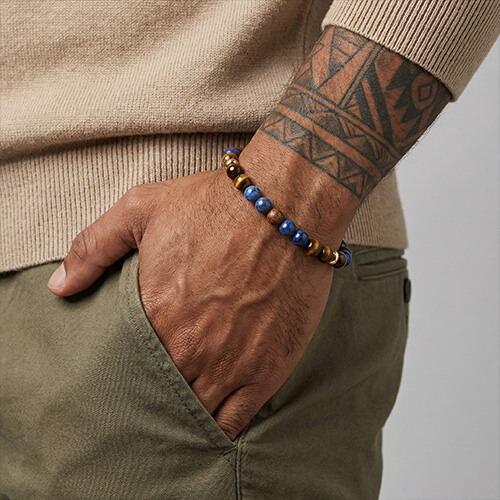
Mr. Woodini bracelets use 8mm natural stone beads strung on quality elastic cord, available in sizes 17-22cm. The Malachite and Black Agate (8mm) and Black Skull and White Howlite are among the pieces worth keeping dry. Browse the full men’s bracelet collection.
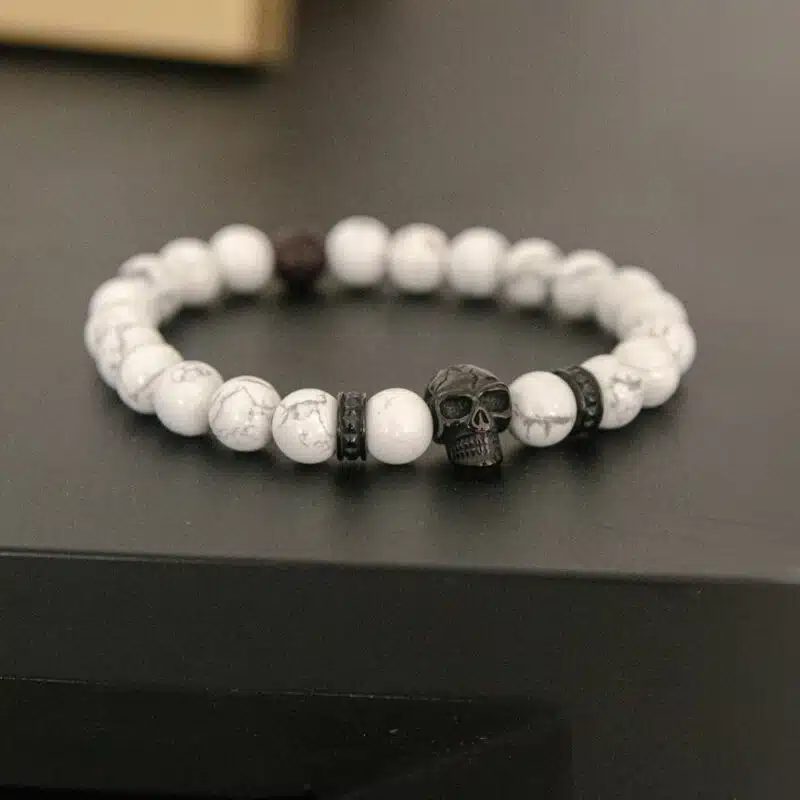
Black Skull and White Howlite Bracelet
Mr. Woodini was founded in 2018. We design eco-accessories built from materials with a story – recycled wood temples, natural stone beads, handcrafted construction. Our guides are written from direct experience: sourcing stones, testing daily wear, and building pieces by hand. Learn more about us.
Common Questions
It’s not recommended. Water weakens the elastic cord over time, and soap and shampoo leave residue on stone surfaces. Take it off before showering – it takes two seconds and significantly extends the bracelet’s lifespan.
One accidental exposure won’t damage it. Dry it immediately with a soft cloth and let it air dry fully before wearing again. Repeated exposure is what causes long-term cord degradation and stone dulling.
No. Chlorine in pools and salt in seawater are both harsh on elastic cord and stone surfaces. Remove before any water activity – pool, sea or shower. The cord in particular degrades quickly with chemical exposure.
When the bracelet stops springing back to shape after stretching, or you feel roughness in the cord at the bead holes – that’s the signal. A local jeweler can restring it for a small fee. The stone beads last indefinitely; only the cord needs replacing.