


Estimated Reading Time: 7 minutes
Your bracelet is darker than it was six months ago. That’s not damage – it’s the stone responding to your skin, your daily environment, and time. Some of that change is irreversible; most of it is manageable.
Table of Contents
- Do Natural Stone Beads Actually Change Color?
- UV Light and Fading
- Skin Oils and Product Absorption
- Humidity and Moisture Effects
- Physical Wear on Stone Surfaces
- Stone-by-Stone Color Stability Guide
- Tiger Eye and Chatoyance: The Light-Shift Effect
- Dyed Stones vs. Natural Stones
- How to Slow Color Change
- Color Stability Reference Table
- Mr. Woodini Collection
- About Mr. Woodini
- Common Questions
Do Natural Stone Beads Actually Change Color?
Yes – natural stone beads change color over time, and this is expected rather than exceptional. The rate of change and the type of change depends on the specific stone, how the bracelet is worn, what it’s exposed to, and how it’s cared for. Understanding what causes color change helps you care for your bracelet more effectively and sets realistic expectations for how a piece will age.
It’s also worth noting upfront: some color change in a natural stone bracelet is evidence that the material is genuine. Synthetic stones and heavily dyed stones often have unnaturally stable color that doesn’t shift with wear and exposure. A stone that develops a slight patina or deepens in tone over years of wear is behaving like a natural material, which is exactly what it is.
The changes that are concerning – sudden dramatic color loss, white powder forming on the surface, or obvious discoloration in patches – are different from normal aging and usually indicate a specific problem that can be identified and addressed.
UV Light and Fading
UV radiation from sunlight is the most consistent cause of color change in natural stone. The effect varies significantly by stone type, but most colored gemstones experience some degree of fading with prolonged UV exposure.
The mechanism is photochemical: UV light breaks down the molecular bonds responsible for color in certain minerals. In amethyst, for example, the iron compounds that create the purple color are unstable under UV and fade to pale yellow over time. Lapis lazuli can lose depth of color with extended sun exposure. Rose quartz is also susceptible.
Black and very dark stones – onyx, hematite, obsidian – are far more UV-stable because their color comes from the base mineral composition rather than trace elements, and those compounds are more resistant to UV breakdown. This is one practical reason that dark stones are the more durable long-term choice for a bracelet worn daily outdoors.
The practical implication: don’t leave natural stone bracelets in direct sunlight when you’re not wearing them. A windowsill is not a good storage location. A drawer or a jewelry box in a shaded area is significantly better.
Skin Oils and Product Absorption
Natural stone is porous to varying degrees, and porous materials absorb substances they come into contact with. Skin oils, sweat, hand cream, sunscreen, and perfume all come into contact with a bracelet worn on the wrist, and over time, these substances can be absorbed into the stone surface.
The effect on color depends on the substance and the stone. Skin oils absorbed into lava rock (which is highly porous) gradually darken the stone’s surface – this is why used lava rock beads often have a richer, deeper appearance than new ones. The oil absorption is part of why lava rock is used as an essential oil diffuser bracelet – the pores hold fragrance as well as they hold skin oil.
Sunscreen and perfume are more problematic because they contain chemicals that can react with stone surfaces rather than simply discoloring them. They can dull the polish on smooth stones, alter surface color in ways that aren’t uniform, and degrade elastic cord. The standard advice – apply fragrance and sunscreen before putting on a bracelet, not after – is practical rather than just precautionary.
Humidity and Moisture Effects
Water itself doesn’t generally damage natural stone, but prolonged exposure to moisture can affect certain stones and almost always affects the elastic cord a bracelet is strung on. Some stones – pyrite-bearing minerals, for example – can oxidize when exposed to water repeatedly, producing surface discoloration. Malachite is sensitive to acidic water and should not be soaked.
The main humidity effect on bracelets is indirect: elastic cord absorbs moisture and the repeated cycle of wetting and drying weakens it over time. This is the primary reason bracelets worn while swimming or showering have shorter cord lifespans. The stone beads survive; the cord doesn’t.
High ambient humidity in storage (a bathroom, for example) has a similar slow degrading effect on elastic cord, though less severe than direct water exposure. Storing bracelets in a dry environment extends cord life significantly.
Physical Wear on Stone Surfaces
Physical abrasion gradually changes the surface quality of stone beads. A bracelet worn daily contacts surfaces throughout the day – desks, clothing, other accessories. Over time, this contact can dull the polish on smooth stones like onyx, removing the high-gloss finish that makes new onyx beads so visually striking.
This kind of wear is slow and gradual rather than sudden. A polished black onyx bracelet worn daily for two or three years will have a slightly less sharp surface gloss than it did when new – but it will also have developed a kind of secondary polish from the even wearing that many owners prefer to the original high-gloss finish. It looks like a piece that’s been worn rather than a new piece, which is a different aesthetic rather than a worse one.
Matte-surface stones like lava rock don’t show this effect because they have no polish to lose. The surface stays consistent across years of wear.
Stone-by-Stone Color Stability Guide
Different stones have genuinely different levels of color stability under normal wearing conditions. Understanding where your specific stone falls helps set accurate expectations.
Black onyx is one of the most stable stones for daily wear. The deep black color comes from iron oxides and carbon compounds that are resistant to UV and chemical exposure. Onyx may develop a slight surface patina over years but rarely fades noticeably in normal wearing conditions.
Hematite is similarly stable – its color comes from iron oxide (the same compound that makes rust red, but in a different crystal structure), which doesn’t fade under UV. The metallic surface may develop minor scratches with wear but the color itself is highly stable.
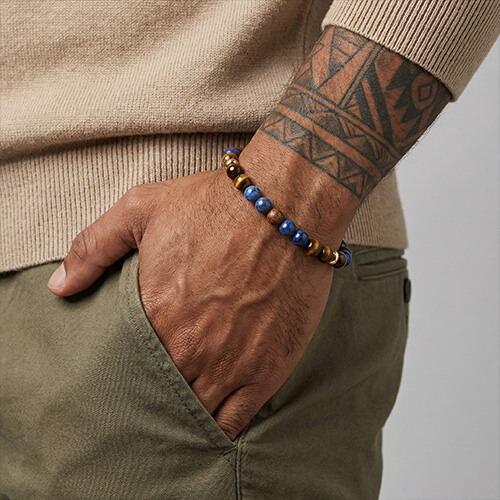
Tiger eye is moderately stable. The golden-brown color is fairly UV-resistant, and the chatoyant quality doesn’t fade with light exposure since it’s a structural optical effect rather than a chemical one.
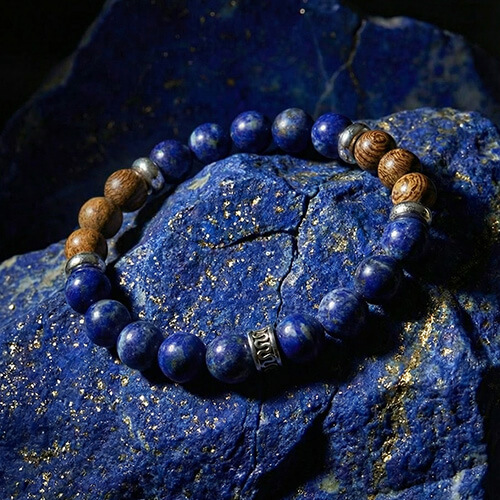
Lapis lazuli requires more care. The deep blue color comes from lazurite, which is more susceptible to UV fading and can be affected by acids and oils. High-quality lapis that hasn’t been dyed holds its color better than treated stone, but some caution with sun exposure is warranted.
Malachite is sensitive to acids, including mild acids in sweat and skin care products. The surface can dull and lose its banding clarity over time without proper care.
Tiger Eye and Chatoyance: The Light-Shift Effect
Tiger eye has a distinctive quality that can appear to be color change but is actually something different: chatoyance. This is an optical phenomenon caused by parallel fibrous inclusions within the stone. As the angle of light changes relative to the stone’s surface, these fibers reflect light differently, creating a band of light that moves across the stone’s surface and shifts the apparent color between golden and brown.
This effect doesn’t fade over time and isn’t a sign of anything happening to the stone chemically. It’s a structural property of the stone that remains consistent regardless of age or wear. If your tiger eye bracelet looks different under indoor fluorescent light versus outdoor sunlight, that’s chatoyance doing exactly what it should.
Dyed Stones vs. Natural Stones
Many lower-cost “natural stone” bracelets use stones that have been dyed to enhance or alter their color. Howlite dyed blue to resemble turquoise is one common example. Dyed stones look vivid and consistent when new but fade more rapidly and less gracefully than undyed natural stone because the dye sits on or near the surface rather than being integral to the mineral.
A dyed stone bracelet that has been worn for a year typically shows uneven color loss at the points where beads rub against each other or against the cord. Genuine natural stone aging is more gradual and more even. If your bracelet is losing color in patches or at bead contact points specifically, dye is the likely explanation.
Buying from a maker who sources natural, undyed stone is the most reliable way to avoid this. The color will be slightly less vivid initially – natural stone colors are more subdued than dyed versions – but it will age consistently and remain attractive over years of wear.
How to Slow Color Change
The main protective actions are straightforward: store bracelets out of direct sunlight, apply fragrance and sunscreen before putting on a bracelet, wipe the bracelet with a dry cloth after wearing to remove skin oils, and avoid wearing bracelets while swimming or showering.
Beyond these habits, periodic gentle cleaning with a slightly damp cloth (not soaking) removes surface buildup that can affect how the stone looks. For smooth polished stones, a very light application of mineral oil once every few months can restore surface depth without damaging the stone.
Color Stability Reference Table
| Stone | UV Stability | Oil/Product Sensitivity | Expected Change Over Time |
|---|---|---|---|
| Black Onyx | High | Low | Surface patina only – minimal |
| Hematite | High | Low | Minor surface scratches, color stable |
| Tiger Eye | Moderate-high | Low-moderate | Gradual deepening of tone |
| Lava Rock | High | High (absorbs oils) | Gradual darkening from oil absorption |
| Lapis Lazuli | Moderate | Moderate | Some fading with prolonged sun exposure |
| Malachite | Moderate | High (acid-sensitive) | Surface dulling without regular care |
Mr. Woodini Collection
Mr. Woodini sources natural, undyed gemstones for the bracelet collection – meaning the color you see is the genuine color of the mineral rather than a dye that will fade unevenly. The collection includes black onyx, tiger eye, lava rock, hematite, lapis lazuli, malachite, zebrawood, ebony and rosewood in 8mm beads, available in sizes 17cm to 22cm.
Mr. Woodini bracelets use natural stone selected for color quality and consistency. Natural materials age with character rather than simply degrading – and knowing the care basics outlined in this article will keep any piece looking its best for years. All orders ship internationally with gift packaging included.
Browse the full men’s bracelet collection to find the right stone for your wrist and lifestyle.
About Mr. Woodini
Mr. Woodini was founded in 2018 by Idan Birnberg. We design eco-accessories built from materials with a story — recycled wood temples, natural stone beads, handcrafted construction made in Israel. Our guides are written from direct experience: sourcing stones, testing daily wear, and building pieces by hand. Learn more about us.
Common Questions
Questions About Natural Stone Color Changes
Yes, and it’s usually a sign of authenticity. Natural stones absorb oils, react to light and interact with your skin chemistry over time. Synthetic stones don’t do this — they stay the same.
Lapis lazuli, turquoise and howlite are most sensitive to oils and moisture. Tiger eye and black onyx are more stable. The change is gradual and often adds character rather than damage.
Minor surface buildup can be gently cleaned with a dry soft cloth. Deep changes caused by oils or UV exposure are usually permanent — but they give each bracelet a unique, worn-in character.
Remove before showering, swimming and applying perfume or lotion. Store in a dry place away from direct sunlight. A quick wipe after wearing goes a long way.