


Reading time: approximately 5 minutes
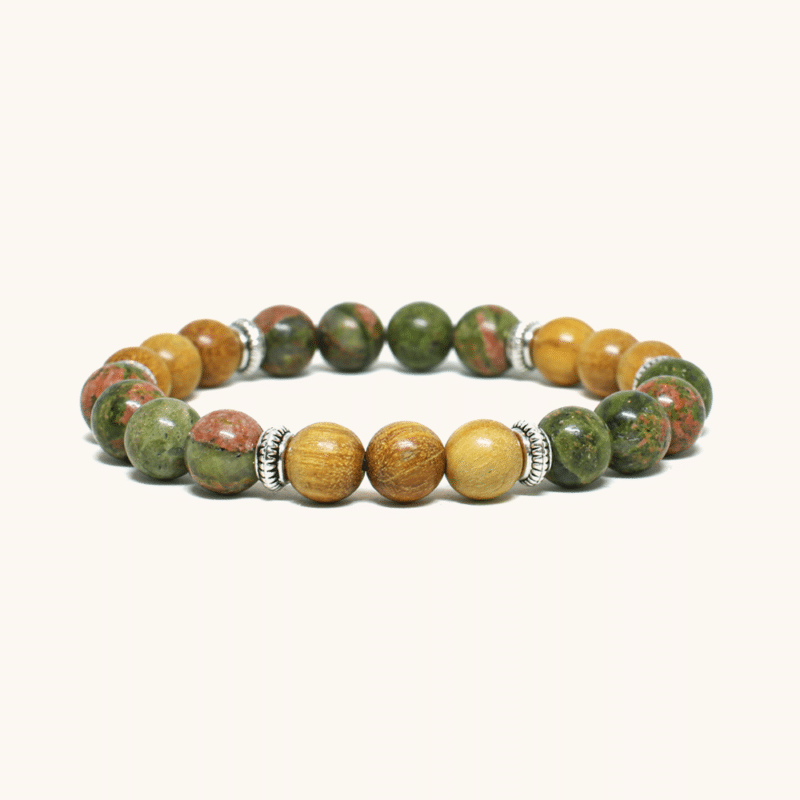
Unakite looks like two stones that decided to share one bead. Olive green on one side, salmon pink on the other, sometimes with a grey-white seam of quartz running between them. People who see it for the first time usually ask what it is – which is part of the appeal.
An unakite stone bracelet is one of the easiest ways to wear color without wearing anything loud. The green and pink are both muted, earthy tones, closer to moss and terracotta than to anything bright. This guide covers what unakite actually is, how it holds up to daily wear, and how to style it so it looks deliberate.
Table of Contents
What Is Unakite?
Unakite is a type of altered granite. It forms when granite is changed by heat and mineral-rich fluids deep underground, and it’s made up of three main minerals:
- Pink feldspar (orthoclase) – the salmon to coral-pink areas
- Green epidote – the olive and pistachio greens
- Quartz – the clear to milky-grey patches between them
The proportions change from piece to piece, which is why one unakite bead can be mostly green with a flash of pink, and the bead next to it can be closer to half and half. On a bracelet, that variation is the point. A strand where every bead looks identical would actually be a reason to doubt the stone – there’s more on that in our guide on how to tell if a gemstone bracelet is real.
Where the Name Comes From
The stone was first described in the Unaka Mountains, part of the Appalachian range along the border of North Carolina and Tennessee, and took its name from them. Today unakite is also found in South Africa, Brazil, China and elsewhere, and most beads on the market come from these sources rather than from the original American deposits.
It’s not a rare stone, and it isn’t treated or dyed – the colors you see are the minerals themselves. That makes unakite a good value: you get a natural stone with genuine visual character without paying for scarcity.
How Durable Is Unakite?
Unakite sits around 6 to 7 on the Mohs hardness scale – harder than malachite or turquoise, close to tiger eye. For a bracelet that means it handles daily wear well: desk edges, bag straps and the occasional knock won’t do much.
A few practical notes:
- Small surface pits are normal. Because unakite is a mix of minerals with slightly different hardness, polished beads can show tiny natural pits. They’re not damage.
- Water is fine, chemicals aren’t. Rinsing with water won’t hurt the stone. Perfume, chlorine and cleaning products are harder on the elastic cord and any wood beads than on the unakite itself – see whether you can shower with a stone bracelet.
- Clean with a damp cloth. No ultrasonic cleaners, no soaking. Our bracelet care guide covers storage too.
What Unakite Pairs Well With
Because the stone already carries two colors, it works best next to materials that pick up one of them rather than adding a third.
Yellow sandalwood pulls out the warm, pink side and makes the whole bracelet read more golden. It’s the softer, autumn version – our unakite and yellow sandalwood bracelet sets the stones in groups of three with honey-toned wood and small steel spacers.
Green sandalwood leans into the green side for a cooler, more forest-like look. The unakite with green sandalwood is the version to choose if most of your wardrobe sits in olive, khaki and navy.
Steel – a single steel bead or spacer – keeps it from looking too rustic and makes it easier to wear with a watch.
What doesn’t work as well: other strongly patterned stones on the same strand. Unakite next to malachite or a busy jasper turns into noise.
How to Wear an Unakite Bracelet
With everyday clothes
Unakite’s colors are the colors of a lot of casual menswear and womenswear already: olive jackets, rust and brick knits, cream shirts, denim. That’s why it’s an easy first color stone. If you’re not sure whether green-toned stones suit you, the guide on wearing green beaded bracelets goes through outfit pairings.
Stacked
It stacks best with one plain neighbour – a dark wood or matte black bracelet – so the pattern has room. Two unakite bracelets together lose the effect. Our bracelet stacking guide explains how to balance texture and color across a stack.
By season
It reads warmest in autumn, when the pink picks up rust and brown clothing. In summer, against a tan and lighter clothes, the green side comes forward.
If you want to see it alongside other stones before deciding, browse the full natural stone bracelet collection, where every bracelet is listed by the stones and woods it actually contains.
FAQ
What is unakite stone made of?
Unakite is an altered granite made mainly of three minerals: pink orthoclase feldspar, green epidote and quartz. The mix varies from piece to piece, which is why every unakite bead shows a different balance of olive green, salmon pink and grey-white. The colors are natural, not dyed.
Is unakite a real gemstone?
Yes. Unakite is a natural rock used as an ornamental stone, cut into beads and cabochons. It isn’t rare, which keeps it affordable, but it is a genuine natural material. Its colors come from its minerals, so dye is rarely an issue with unakite compared to stones like turquoise.
Can I wear an unakite bracelet every day?
Yes. At around 6 to 7 on the Mohs scale, unakite is durable enough for daily wear. Avoid hard knocks against stone or metal surfaces, take it off before using cleaning chemicals, and wipe it with a damp cloth. The elastic cord will need more care than the stone itself.
Is unakite a good stone for men?
It’s one of the better color stones for men who don’t usually wear color. The green and pink are muted and earthy rather than bright, and they match common menswear colors like olive, rust and navy. Paired with wood or a steel accent, it looks understated rather than decorative.
Where does the name unakite come from?
It’s named after the Unaka Mountains on the border of North Carolina and Tennessee in the United States, where the stone was first described. Most unakite on the market today comes from other sources, including South Africa, Brazil and China.
Mr. Woodini was founded in 2018. We design eco-accessories built from materials with a story – natural stone beads, real wood and handcrafted construction. Our bracelets are handmade in Israel, and our guides are written from direct experience: sourcing stones, testing daily wear, and building pieces by hand. Learn more about us.