



Reading time: approximately 5 minutes
Wood beads are lighter on the wrist than stone and develop a patina with wear. The species matters – not just for appearance, but for how the bead responds to humidity, oil, and time.
Why Do Wood Bracelets Work?
Wood brings something to a bracelet that stone and metal can’t: visible grain. Each bead has a unique pattern formed over years of tree growth – no two beads are identical, and no two bracelets made from the same wood species look exactly alike. This natural variation is part of why wood bracelets feel personal in a way that factory-produced accessories don’t.
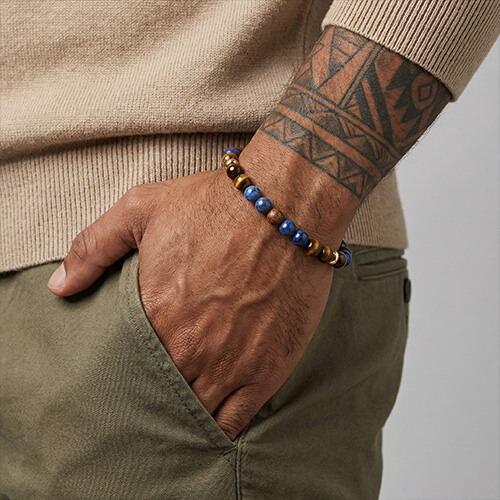
The material also has tactile qualities that work in its favor. Wood is warm to the touch, slightly lighter than comparable stone beads, and has a surface texture that changes subtly over time as natural oils from the skin work into the wood. A wood bracelet worn regularly for a year looks richer than a new one. From a styling perspective, wood connects to organic textures and earth tones in clothing, making it a natural fit with casual and outdoor styles. For context on how wood bracelets translate across settings, see the full wood bead bracelet styling guide.
What Are the Main Wood Species Used in Bracelets?
Zebrawood has a distinctive striped pattern – dark brown lines running through a lighter golden-brown background. The contrast is bold and graphic. Zebrawood beads work well with dark stones (black onyx, lava rock) where the warm striping contrasts with the stone’s dark opacity.
Ebony is one of the densest wood species available for jewelry use. Very dark – ranging from deep brown to near-black – with a fine, tight grain that polishes to a high shine. Ebony beads have a gravitas that other woods don’t; they look almost like a dark stone at first glance.
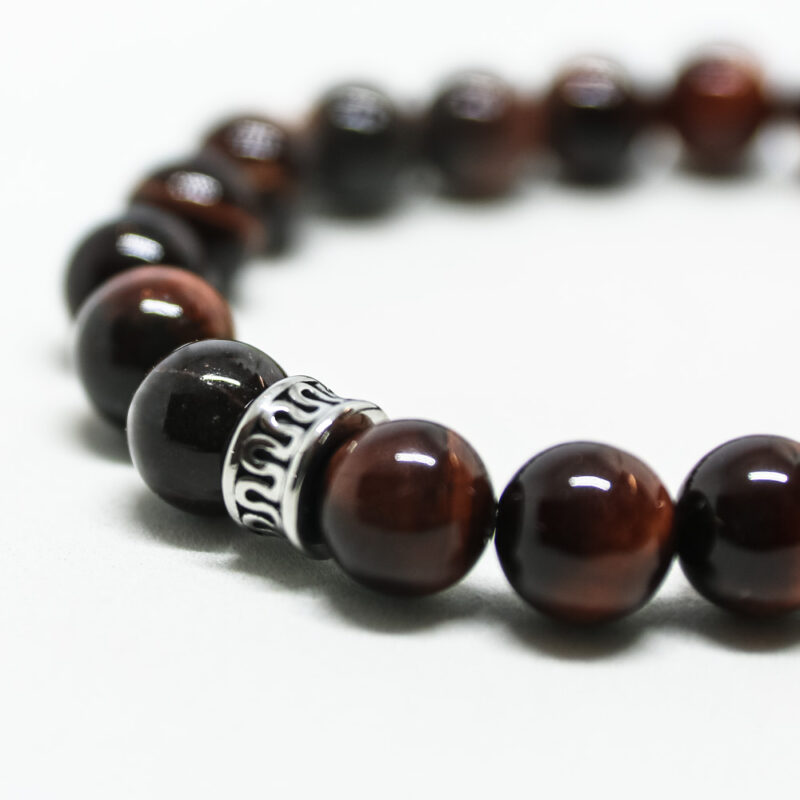
Rosewood has warm reddish-brown tones with a flowing grain pattern. Its warmth makes it easy to pair with other materials. Rosewood works well with tiger eye (both warm-toned), amber stones or brown jasper. It’s also one of the more aromatic woods.
Sandalwood is lighter in color – pale golden-beige with fine grain and a subtle natural fragrance. The most understated wood commonly used in bracelets. Works well for minimal styles and pairs with lighter stones like howlite.
| Wood Species | Color | Character | Best Stone Pairing |
|---|---|---|---|
| Zebrawood | Golden-brown with dark stripes | Bold, graphic | Black onyx, lava rock |
| Ebony | Near-black to deep brown | Fine, tight, high-polish | Onyx, hematite, howlite |
| Rosewood | Warm reddish-brown | Flowing, warm, aromatic | Tiger eye, amber, brown jasper |
| Sandalwood | Pale golden-beige | Fine, subtle, fragrant | Howlite, clear quartz |
| Wenge | Dark brown with fine streaks | Dense, linear, serious | Black onyx, matte stones |
How Do You Pair Wood with Gemstones?
Wood and natural stone are the most natural pairing in beaded jewelry – both share a visual language of natural variation, earthy tones and non-manufactured texture. The most effective pairings use color contrast within the natural-material palette. Zebrawood (warm, striped) with black onyx (smooth, dark) creates a combination where wood grain contrasts with stone opacity. Rosewood (warm, reddish) with tiger eye (warm, golden) creates a tonal harmony. Ebony (near-black) with hematite (metallic grey-black) is a very dark combination where the interest comes entirely from surface texture differences.
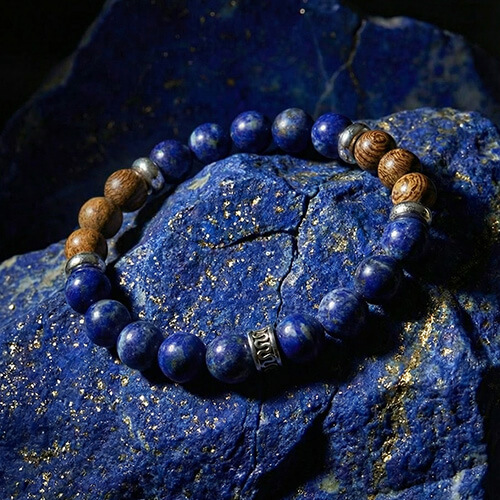
Adding small metal spacer beads between wood and stone is a common third element. Stainless or oxidized metal beads create separation that prevents the bracelet from looking monolithic and adds a modern edge to what would otherwise be a purely organic combination.
How Do You Care for Wood Bead Bracelets?
Wood requires slightly more attention than stone. The main consideration is moisture – prolonged water contact can cause wood to swell, warp or crack. Brief contact (washing hands, light rain) is fine. Swimming and extended soaking should be avoided. Clean wood beads with a dry or very lightly damp cloth. Avoid soaps and cleaning products that can strip the natural oils and finish. Occasionally applying a small amount of natural oil (jojoba or almond oil) to beads that are looking dry maintains the finish and brings out the grain. Store away from direct sunlight – UV exposure over time can bleach lighter wood species like sandalwood. For full general care guidance, see the bracelet care guide.
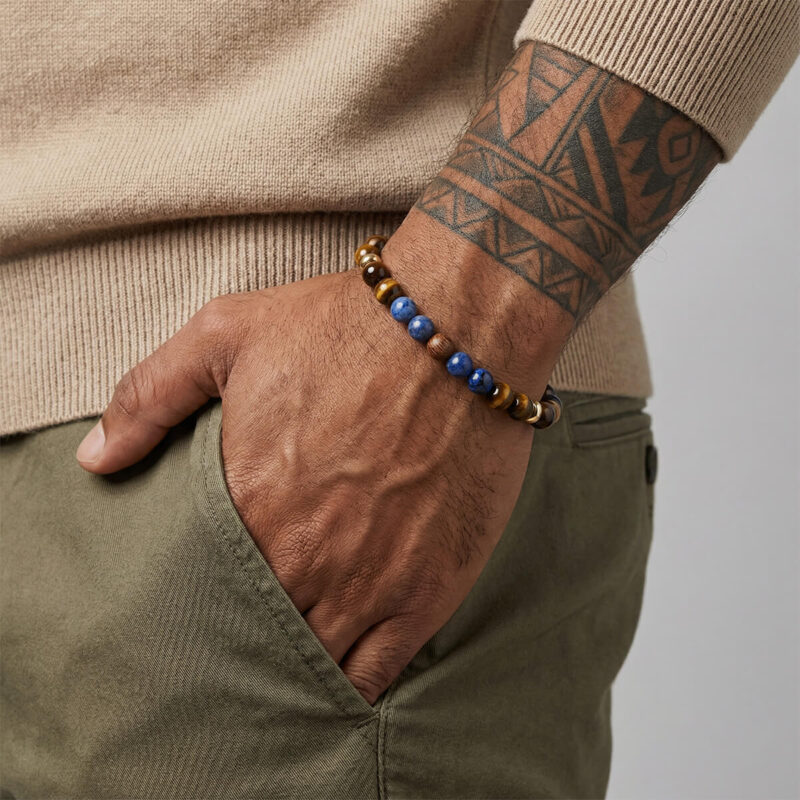
Dumortierite and Brown Tiger Eye Beaded Bracelet (6mm)
Worth Starting With
Gambia (hematite + zebrawood, 6mm) for a graphic dark combination. Red Tiger Eye and Rosewood for a warm earth palette. Matte Black Onyx and Wenge for a very dark, minimal combination.
Browse the full bracelet collection – all pieces handmade in Israel, available in sizes S (16cm) to XXL (20cm).
Mr. Woodini was founded in 2018. We design eco-accessories built from materials with a story – recycled wood temples, natural stone beads, handcrafted construction. Our guides are written from direct experience: sourcing stones, testing daily wear, and building pieces by hand. Learn more about us.
Questions About Wooden Bead Bracelets
The main species are zebrawood (bold striped grain), ebony (near-black, dense), rosewood (warm reddish-brown) and wenge (dark brown, linear). The same species are used in the sunglasses temple production, which is why bracelet and sunglasses combinations from Mr. Woodini share natural material language.
Yes, with basic care. Keep them dry, away from prolonged sunlight and out of water. Wood can swell or crack with repeated moisture exposure – a quick wipe after wearing is enough regular maintenance. Occasional conditioning with natural oil every few months keeps the grain looking rich.
Yes – wood and stone is one of the most natural pairings in bracelet stacking. The contrast in texture between smooth polished stone and organic wood grain gives the stack visual depth without color competition.
Zebrawood is visually bold – the distinctive striped grain makes it the statement wood in a bracelet. Ebony is visually serious – its deep, near-black color and tight grain give it an almost stone-like quality that’s more subtle and formal. Zebrawood draws the eye to itself; ebony provides a rich dark complement to whatever stone it’s paired with.