


Reading time: approximately 5 minutes
Buying sunglasses online without trying them on is a genuine challenge – frame width, nose bridge fit, and temple length don’t come through in product photos. A few measurements and an understanding of face shape get you most of the way there.
Why Buy Sunglasses Online?
Buying sunglasses online requires different information than buying in a physical store. In a shop, you try frames on and make a judgment based on how they look and feel. Online, you work from measurements, product photos and detailed specifications. Neither approach is objectively better; they require different skills.
Online shopping has practical advantages for sunglasses specifically: selection is dramatically wider than any physical retailer can stock; premium craft eyewear brands that don’t have retail distribution are only available online. The risks are manageable – incorrect size, color that doesn’t match photos, or quality gaps – and all three can be addressed through good product information and a sensible returns policy.
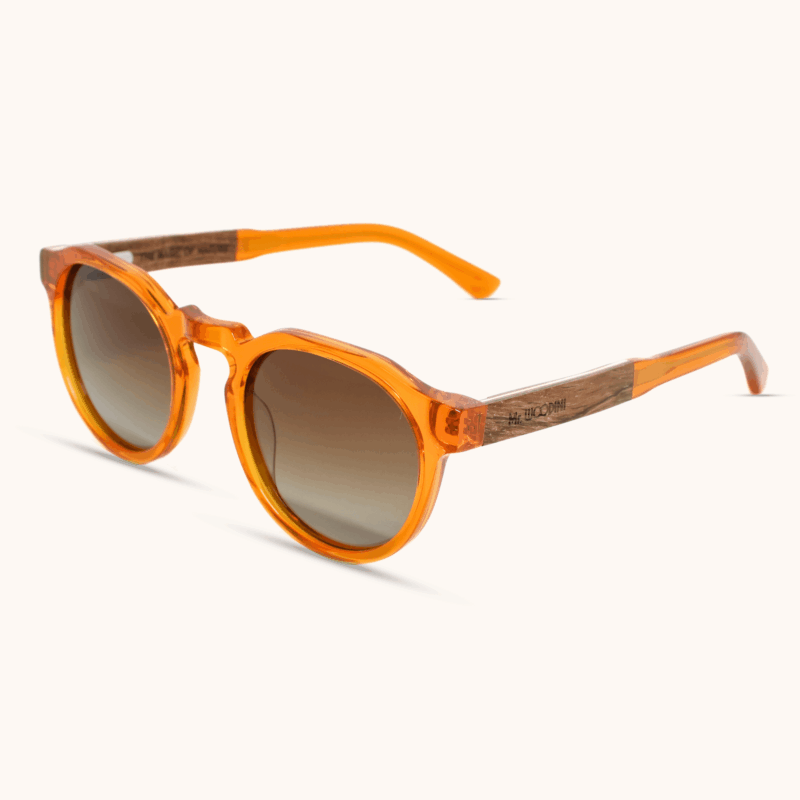
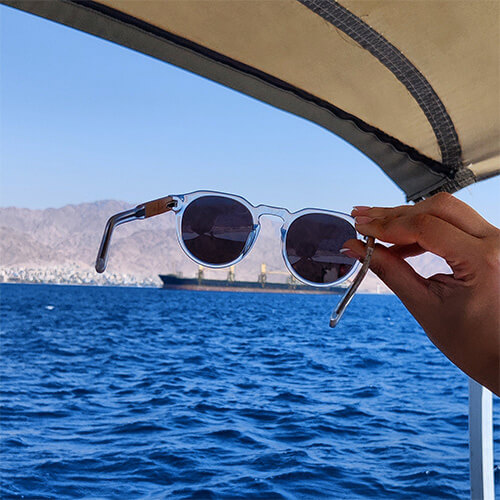
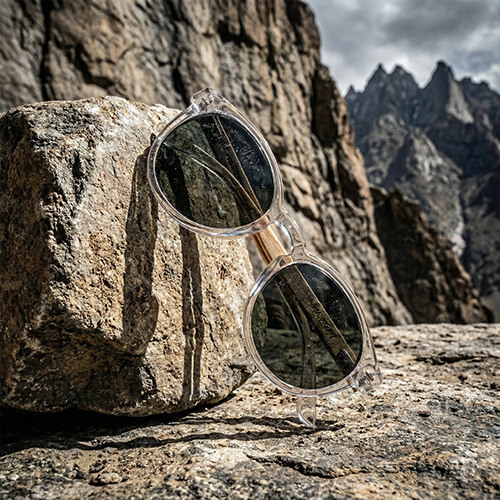
Sumatra – Crystal Orange
How Do You Read Frame Measurements?
Lens width – the horizontal width of each individual lens (usually 44-60mm). This alone doesn’t tell you total frame width. Bridge width – the distance between the two lenses across the nose bridge (usually 14-24mm). A wider bridge suits wider nose structures. Temple length – the length of each arm from hinge to temple tip (typically 135-150mm; standard adult size around 140mm). Total frame width – the full width from outside edge to outside edge. This is the most important single measurement for fit – it should approximately match the width of your face.
What Should You Check on Every Product Page?
Before ordering, verify: UV400 certification (non-negotiable – dark lenses alone don’t guarantee protection), frame measurements (all dimensions should be listed), frame material, lens type (polarized vs non-polarized), and the return/exchange policy. For a full explanation of UV certification and how to verify it, see the UV protection guide. For polarization specifically, see the polarized sunglasses guide.
How Do Frame Materials Compare?
| Material | Weight | Durability | Best For |
|---|---|---|---|
| Acetate | Light | High | Premium everyday wear, fashion |
| Acetate + Wood temples | Light to moderate | High | Premium, eco-conscious, distinctive style |
| Metal (titanium / stainless) | Moderate | High | Minimal styles, semi-rimless |
| TR-90 Nylon | Very light | Good for sport | High-performance sport |
For a deeper look at acetate – its properties, quality grades and how it ages – see the acetate guide.
How Do You Get the Right Size Online?
Matching frame size to face size is the primary determinant of whether sunglasses look right and feel comfortable. Measure the width of your face from temple to temple with a flexible tape measure and compare to the total frame width in the product specifications. General guide: faces under 130mm → frames under 130mm; 130-140mm face → 130-140mm frame; 140-150mm face → 140-150mm frame; over 150mm → explicitly wide frames. Bridge width matters separately: narrower nose bridges suit frames with bridge widths under 18mm; wider or flatter nose structures suit 20mm+ bridges. See the full size guide for measuring instructions.
What Are the Red Flags When Buying Online?
No UV certification stated. If the product page doesn’t clearly state UV400, the lenses may not be protected. No frame measurements. A brand that doesn’t publish frame dimensions doesn’t want you to know how their sizes compare. Stock photos only. If a product page shows only computer-rendered images and no real-world photography, there may be a significant gap between the rendering and the actual product. Very low price with premium claims. Quality acetate frames, polarized lenses and spring hinges have minimum cost floors. No return policy. A brand with very restricted returns on eyewear is signaling that fit complaints are common.
Worth Considering
Paloma (round clear acetate, 139mm total width) for medium faces. Sumatra (round, zebrawood temples) for a classic shape. Fuji (rectangular, olive colorway) for a more angular look. Sydney for a contemporary medium frame.
Browse the full sunglasses collection – frame dimensions are listed on every product page.
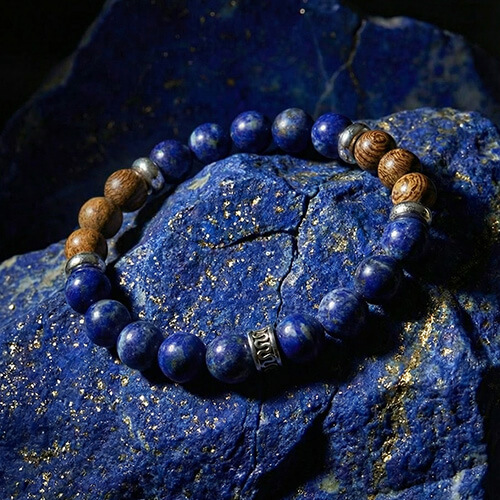
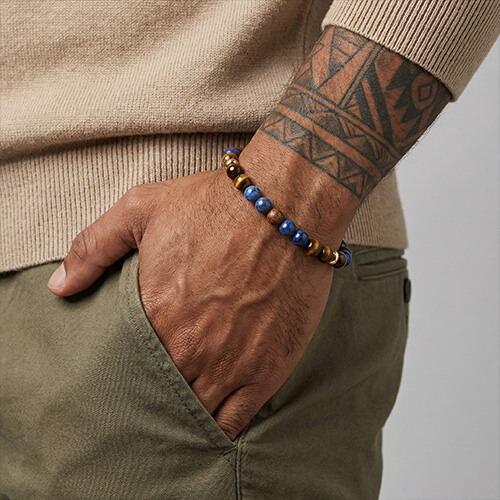
Mr. Woodini was founded in 2018. We design eco-accessories built from materials with a story – recycled wood temples, natural stone beads, handcrafted construction. Our guides are written from direct experience: testing frames daily, sourcing materials, and building pieces by hand. Learn more about us.
Questions About Buying Sunglasses Online
Check the total frame width measurement – it should roughly match the width of your face in millimeters. Measure your face from temple to temple with a flexible tape. If the product page doesn’t list frame dimensions, that’s itself a red flag.
Look for “UV400” or “100% UV protection” explicitly stated in the product details – not just implied by price or brand. Dark lenses alone don’t guarantee UV protection; the coating is what matters.
At least 14 days, accepts unworn items in original condition, and offers exchanges as well as refunds. Confirm whether return shipping is covered. A brand with no returns or very restricted returns on eyewear is a red flag.
Material details (acetate vs plastic), lens type with explicit UV400 certification, frame construction (spring hinges stated), real product photography rather than renders, and brand transparency about manufacturing. Vague listings with only computer-generated images are a red flag.