


Reading time: approximately 5 minutes
Polarized sunglasses show up on every “best sunglasses” list, but the explanation of what they actually do tends to be either too technical or too vague. The short version: they cut glare from flat surfaces – water, roads, car hoods, wet pavement. That specific function makes them genuinely better for certain environments and irrelevant for others.
This guide covers how polarized lenses work, when they make a real difference, when they don’t, and what to check before you buy.
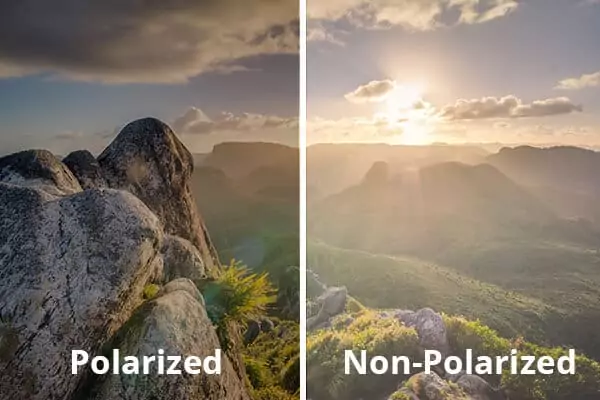
How Do Polarized Lenses Actually Work?
Most sunglasses reduce brightness by tinting the lens. Polarized lenses do something different – they filter light by direction.
When sunlight hits a flat horizontal surface (water, a road, a car hood), it bounces back predominantly as horizontal light. That’s what causes glare – the sharp, blinding reflection that makes you squint even with dark lenses on. A polarized lens has a vertical filter built into it that blocks that horizontal light while letting everything else through. The result isn’t just less brightness – it’s cleaner, higher-contrast vision.
Think of it like a venetian blind for your eyes, set horizontally. Normal light passes through the gaps. Glare hits the slats and stops.
How Do You Test If Sunglasses Are Polarized?
Three reliable tests – before buying, or to check a pair you already own:
The screen test. Look at a phone or laptop screen through the lenses and tilt your head about 60 degrees. If the screen goes significantly darker, the lenses are polarized – you’re seeing the filter interact with the screen’s own polarization layer.
The water test. Look at a reflective water surface with the sunglasses on, then without. Polarized lenses let you see into the water instead of just the reflection. The difference is immediate.
The overlap test. Hold two pairs of polarized sunglasses facing each other and rotate one 90 degrees. The overlapping area will go almost completely dark – the two filters block each other.
When Do Polarized Lenses Make a Real Difference?
Driving. Glare from wet roads, windshields and light-colored pavement is genuinely reduced. Most drivers who try polarized lenses don’t go back.
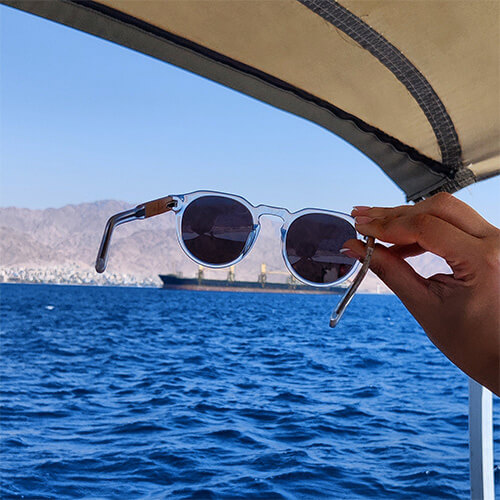
Water – fishing, sailing, beach. This is where polarization was originally developed. You can see below the surface instead of just the reflection. For fishing, that’s functional. For anyone near water on a sunny day, it’s noticeably more comfortable.
Snow and skiing. Same principle – horizontal glare from flat surfaces. The reduction in eye fatigue over a full day on the mountain is significant.
Everyday urban wear. Less dramatic, but real. Wet pavements, shop windows, car roofs – polarized lenses reduce the micro-glare that accumulates over a day outside.
“The polarized lenses are a real surprise – the visibility is just amazing. High quality materials, very comfortable.”
When Don’t Polarized Lenses Help?
Reading LCD screens outdoors. Some phone screens and digital instrument panels appear dark or distorted at certain angles when viewed through polarized lenses. Usually manageable, occasionally annoying.
Low-light conditions. Polarized lenses reduce overall light transmission. In overcast or dawn/dusk conditions, a lighter non-polarized lens serves you better.
Activities where surface glare carries information. Icy patches on a road or trail can be identified partly by their reflective quality. Polarized lenses reduce that signal.
Are Polarized Lenses the Same as UV Protection?
No – and this distinction matters. Polarization reduces glare. UV protection blocks ultraviolet radiation. They’re separate features.
A polarized lens doesn’t automatically include UV400 protection – and UV400 (blocking 100% of UVA and UVB rays) is what actually protects your eyes from long-term damage. A cheap dark lens with no UV filter can be worse than no sunglasses at all, because the tint causes your pupil to dilate while UV still passes through.
When buying polarized sunglasses, confirm both: polarized filter and UV400 protection. If the listing only mentions polarization and not UV, look elsewhere.
| Polarized | Non-Polarized | |
|---|---|---|
| Reduces glare from flat surfaces | Yes | No |
| Best for driving | Yes | Less effective |
| Best for water and fishing | Yes | No |
| Works well in low light | Less effective | Yes (lighter tints) |
| Works with LCD screens | Can cause distortion | Yes |
| Includes UV protection automatically | No – verify separately | No – verify separately |
What Should You Check Before Buying Polarized Sunglasses?
Lens color. Gray polarized lenses are the most versatile – they reduce brightness without shifting colors. Brown lenses add warmth and enhance contrast, which works well for fishing and outdoor sports. Green lenses sit between the two.
UV400 confirmation. As above – polarization and UV protection are separate. Verify both are present before buying.
Frame fit. Polarized lenses only work properly when the frame keeps them at the right angle in front of your eyes. Ill-fitting frames reduce the effectiveness of the filter.
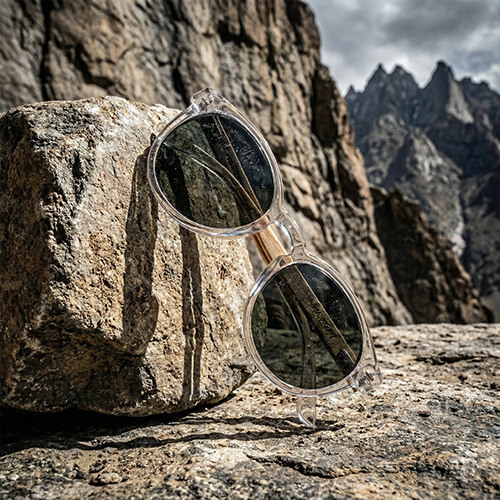
Frame material. For time near water or outdoors, bio-acetate frames with recycled wood temples hold up better than standard plastic. The wood develops a natural patina instead of degrading in the sun.
Worth Considering
Mr. Woodini polarized sunglasses – bio-acetate frames with recycled wood temples and TAC polarized lenses with UV400 protection. Available in multiple frame shapes and gray or brown polarized lenses.
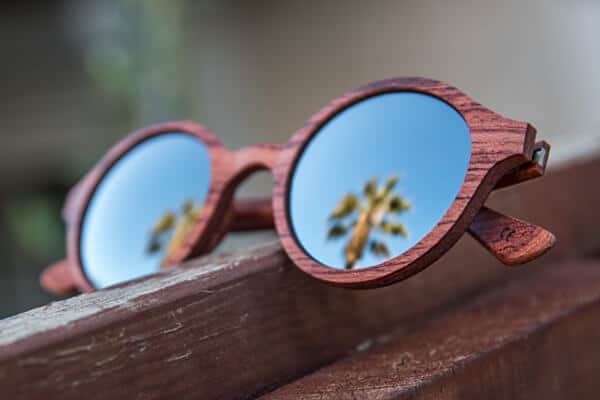
Arishima – Wooden Sunglasses and TAC polarized lens
Mr. Woodini was founded in 2018 by Idan Birenberg. We design eco-accessories built from materials with a story – recycled wood temples, natural stone beads, handcrafted construction. Our guides are written from direct experience: testing lenses daily, sourcing materials, and building pieces by hand. Learn more about us.
Questions About Polarized Sunglasses
They block horizontally polarized light – the type that creates glare from flat reflective surfaces like water, snow, roads and car hoods. The result is reduced eye strain and clearer vision in those conditions, not just darker overall brightness.
For driving, water activities, or any outdoor use with strong surface reflections – yes. The improvement in visual comfort is immediately noticeable. For purely indoor or low-light use, the benefit is minimal and a lighter lens may serve you better.
Not automatically. Polarization and UV protection are separate features. Always confirm UV400 protection alongside polarization – quality lenses include both, but cheap polarized lenses may skip the UV filter entirely.
Look at a phone or laptop screen through the lenses and tilt your head about 60 degrees. If the screen darkens noticeably, the lenses are polarized. Or look at a reflective water surface – polarized lenses let you see below the surface instead of just the glare.