


Reading time: approximately 5 minutes
Look at a lot of bracelet listings and you’ll see “316L steel” next to the metal bead or clasp, usually without explanation. It’s worth knowing what those four characters mean, because they answer the questions people actually ask about metal jewelry: will it tarnish, will it rust, and will it leave a green mark on my wrist?
Short version: 316L stainless steel is one of the most durable, low-maintenance metals used in everyday jewelry. Here’s why, where its limits are, and how it compares to silver and cheaper steels.
Table of Contents
What Is 316L Stainless Steel?
316L is a grade of austenitic stainless steel. In simple terms, it’s iron alloyed with:
- Chromium (around 16-18%) – forms an invisible protective layer on the surface that stops corrosion
- Nickel (around 10-14%) – keeps the steel stable, tough and easy to polish
- Molybdenum (around 2-3%) – the ingredient that separates 316 from cheaper grades, improving resistance to salt and chlorides
The “L” stands for low carbon, which makes the steel more resistant to corrosion after it’s been welded or worked. It’s the same family of steel used for medical instruments and marine hardware, which is why you’ll sometimes see it called “surgical steel” or “marine grade.”
Does 316L Steel Tarnish or Rust?
Under normal wear, no.
The chromium in stainless steel reacts with oxygen to form a thin, self-repairing oxide layer. If the surface is scratched, the layer re-forms. That’s why 316L doesn’t develop the dark tarnish that silver does, and doesn’t rust the way ordinary steel would.
The molybdenum matters most for a bracelet, because sweat contains salt – and salt is exactly what attacks lower grades of steel over time. 316L handles daily sweat, rain and handwashing comfortably.
What it can do:
- Collect a film of skin oil, soap and lotion that dulls the shine. A wipe removes it.
- Scratch – especially polished surfaces. Fine scratches are cosmetic and blend in on engraved or textured beads.
- Stain in harsh conditions, like long exposure to chlorine or strong cleaning chemicals.
Will It Turn Your Skin Green?
No. Green marks on skin come from copper reacting with sweat – usually in brass, bronze or cheap plated jewelry once the plating wears through. 316L steel doesn’t contain copper as a main component, and it isn’t plated, so there’s nothing to wear away and nothing to turn green.
Is 316L Steel Safe for Sensitive Skin?
For most people, yes. 316L contains nickel, but it’s tightly bound in the alloy and releases very little – which is why it’s widely used in body jewelry and is generally well tolerated.
That said, “well tolerated” isn’t a guarantee. If you have a diagnosed nickel allergy, a short trial wear or a conversation with your doctor is sensible. In a beaded bracelet, the steel is usually a single bead or spacer, so skin contact is limited anyway. We cover materials for sensitive skin more broadly in our post on hypoallergenic materials.
316L vs 304 Steel vs Silver vs Plated Metal
| 316L steel | 304 steel | Sterling silver | Plated base metal | |
|---|---|---|---|---|
| Tarnishes | No | Rarely | Yes, darkens over time | Plating wears off |
| Handles sweat and salt | Very well | Well | Tarnishes faster | Poorly |
| Green skin marks | No | No | Rarely | Common |
| Maintenance | Wipe occasionally | Wipe occasionally | Regular polishing | Limited lifespan |
| Color | Cool grey-silver | Cool grey-silver | Brighter white | Varies |
Silver has a brighter, whiter shine and a long tradition in jewelry, but it needs polishing. 316L looks slightly cooler and greyer – and stays that way. For a bracelet worn every day, that trade-off usually favours steel. There’s a broader comparison of materials in natural stone vs metal bracelets.
Why We Use It in Stone Bracelets
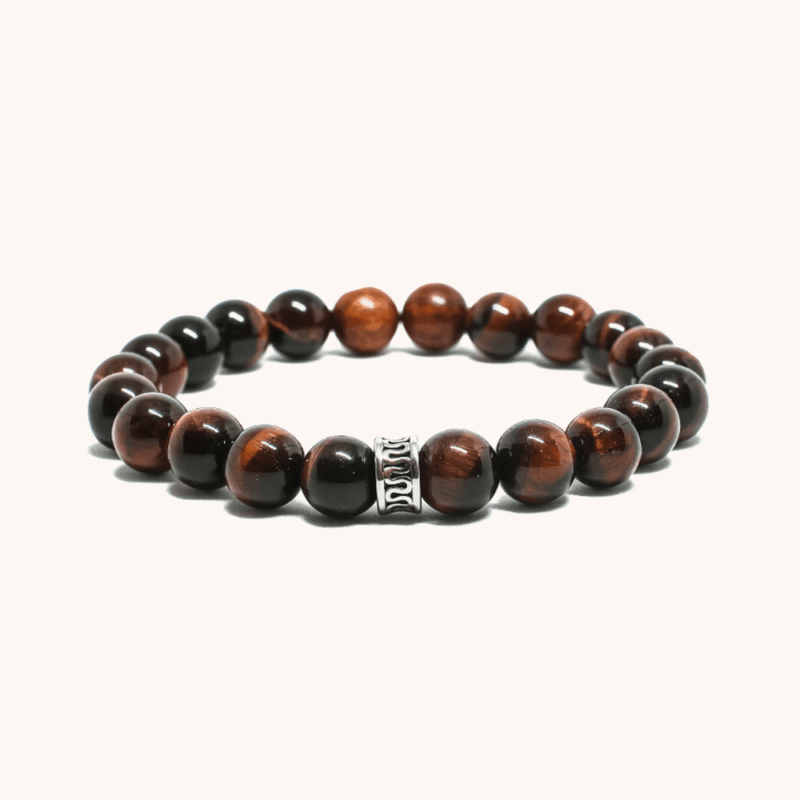
In a natural stone bracelet, a single engraved 316L steel bead does three things:
- It gives the bracelet a focal point. A row of identical stones gains structure.
- It bridges stone and metal. A steel bead makes a stone bracelet sit naturally next to a steel watch, a belt buckle or a ring.
- It holds detail. Steel keeps engraving sharp for years, where softer metals wear smooth.
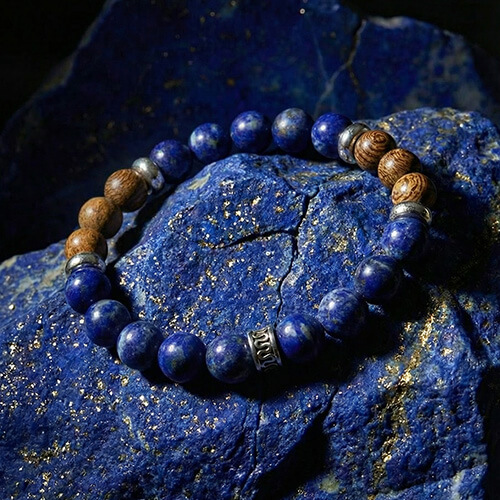
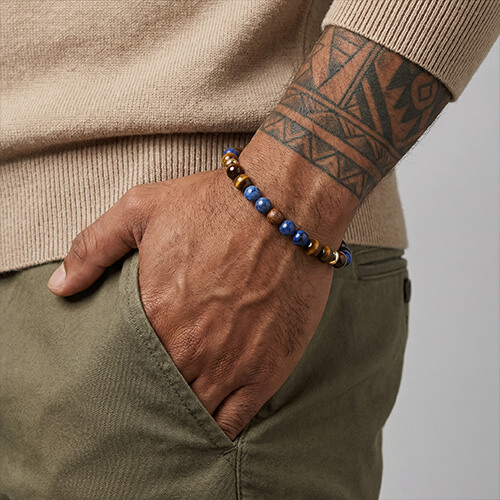
You’ll find it across the collection – on the gold tiger eye with an engraved steel bead, the red tiger eye version, the lapis lazuli with a steel feature bead and the black tourmaline and ebony bracelet.
How to Care for 316L Steel
- Wipe with a soft cloth after heavy sweating.
- For a deeper clean, a drop of mild soap in water on a cloth – then dry. Keep water off wood beads.
- Take bracelets off before swimming in chlorinated pools and before using cleaning products.
- Store separately from soft stones so the steel doesn’t scratch them.
The rest of the routine is in our bracelet care guide. To see every bracelet with a steel accent, browse the men’s bracelets collection.
FAQ
Does 316L stainless steel tarnish?
No. 316L stainless steel forms a thin, self-repairing chromium oxide layer that prevents tarnish and rust under normal wear. It can collect a dull film of skin oils and lotion, and polished surfaces can scratch, but a quick wipe with a soft cloth restores its look. It doesn’t darken like silver.
Can I shower with 316L stainless steel jewelry?
The steel itself handles water and soap without problems. In a beaded bracelet, though, the elastic cord and any wood or soft stone beads are more sensitive, so it’s better to take the bracelet off before showering. Avoid chlorinated pools and hot tubs, which are harder on all materials.
Is 316L steel the same as surgical steel?
“Surgical steel” isn’t a single official grade, but 316L is the grade most commonly sold under that name, because it’s used for medical instruments and body jewelry. When a listing says surgical steel, it’s worth checking whether it specifies 316L, which has the added molybdenum for corrosion resistance.
Will 316L steel turn my skin green?
No. Green marks come from copper reacting with sweat, which happens with brass, bronze and plated jewelry. 316L stainless steel isn’t plated and isn’t copper-based, so there’s no coating to wear through and nothing to react with your skin in that way.
Is 316L steel better than sterling silver?
For everyday wear and low maintenance, usually yes – it doesn’t tarnish, handles sweat well and is harder to scratch. Sterling silver has a brighter, whiter shine and a more traditional feel, but needs regular polishing. The choice depends on whether you value shine or durability more.
Mr. Woodini was founded in 2018. We design eco-accessories built from materials with a story – natural stone beads, real wood and handcrafted construction. Our bracelets are handmade in Israel, and our guides are written from direct experience: sourcing stones, testing daily wear, and building pieces by hand. Learn more about us.