



Reading time: approximately 7 minutes
Metal bracelets don’t age. Stone bracelets do – the surface shifts with your skin, the color deepens over time. Whether that’s a feature or a drawback depends on what you want from an accessory.
How Do the Two Materials Actually Compare?
The question of natural stone versus metal bracelets doesn’t have a single right answer. Both materials have genuine strengths and both have real limitations. The useful comparison isn’t “which is better” in the abstract – it’s which works better for the specific way you live, dress and move through the world. Someone who works outdoors in all weather and gets his wrists wet regularly will land in a different place than someone who works in an office and wants an accessory that adds a specific quality to his look. This guide breaks down the actual differences across comfort, durability, appearance and practical use.

Which Is More Comfortable for All-Day Wear?
Comfort consistently favors stone for all-day wear. Metal is thermally conductive – in cold weather a metal bracelet feels cold against your wrist until your body heat warms it up; in summer, metal can get uncomfortably warm in direct sun. Natural stone has much lower thermal conductivity and sits close to body temperature throughout the day. Metal bracelets, particularly link or chain styles, can also catch on fabric – shirt cuffs, sweater knit, jacket sleeves. Stone beaded bracelets on elastic cord have no hard edges or catching points and flex with the wrist. Weight is another factor: a stainless steel chain bracelet weighs noticeably more than a natural stone beaded bracelet of the same width.
Which Is More Durable?
Metal wins on raw durability against water and impact. A stainless steel bracelet can be submerged, exposed to sweat and knocked against hard surfaces without meaningful damage – making it the better choice for physically active wear. Natural stone bracelets require more care: the stones themselves are durable (most gemstones resist scratching in normal use) but the cord they’re strung on is the vulnerability. Water, soap and heat degrade elastic cord over time, and the bracelet will eventually need restringing. With proper care (keeping it dry, storing correctly), restringing might be needed every few years. For full maintenance guidance, see the bracelet care guide.
Metal bracelets have their own maintenance requirements: sterling silver tarnishes, gold-filled pieces can wear through plating, and polished stainless steel scratches visibly on hard surfaces. No bracelet material is completely maintenance-free.
| Factor | Natural Stone | Metal |
|---|---|---|
| Water resistance | Low – cord degrades with exposure | High – stainless handles immersion |
| Scratch resistance | High – most gemstones are hard | Medium – polished metal scratches visibly |
| Tarnish / discoloration | Low – stone is stable | Medium – silver tarnishes, plating wears |
| Maintenance needed | Occasional restringing | Polishing (silver), clasp inspection |
Which Offers More Visual Range?
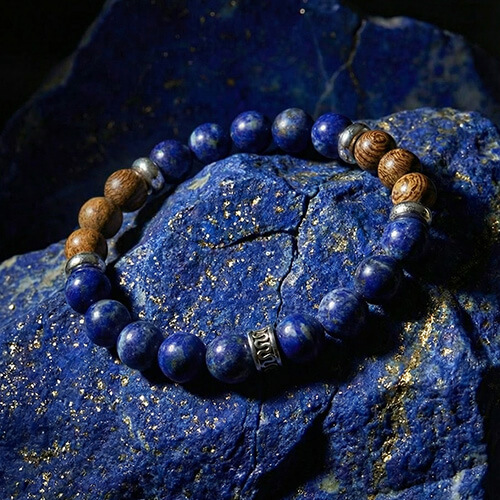
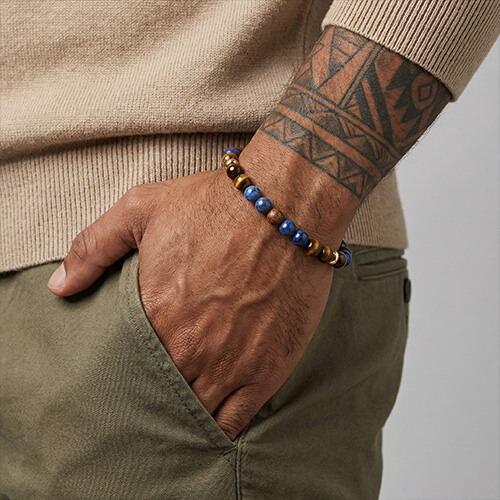
Natural stone has a clear advantage here. The visual range available in natural gemstones – from the deep opaque black of onyx to the chatoyant gold of tiger eye to the rich blue of lapis lazuli – far exceeds what metal offers in terms of color and character. Stone bracelets are also inherently individual: the mineral patterns in each bead are unique. Two black onyx bracelets from the same batch will be very similar but not identical – this natural variation gives stone pieces a character that manufactured metal pieces don’t have. For style stacking, stone bracelets can be mixed in ways that metal bracelets generally can’t without looking cluttered.
Which Is Better for Sensitive Skin?
Metal allergies are common, particularly to nickel used in many lower-quality alloys. Even stainless steel and some silver alloys can cause reactions in people with sensitive skin. Natural stone doesn’t produce allergic reactions – the issue is always the metal cord or closures used in the piece, not the stone itself. For people who have experienced redness, itching or irritation from metal jewelry, natural stone beaded bracelets on elastic cord are a practical alternative: no metal components in direct, sustained contact with the skin.
Starting with Natural Stone
Silver Skull with Tiger Eye and Lava Stone – combines a silver metal accent with natural stone, showing how the two materials can work together. For a pure stone approach: Lapis Lazuli and Zebra Wood Premium. Browse the full men’s bracelet collection – all pieces 17-22cm, gift packaging included.

Lapis Lazuli and Zebra Wood Premium Beaded Bracelet
Mr. Woodini was founded in 2018. We design eco-accessories built from materials with a story – recycled wood temples, natural stone beads, handcrafted construction. Our guides are written from direct experience: sourcing stones, testing daily wear, and building pieces by hand. Learn more about us.
Common Questions
Natural stone is hypoallergenic, lighter on the wrist and visually unique – no two pieces are identical. It also stays closer to body temperature throughout the day, making all-day wear more comfortable than metal.
Metal is generally more resistant to water and impact, making it better for outdoor or physical wear. Stone bracelets last years with basic maintenance – the elastic cord is the part most likely to need replacing, not the stone itself.
Yes. Stones like onyx, lapis and tiger eye are inert materials that don’t react with skin. Unlike metal alloys that may contain nickel, they won’t cause irritation or discoloration with sustained wear.
Yes – it’s one of the most common stacking approaches. A stone bracelet paired with a slim metal cuff or worn on the opposite wrist from a watch creates contrast without competing for attention.