






Reading time: approximately 7 minutes
Skin reactions to eyewear frames are more common than most people realize – and the culprit is usually nickel, not the frame design. Material choice is the fix, not allergy medication.
Why Does Eyewear Cause Skin Reactions?
Sunglasses sit on the face for hours at a time, in direct contact with skin at the nose bridge, behind the ears and at the temple sides. This sustained contact, combined with heat and sweat, creates conditions where any irritant in the frame material can cause a reaction – usually contact dermatitis: redness, itching and sometimes small blisters at the contact point.
Most people who experience skin reactions to eyewear are not allergic to eyewear as a category. They are reacting to a specific material or chemical compound in a specific frame. Identifying which material is causing the reaction is the first step toward finding eyewear that works without causing irritation. The American Academy of Ophthalmology recommends looking for frames made from inert materials when skin sensitivity is a concern.
What Makes Nickel the Primary Culprit?
Nickel is the most common contact allergen in the world, and it is widely used in eyewear manufacturing. It appears in frame alloys – many metal frames described as “stainless steel” or “chrome” contain significant nickel percentages. It appears in hinge hardware, screws, nose pad arms and decorative elements. Nickel sensitivity develops with repeated exposure. A person who wore metal frames for years without a reaction can develop sensitivity over time as cumulative exposure crosses a threshold. Once the sensitivity develops, even small amounts of nickel at skin contact points will trigger a reaction within hours of wear.
EU regulations (REACH) set limits on nickel release from items in prolonged skin contact – compliant frames must release less than 0.5 micrograms per square centimeter per week. However, compliance varies significantly across manufacturers, and frames produced outside the EU may not meet these standards.
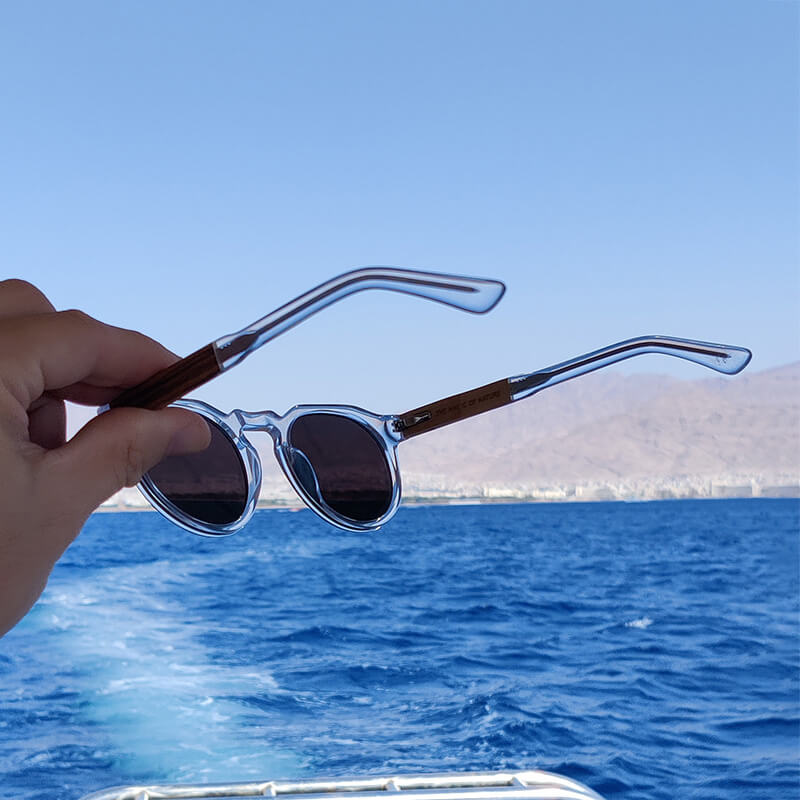
Sumatra – Acetate Sunglasses with Wood Temples
Which Materials Are Safe for Sensitive Skin?
Titanium is the gold standard for metal frames with sensitive skin. It is biocompatible – the same property that makes it suitable for surgical implants – and contains no nickel in pure form. The trade-off is cost: titanium frames sit at the higher end of the price range.
Acetate is suitable for virtually all sensitive skin types. It contains no nickel and its contact with skin at the nose bridge and temples is generally tolerated even by people with significant chemical sensitivities. The material is derived from plant cellulose (wood pulp or cotton), making it one of the more naturally sourced options in eyewear. Acetate also maintains its surface quality over years of use – unlike plated metals that expose underlying alloys as plating wears away.
Natural wood is among the lowest-allergen materials used in eyewear. It is inert, contains no synthetic additives in its base form and has minimal contact with the skin compared to the nose pads and temple tips. The surface finish applied to wood temples should be confirmed as skin-safe; most quality manufacturers use food-safe or cosmetic-grade lacquers.
What Materials Should You Avoid?
Unspecified metal alloys – frames described only as “metal” or “chrome” without specific alloy information – carry the highest risk of nickel content. If a manufacturer cannot specify the alloy composition, assume nickel is present. Plated metals present a particular risk: nickel is frequently used as an undercoat before gold, silver or chrome plating. As the plating wears with normal use, the nickel layer is exposed at the highest-friction contact points. A frame that caused no reaction when new can begin causing reactions after six months of wear as the plating deteriorates.
| Material | Nickel Risk | Sensitive Skin Rating | Notes |
|---|---|---|---|
| Titanium | None | Excellent | Best for severe nickel allergy |
| Bio-acetate | None | Excellent | Plant-derived, no metal content |
| Natural wood | None | Excellent | Verify surface finish is skin-safe |
| 316L stainless steel | Minimal release | Good | Not for severe nickel allergy |
| Standard metal alloy | High | Poor | Avoid if any nickel sensitivity |
Where Do Frames Touch Your Skin?
The nose pads are the highest-risk contact point. They carry the weight of the frame and press against skin continuously. On metal frames, nose pad arms are typically made from a separate metal component that may have a different alloy composition than the main frame. Silicone or acetate nose pads on metal arms reduce direct metal-to-skin contact but do not eliminate it if the pad hardware contains nickel. Temple tips – the ends of the arms that rest behind the ear – are in sustained contact with skin that is often warm and may become sweaty. This is a common reaction site for people sensitive to plastic frame additives or to nickel in metal temples.
Mr. Woodini Sunglasses for Sensitive Skin
Mr. Woodini frames use bio-acetate for the front frame and 100% recycled wood for the temples – both materials with no nickel content and a clean profile for sensitive skin. Stainless steel spring hinges and UV400 polarized lenses are standard. The Sumatra and Paloma are two of the collection’s clearest demonstrations of the acetate-and-wood construction. Browse the full sunglasses collection.
Mr. Woodini was founded in 2018. We design eco-accessories built from materials with a story – recycled wood temples, natural stone beads, handcrafted construction. Our guides are written from direct experience: testing frames daily, sourcing materials, and building pieces by hand. Learn more about us.
Questions About Hypoallergenic Eyewear
Acetate, wood and titanium are the best choices. Acetate is plant-derived and inert – no nickel, no metal content. Wood is natural with no synthetic additives. Both avoid the nickel and cheap alloys that cause most skin reactions.
Yes. Mr. Woodini frames are made from bio-acetate with recycled wood temples – no nickel in the primary frame materials. If you have a specific allergy, contact us before ordering to confirm material details for your situation.
Usually the frame material – particularly cheap metal alloys containing nickel, or plated frames where the nickel undercoat becomes exposed as the plating wears. The solution is choosing acetate or wood frames with quality hardware.
Redness, itching or marks that appear specifically where the frame contacts skin – nose bridge, temples, behind the ears – are the signs. Switching to acetate or wood frames typically resolves the issue if nickel or cheap alloys are the cause.