






Reading time: approximately 5 minutes
Standard hinges hold a fixed position, spring hinges flex outward under pressure and return to shape. That elasticity is the difference between a frame that cracks when you put it on fast and one that absorbs the movement.
What Are Spring Hinges?
A hinge connects the temple (arm) of a pair of glasses to the front frame. Standard barrel hinges are rigid – they open to a fixed angle, and any force beyond that stresses the metal until it bends or breaks. Spring hinges contain an internal spring mechanism that allows the temple to flex outward beyond the standard opening angle, then return to position when released.
The flex range varies by design, but most quality spring hinges allow 15-20% additional opening beyond the standard frame width. This means a pair of sunglasses that would normally snap under moderate lateral stress instead flexes and recovers. For daily life – dropping sunglasses, putting them on quickly, carrying them in a bag – this makes a significant practical difference in how long the frames last.
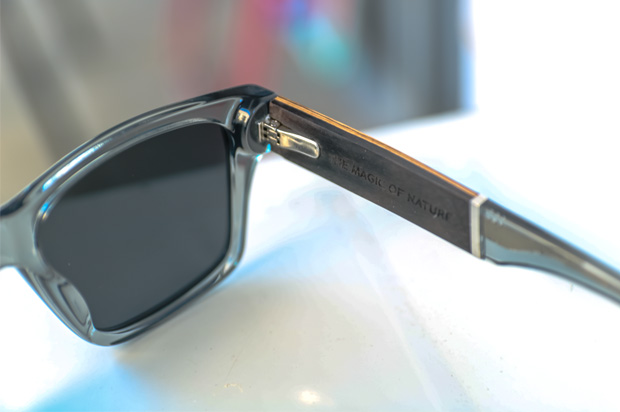
How Does the Spring Hinge Mechanism Work?
The spring is housed inside the barrel of the hinge – the cylindrical section that connects the temple to the front frame. When the temple is pushed outward beyond its natural resting position, the coiled spring compresses. When the pressure is released, the spring expands and returns the temple to its standard open position.
Quality spring hinges use thicker-gauge springs that compress only partially under normal stress. The spring retains its tension through thousands of open-close cycles because it’s never fully compressed. This is why the difference between a well-made and a poorly-made spring hinge only becomes obvious after 12-18 months of daily use – the inferior version functions correctly at first but degrades faster. According to American Academy of Ophthalmology guidance, frame durability is one of the key factors in long-term eye protection – glasses you stop wearing because they broke offer no protection at all.
What Are the Main Benefits of Spring Hinges?
Durability under real-world stress. Spring-hinge frames survive accidents that standard-hinge frames don’t. A bag pressing against the temples applies lateral stress repeatedly. Standard hinges develop metal fatigue at the barrel joint and eventually fail. Spring hinges absorb this stress without permanent deformation. Sitting on sunglasses – one of the most common ways frames get damaged – compresses the temples with significant force. Spring hinges flex and recover; standard hinges of the same construction will bend or snap.
Easier to put on with one hand. With standard hinges, spreading the temples requires two hands to avoid stressing the frame. Spring hinges flex naturally outward as you put on the glasses, accommodating the shape of your head without requiring careful technique. This becomes relevant for driving, sport or any context where one-handed operation is common.
Better fit across head sizes. Standard hinges work best when the frame width closely matches the head width. If the frame is slightly narrow, the temples press uncomfortably. With spring hinges, the temples flex outward slightly to match, eliminating the pressure point. A frame that’s 2-3mm too narrow becomes comfortable rather than unusable.
“The spring hinges make them sit perfectly – they flex outward rather than pressing on the sides of my head. Above all, made from recycled materials, which matters a lot to me.”
What Separates Good Spring Hinges from Bad Ones?
Not all spring hinges perform equally. The range in quality has a direct effect on how long they last.
Spring gauge. Thicker spring wire maintains tension longer. A quality spring hinge has a firm, consistent return force. A thin-spring hinge returns more loosely and may rattle slightly.
Barrel material. Stainless steel barrels resist corrosion from sweat and humidity. Cheaper alloys can corrode at the spring contact point, which eventually locks or restricts spring movement.
Number of barrel sections. More sections (typically 5 or 7) distribute hinge stress across more contact points, reducing wear at any single point. Budget spring hinges often use 3-section barrels that wear faster.
Brand transparency. Brands that specify “stainless steel spring hinges” in their product descriptions are providing checkable information. Brands that simply say “durable hinges” are not.
| Property | Spring Hinges | Standard Barrel Hinges |
|---|---|---|
| Flex range | 15-20% beyond standard opening | Fixed – no flex beyond standard |
| Durability under stress | High – absorbs lateral force | Moderate – bends permanently under force |
| One-hand operation | Easy | Requires care |
| Fit tolerance | Wider – accommodates slight mismatch | Narrow – requires close size match |
| Lifespan (quality version) | 5-10 years typical | 2-5 years typical |
How Do You Maintain Spring Hinges?
Spring hinges require no special maintenance beyond what any hinge needs. Keep hinge screws tight – a small optician’s screwdriver tightens them if they loosen over time. Rinse salt water and sweat off the hinges after beach or sport use to prevent corrosion at the barrel joint.
If a spring hinge starts feeling loose or stops returning to position correctly, the spring has fatigued. Most opticians can replace spring hinge assemblies – it’s a simple repair. For a broader look at frame care, see our guide on how to clean and maintain sunglasses.
Worth Considering
Boogie – bio-acetate frame with recycled wood temples and stainless steel spring hinges as standard. A practical example of how the mechanism works with this frame construction.
All frames in the men’s sunglasses collection include stainless steel spring hinges and UV400 lenses as standard.
Mr. Woodini was founded in 2018 by Idan Birenberg. We design eco-accessories built from materials with a story – recycled wood temples, natural stone beads, handcrafted construction. Our guides are written from direct experience: testing frames daily, sourcing materials, and building pieces by hand. Learn more about us.
Questions About Spring Hinge Sunglasses
A spring-loaded mechanism in the temple hinge that allows the arm to flex 15-20% beyond its standard opening angle, then spring back. This absorbs stress from bags, drops and daily handling that would snap or bend a standard barrel hinge.
Yes, for most people. They extend frame lifespan significantly by reducing stress at the hinge point – the part most likely to fail first. They also improve fit across a wider range of head sizes and make the glasses easier to put on with one hand.
Yes. A skilled optician can replace a spring hinge mechanism. The repair cost is usually worth it for quality frames – cheap frames often aren’t worth repairing, which is another reason frame quality matters upfront.
Open the temples fully and gently push them slightly further outward. Spring hinges will flex and return to position. Standard hinges will resist and feel rigid at the stop point. You can also feel a slight spring-back tension when closing the temples.