






Reading time: approximately 7 minutes
Most lens damage comes from cleaning, not from use. A dry cloth on a dirty lens drags grit across the coating. Running water first removes the particles that cause scratches – everything after is just residue.
Why Does Proper Cleaning Matter?
Sunglasses accumulate oils, fingerprints, sunscreen residue and dust throughout a normal day. Left on the lens surface, these contaminants affect optical clarity in ways that are subtle at first and increasingly obvious over time. More significantly, many cleaning mistakes create permanent lens damage – scratches, coating deterioration and surface hazing that cannot be reversed.
Quality lenses have multiple layers: the base material, a polarization film, anti-reflective coating, and often a hydrophobic or oleophobic outer treatment. Each layer has different sensitivity to abrasion and chemical exposure. A cleaning approach that is safe for bare polycarbonate can damage a delicate AR coating. Cellulose acetate frames also respond differently to solvents than standard plastic – worth knowing before you reach for a household cleaner.
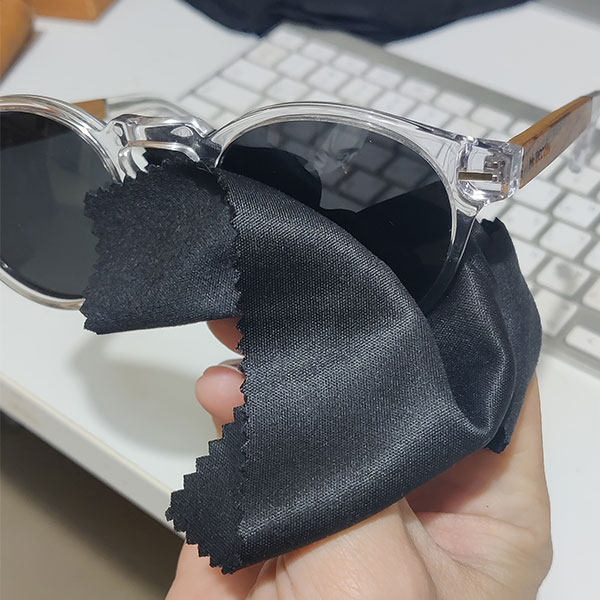
What Should You Never Use to Clean Sunglasses?
Clothing fabric. The most common cause of lens scratches. Fabric picks up dust and grit throughout the day. Wiping a lens with contaminated fabric drags particles across the optical surface under pressure. The resulting micro-scratches accumulate into visible haze that cannot be polished out of coated lenses.
Paper products. Tissues, paper towels and napkins are made from wood fibers harder than most lens coatings. Even “soft” paper towels are abrasive at the microscopic level relevant to optical surfaces.
Ammonia or alcohol-based glass cleaners. These damage lens coatings – particularly AR coatings and hydrophobic treatments – and can degrade acetate frame materials with repeated use.
What Is the Right Way to Clean Sunglasses?
A simple three-step routine handles most everyday cleaning without risk of damage.
Step 1 – Rinse. Run the lenses under lukewarm water. This removes loose dust and grit without friction. Cold water is fine; avoid hot water as it can affect some coatings and warp acetate frames. This is the step most people skip, and it’s the step that prevents most scratches.
Step 2 – Soap. Apply a small drop of mild dish soap to each lens and gently work it across the surface with clean fingertips. Dish soap removes oils, sunscreen and skin residue that water alone doesn’t clear. Use light pressure in circular motions. Clean the frame too – especially nose pad areas where skin oil accumulates.
Step 3 – Dry. Rinse thoroughly, shake off excess water, then blot dry with a clean microfiber cloth. Don’t rub – blot, or use light strokes on a fully wet surface where water provides lubrication.
“Three years with these glasses and they still look brand new. Solid quality.”
How Do You Clean Coated Lenses Without Damaging Them?
Anti-reflective coatings are the most delicate common lens treatment. Clean them using the rinse-soap-rinse-blot method above. Avoid any solvent-based cleaner. Replace your microfiber cloth regularly – a cloth that has picked up grit from a bag can damage AR coatings just as contaminated clothing does. The American Academy of Ophthalmology notes that lens coating damage is cumulative and irreversible – prevention is the only real option.
Hydrophobic and oleophobic coatings repel water and oil, making cleaning easier. But these coatings have a finite lifespan and degrade with cleaning over time. Alcohol-based cleaners accelerate their degradation significantly. The gentle approach extends their effective life.
How Do You Care for Wood Temples?
Natural wood temples are finished with a protective coating that seals the grain against moisture. After saltwater exposure or heavy sweating, rinse with fresh water and dry thoroughly with a soft cloth. Allow them to air dry completely before storing – wood that stays damp develops surface staining and can eventually crack at the grain. This applies to all our wooden temple sunglasses, from the Sumatra to the Paloma.
Every few months, a light application of a natural wood conditioner – beeswax or food-grade mineral oil – helps maintain the finish. Apply a small amount with a cloth, let it absorb for a minute, then buff off the excess. This simple step extends the life and appearance of wood temples considerably.
Avoid acetone, alcohol-based cleaners and solvent-based products on wood. These strip the protective finish and expose raw wood to damage.
| Frame Material | Cleaning Method | Avoid |
|---|---|---|
| Acetate | Mild soap and water, soft cloth | Acetone, strong solvents, prolonged soaking |
| Natural wood temples | Damp cloth, dry promptly | Soaking, harsh cleaners, leaving wet |
| Stainless steel hinges | Rinse with fresh water after saltwater use | Salt residue left on surface, bleach |
| Polarized lenses | Rinse first, mild soap, microfiber blot | Dry wiping, paper products, alcohol cleaners |
How Should You Store Sunglasses to Protect Them?
A hard case is the most effective protection when glasses are not being worn. Most scratches, frame distortions and hinge damage happen during casual storage – in bags, pockets, on tables where other objects sit on top. A case eliminates most of these scenarios entirely.
Placing sunglasses lens-down on any surface is a reliable way to accumulate scratches. If you set them down without a case, place them lens-up or folded on the temple arm. Don’t leave them on a car dashboard – interior temperatures in summer can reach 80-90°C, enough to permanently warp acetate frames and delaminate lens coatings. For a full breakdown of what heat does to frames and how to avoid it, see our guide on protecting sunglasses from heat damage.

How Do You Maintain the Hinges?
Spring hinges allow the temple arm to open beyond 90 degrees without stressing the frame. Rinse hinges with fresh water after beach or saltwater use and move the temple arms through their full range of motion during rinsing. If a hinge becomes stiff, a small amount of silicone lubricant at the barrel, worked in by opening and closing several times, usually restores smooth action.
Loose hinge screws are a common cause of wobbly temple arms. Most opticians tighten them at no charge, or a small eyeglass screwdriver works at home – but don’t overtighten, the threads strip easily.
Worth Considering
Paloma – bio-acetate round frame with recycled wood temples and TAC polarized lenses. Ships with a hard eco case and microfiber cloth included on every order.
Mr. Woodini was founded in 2018 by Idan Birenberg. We design eco-accessories built from materials with a story – recycled wood temples, natural stone beads, handcrafted construction. Our guides are written from direct experience: testing frames daily, sourcing materials, and building pieces by hand. Learn more about us.
Questions About Cleaning Sunglasses
Rinse under lukewarm water first to remove loose particles, then apply a drop of mild dish soap and work gently with clean fingertips. Rinse again and blot dry with a clean microfiber cloth. Never wipe a dry lens – always rinse before touching the surface.
Yes – one drop of mild dish soap in lukewarm water is safe and effective for most frames including acetate. Avoid heavily fragranced or antibacterial formulas. Rinse thoroughly so no residue remains on the lens surface.
Wipe with a damp cloth and dry immediately after saltwater or sweat exposure. Every few months, apply a small amount of beeswax or food-grade mineral oil to maintain the finish. Avoid alcohol-based cleaners and acetone – both strip the protective coating from the wood.
Surface haze is usually coating damage from harsh products or heat. Haze between lens layers is delamination. Neither can be fixed at home – both require lens replacement. The best approach is prevention: avoid dry wiping, heat and solvent-based cleaners.