




Reading time: approximately 5 minutes
Transparent frames work because they don’t fight the face. The frame is visible, but it doesn’t add color or visual weight – which makes them more adaptable across face shapes and skin tones than colored acetate.
Why Have Clear Frames Become so Popular?
Clear and transparent frames have been growing steadily in eyewear since around 2017 and have reached mainstream adoption across sunglasses and optical frames alike. The reason isn’t primarily fashion – it’s practicality. A clear frame coordinates with any outfit because it doesn’t introduce a color that competes with clothing or accessories. It’s the eyewear equivalent of a neutral shoe: visible as a design element, but not demanding coordination.
The staying power of the trend comes from the fact that it solves a real problem. Most people own one or two pairs of glasses. A clear frame works across all the contexts those glasses need to handle – work, casual, outdoor, dressed up – in a way that a strongly colored frame doesn’t. For context on how clear frames fit into broader eyewear trends, see the eyewear trends guide.
What Makes Quality Clear Acetate Different from Cheap Plastic?
Not all clear frames are equal. Premium cellulose acetate has depth and clarity even in transparent form. Light passes through it in a way that shows the material’s thickness and the slight natural variation within the acetate – giving the frame a three-dimensional quality. Cheap clear plastic looks flat and thin, with a slightly hazy or milky appearance. Acetate also allows for varying levels of transparency: fully clear, slightly tinted or frosted translucent. For more on why acetate produces this result, see the acetate frames guide.
Who Do Clear Frames Suit?
Clear frames suit a broader range of face tones and hair colors than most frame colors. Dark frames need to be balanced against skin tone and can look heavy on lighter complexions. Clear frames don’t introduce a color reference at all, so they adjust to the face rather than requiring the face to adjust to them.
People with lighter hair – blonde, grey, silver – often find that clear frames are the most flattering option because they don’t create a high-contrast band across the face. People with darker hair and skin tones can wear clear frames to create a deliberately minimal look where the frame is present but doesn’t dominate. Face shape affects clear frames the same way it affects any frame – for a full face shape guide, see the sunglasses selection guide.
Which Lens Color Works Best with Clear Frames?
In clear frames, the lens color becomes more prominent as a design element precisely because the frame doesn’t compete with it. Grey lenses are the most common pairing – they maintain the neutral, understated quality of the frame. Brown and amber lenses add warmth. Mirrored lenses in clear frames create a more dramatic contrast – a clear acetate frame with a blue or silver mirrored lens is a strong visual statement but is less versatile than grey or brown. Colored lenses (rose, yellow, blue) are more trend-specific but work when the outfit is kept simple.
How Do You Style Clear Frames?
In minimal, clean-lined outfits, clear frames add a design element without introducing color. In more complex or colorful outfits, clear frames step back and let the clothing be the statement. Either approach works because the frame isn’t pulling in a direction that conflicts.

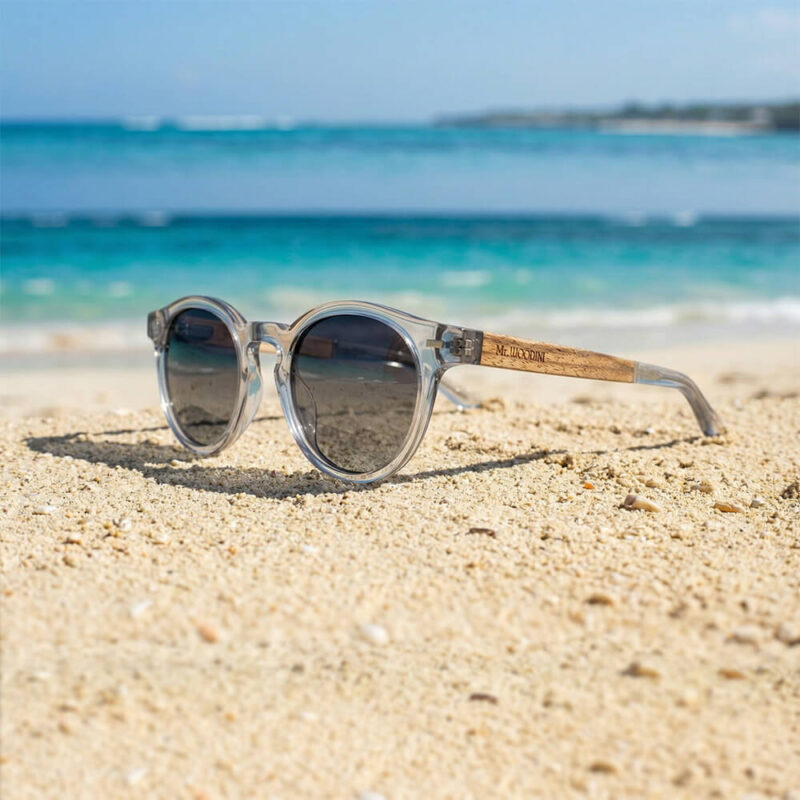
Malibu – clear transparent acetate with recycled wood temples
Clear frames with natural wood temples add a material contrast that makes the combination more interesting than a fully transparent frame. The wood’s warm texture against clear acetate creates a deliberate interplay between natural and minimal – particularly effective with natural fabrics like linen and cotton.
How Do You Care for Clear Frames?
Transparent frames show what dark frames hide. Fingerprints are immediately visible on clear acetate. Oils from skin transfer to the frame surface and show as cloudy patches. Wipe the frame with a soft cloth after each use. For deeper cleaning, mild soap and lukewarm water remove oil buildup without damaging the acetate surface. Avoid alcohol-based cleaners, which can cloud acetate over time.
Clear acetate can yellow slightly over years of UV exposure – more visible in transparent frames than dark ones. Keeping frames away from prolonged UV exposure when not worn slows this process. For more on heat and UV effects on acetate, see the heat damage guide.
| Frame Type | Best Lens Pairing | Style Context |
|---|---|---|
| Fully clear acetate | Grey or brown | Minimal, everyday, versatile |
| Translucent tinted | Complementary or contrasting color | Fashion-forward, considered |
| Clear with wood temples | Grey, brown, green | Natural materials, craft aesthetic |
| Clear with mirrored lens | Silver, blue, gold mirror | Statement, beach, editorial |
“I ordered based on the photo alone, took the risk that they might not fit – and they fit perfectly. What a frame.”
Worth Considering
Malibu – clear transparent bio-acetate with recycled wood temples. The primary clear frame in the collection, with round proportions that work well on angular and square face shapes.
Browse the full women’s sunglasses collection for additional clear frame options including Paloma.
Mr. Woodini was founded in 2018. We design eco-accessories built from materials with a story – recycled wood temples, natural stone beads, handcrafted construction. Our guides are written from direct experience: testing frames daily, sourcing materials, and building pieces by hand. Learn more about us.
Questions About Transparent Sunglasses
Clear acetate frames are visually light – they don’t add color or weight to a face. They work with every outfit and skin tone, making them one of the most versatile frame choices available. Most people own one or two pairs of glasses; a clear frame handles every context without coordination effort.
Yes. Because they don’t add visual weight or color contrast, clear frames are forgiving across face shapes. The geometry of the frame (round, square, wayfarer) still matters for face shape matching – but the transparency itself doesn’t create any new constraints.
Yes. Clear acetate has the same structural properties as colored acetate – flexible, durable and long-lasting with basic care. The transparency is a property of the material, not a weakness. Quality acetate in any color has a realistic lifespan of 5-10 years with proper care.
Grey lenses are the most versatile – they maintain the neutral quality of the frame. Brown and amber add warmth. Mirrored lenses (blue, silver, gold) create a stronger contrast and more deliberate statement. The clear frame lets the lens color speak more prominently than it would in a dark or colored frame.