



Reading time: approximately 5 minutes
Sunglasses go crooked from being set down on one arm, stored in a bag without a case, or just from regular wear. Most minor alignment issues are fixable at home with heat and light pressure – no tools required.
Why Do Sunglasses Go Crooked?
Putting them on and taking them off repeatedly with one hand gradually pulls one temple wider than the other. Sitting on them, dropping them, or storing them in a bag without a case introduces bends and twists. Heat from a car dashboard or direct sun can soften acetate enough for gravity to warp it – for more on this, see the heat damage guide.
None of this means the frames are broken or need replacing. Crooked sunglasses are almost always fixable. The key distinction is between acetate frames (which need heat to adjust safely) and metal frames (which can be adjusted cold but require careful, even pressure).
How Do You Diagnose the Problem?
Place the frames on a flat surface. Look from the front: do both lenses sit at the same height? Is one temple resting on the surface while the other lifts? Look from the side: do the temples angle down evenly? Then put the frames on and look in a mirror. This diagnosis tells you where to make the adjustment – most crookedness comes from an uneven temple, misaligned nose pads, or a twisted frame front. Each has a different fix.
How Do You Adjust Acetate Frames?
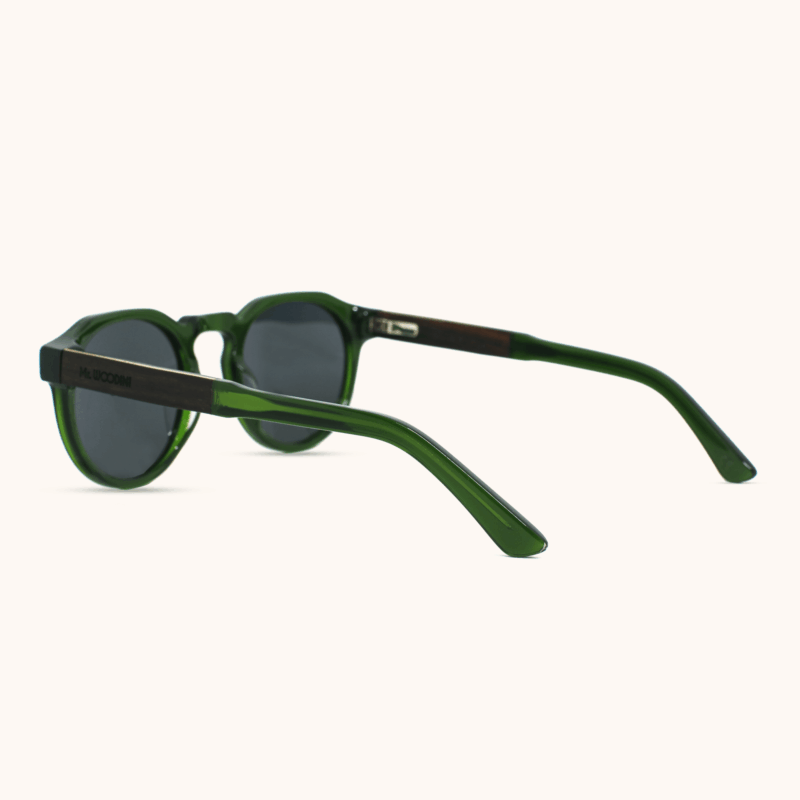
Acetate becomes pliable when warmed and holds its new shape as it cools. Run warm (not boiling) water over the area you want to adjust for 20-30 seconds. The acetate should feel slightly flexible when you press it. Make a small, controlled bend in the direction needed, then hold it in position for 30-60 seconds while the acetate cools.
Don’t force a large bend in one step – multiple small adjustments with cooling time between each one are safer and more precise. A hairdryer on medium setting works for targeted heating. Keep the dryer moving and don’t hold it in one spot for more than a few seconds. Over-heating acetate can blister or discolor the surface. For more on why acetate behaves this way, see the acetate frames guide.
How Do You Adjust Metal Frames?
Metal frames don’t need heat to adjust. The risk is different from acetate: metal can snap at a stress point – usually the junction between temple and hinge – if bent too sharply or repeatedly in the same spot. Apply pressure slowly and evenly. Hold the front of the frame steady with one hand and apply gentle, controlled pressure to the temple with the other. Titanium frames are particularly springy – they may require a slightly larger bend than expected because they spring back partially after releasing pressure.
How Do You Fix Uneven Temples?
Uneven temples are the most common alignment problem – one temple sits higher than the other when the frames are on a flat surface. The adjustment point is typically near the hinge. For acetate frames, warm the hinge area and the first few centimeters of the temple. Then gently bend the lower temple upward by a small amount. Place the frame on a flat surface to check. Repeat until both temples rest flat.
Spring hinges – standard on Mr. Woodini frames – absorb much of the flex that causes temple drift over time. For more on how they work, see the spring hinges guide.
How Do You Fix Nose Pad Problems?
Many frames have adjustable nose pads mounted on small metal arms. If the frame slides down your nose, the pads are too wide apart – bend the arms slightly inward so the pads grip the nose bridge more firmly. If the frame feels pinched, the pads are too close – bend the arms slightly outward. If one side of the frame sits higher and the temples look aligned, compare the two pads from the front – if one arm is bent higher than the other, carefully adjust the lower one upward until they match.
When Should You See an Optician?
Home adjustment handles most minor alignment problems, but some issues are better handled professionally. Take frames to an optician if: the frame is significantly warped and needs major reshaping; a hinge is loose, misaligned or has lost a screw; the frame front is twisted; or the frame has natural wood temples, which should not be bent at home. Most opticians adjust frames for free or for a small fee, even if you didn’t buy the frames from them.
| Problem | Likely Cause | Fix | DIY or Optician? |
|---|---|---|---|
| One side sits higher | Uneven temple angle | Bend lower temple up at hinge area | DIY (acetate: warm first) |
| Frame slides down nose | Nose pads too wide | Bend nose pad arms inward | DIY |
| Frame tips forward | Temple curve too low | Adjust temple hook section upward | DIY (carefully) |
| Twisted frame front | Heat warping or impact | Warm and reshape (acetate) | Optician preferred |
| Loose hinge / screw | Wear and vibration | Tighten with precision screwdriver | DIY or optician |
Worth Considering
Akira – bio-acetate frame with recycled wood temples and stainless steel spring hinges. Spring hinges absorb the flex that causes temple drift over time – reducing how often adjustment is needed in the first place.
Browse the full sunglasses collection – all models include spring hinges as standard.
Mr. Woodini was founded in 2018. We design eco-accessories built from materials with a story – recycled wood temples, natural stone beads, handcrafted construction. Our guides are written from direct experience: testing frames daily, sourcing materials, and building pieces by hand. Learn more about us.
Questions About Sunglasses Adjustment
For minor bends in acetate frames – yes, with warm water and gentle pressure. Metal frames can be bent back carefully by hand. Don’t force cold acetate – it can crack. Wood temples should not be bent at home; take them to an optician.
When the frame is significantly warped, when a hinge is loose or broken, when the frame front is twisted, or when the temples are natural wood. Opticians adjust frames routinely and usually at no charge – faster and safer than repeated home attempts on a difficult problem.
Sitting on them, leaving them face-down, putting them on with one hand repeatedly (stresses one temple), or heat exposure that causes uneven warping. Most causes are preventable – use both hands, store in a hard case, and keep out of direct heat.
Yes, with caution. Use medium heat, keep the dryer moving and don’t hold it in one spot for more than a few seconds. Warm water is actually safer and more controlled for most home adjustments – it heats evenly without risk of blistering the surface.