


Reading time: approximately 6 minutes
Fishing sunglasses are a functional category – the lens color affects what you see beneath the surface, and polarization is not optional. The frame needs to stay on a wet face. Style is secondary to those two requirements.
Why Do Polarized Lenses Matter for Fishing?
Without polarized lenses, a water surface in sunlight reflects the sky back at you. Fish, structure, drop-offs and weed beds below the surface are hidden behind that reflection. A polarized lens blocks horizontally oriented light waves – the type produced by reflection off flat surfaces like water. The reflection is eliminated or dramatically reduced, and the water becomes semi-transparent in appropriate conditions. In shallow, clear water with good light angles, a quality polarized lens allows you to see fish several feet below the surface that would be completely invisible without polarization.
For a full explanation of how polarization works and when it matters beyond fishing, see the polarized lenses guide. According to Prevent Blindness, extended water exposure without UV400 protection is one of the leading causes of cumulative eye damage in outdoor activities.
Which Lens Color Works Best for Fishing?
All polarized lenses cut glare. Lens color determines which wavelengths pass through, which affects contrast, depth perception and how well you can read different water conditions.
Amber and copper lenses enhance contrast and warm the color palette. They perform best in low-to-medium light and are particularly effective in shallow, stained or tannin-colored water where you need contrast to separate fish from the bottom. Most popular for bass, flats and freshwater river fishing.
Grey lenses reduce brightness without altering color balance. Best for bright, open conditions – offshore saltwater, large lakes in full sun, tropical flats at midday. Grey keeps colors accurate, which matters when reading water color to find temperature breaks or current edges.
Green lenses sit between amber and grey in terms of color enhancement. They work well in inshore saltwater, estuaries and conditions where light varies through the day.
What Frame Fit and Coverage Do You Need for Fishing?
A polarized lens only works for light that passes through it. Light entering around the frame – from the top, sides or bottom – reaches the eye without polarization and contributes to glare and eye fatigue. For fishing, the frame should sit close to the face with minimal gaps at the top and at the temples. Frames with rubber nose pads and temple grips hold position better when you are sweating or when spray hits your face.
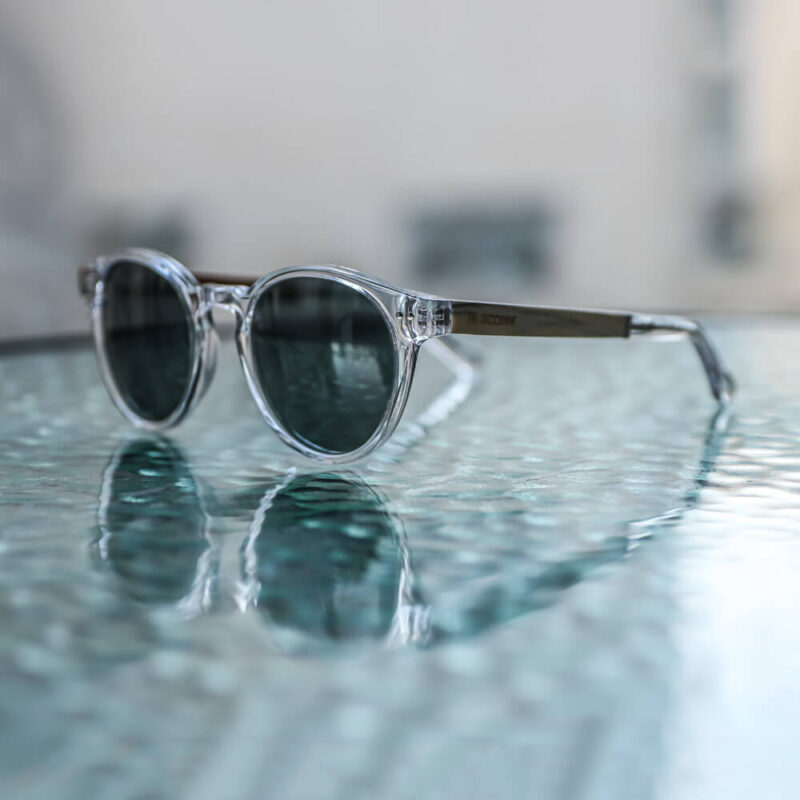
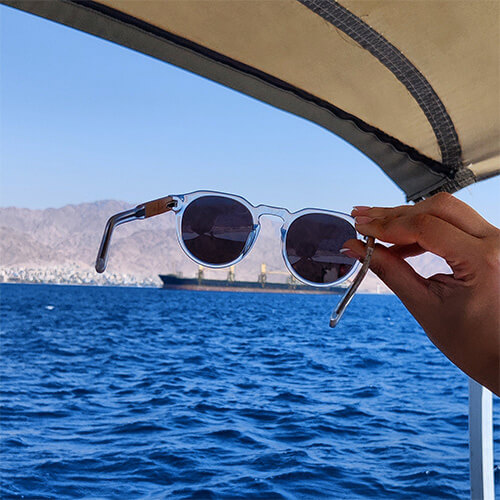
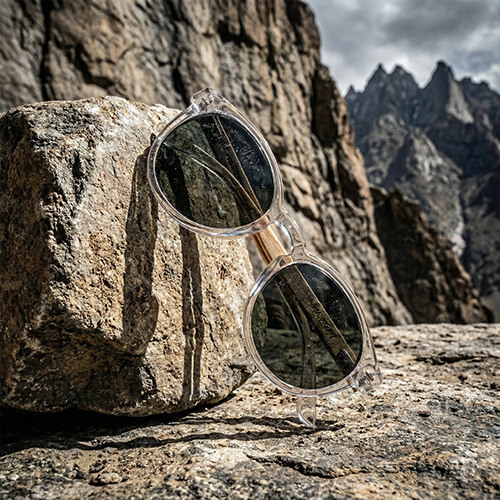
Malibu – transparent acetate frame with recycled wood temples
What Frame Styles Work Best for Fishing?
Wraparound frames curve around the face to reduce peripheral light entry. They are the most effective design for active fishing because they cover more of the visual field and stay on the face better during movement. The trade-off is that very aggressive wraparounds can introduce peripheral distortion with polarized lenses.
Semi-wrap frames offer a middle ground – more coverage than flat frames, less distortion than full wraps. For most fishing situations, a semi-wrap with a well-fitting bridge is the practical choice.
Flat frames are more appropriate for casual fishing or light freshwater use. More comfortable for extended wear but allow more peripheral light in.
What Frame Materials Hold Up in Saltwater?
Saltwater is corrosive. It attacks metal hardware, degrades some plastics and is particularly hard on spring hinge mechanisms with exposed metal components. Acetate frames resist corrosion well – rinse after salt exposure and allow to dry. Stainless steel spring hinges handle saltwater better than standard alloy hinges. Natural wood temples need more care: rinse with fresh water after every saltwater session and allow to dry completely before storing.
| Water Type | Recommended Lens | Frame Style |
|---|---|---|
| Offshore saltwater | Grey | Wraparound or semi-wrap |
| Inshore / estuary | Green or copper | Semi-wrap |
| Shallow tropical flats | Amber or copper | Wraparound with top coverage |
| Freshwater rivers | Amber | Semi-wrap or flat |
| Large freshwater lakes | Grey or green | Semi-wrap |
How Do You Care for Fishing Sunglasses?
Saltwater, sunscreen and fish oils all damage lens coatings and frame finishes over time if left on the surface. Rinse with fresh water after every saltwater session and wipe with a clean microfiber cloth. For a detailed cleaning guide covering acetate frames and wood temples, see the sunglasses cleaning guide.
Store sunglasses in a hard case when not in use on the boat. Decks are hazardous environments for eyewear – a retainer cord keeps them accessible and prevents them going overboard. Inspect hinges periodically: rinse and move the temple arms through their full range of motion after each trip to keep the mechanism clear of salt deposits.
“The polarized lenses significantly cut glare – excellent for driving and outdoor use. The spring hinges make them sit perfectly on the face.”
Worth Considering
Malibu – bio-acetate frame with recycled wood temples, stainless steel spring hinges and TAC polarized lenses with UV400. Well-suited for boat days, coastal outdoor use and casual fishing.
Browse the full sunglasses collection – UV specs and frame dimensions listed on every product page.
Mr. Woodini was founded in 2018. We design eco-accessories built from materials with a story – recycled wood temples, natural stone beads, handcrafted construction. Our guides are written from direct experience: testing frames daily, sourcing materials, and building pieces by hand. Learn more about us.
Questions About Sunglasses for Fishing
Polarized lenses eliminate horizontal glare from water surfaces, allowing you to see below the surface clearly. This is directly useful for spotting fish and reading water conditions. Non-polarized lenses cannot do this regardless of how dark the tint is.
Depends on the water type. Amber and copper for shallow water and low-light conditions. Grey for offshore and bright open water. Green for inshore saltwater and variable light. Amber is the most versatile starting point for freshwater fishing.
Secure fit with minimal gaps around the frame, corrosion-resistant materials for saltwater use, and spring hinges that handle repeated on-off use. Wraparound or semi-wrap styles reduce peripheral light entry that undermines polarization effectiveness.
Rinse with fresh water after every saltwater session, paying attention to hinge areas where salt deposits accumulate. Dry thoroughly before storing. Use a hard case on the boat. Stainless steel hinges resist corrosion better than cheaper alloy alternatives.