


Reading time: approximately 7 minutes
Some frame shapes have been worn by the same faces for decades. The ones that lasted did so because they fit face proportions well – the cultural association helped, but it wasn’t enough on its own.
1. Audrey Hepburn – Oversized Cat-Eye
The opening scene of Breakfast at Tiffany’s (1961) established a single image that still defines oversized sunglasses in popular culture. Audrey Hepburn’s Holly Golightly wore large, dark cat-eye frames that functioned simultaneously as glamour accessory and emotional shield. The frames were produced by Oliver Goldsmith, a British eyewear manufacturer. The oversized proportion was unusual at the time and became influential precisely because it was unexpected on a delicate face.
Cat-eye frames have cycled through fashion multiple times since 1961 – including as one of the strongest eyewear trends in 2026. The cultural anchor remains one performance in one film.
2. James Dean – Wayfarers
The Wayfarer’s flat front, slightly angled top edge and keyhole bridge were genuinely different from the dominant metal frames of the 1950s. The thick acetate construction read as bold and unconventional. Dean’s association with the frame in the mid-1950s gave it its first major cultural moment. The frame went through commercial decline in the 1970s before being revived by deliberate product placement in 1980s films – one of the most successful fashion campaigns in history.
3. Jackie O – Oversized Shields
Jacqueline Kennedy Onassis wore sunglasses as a practical tool – she was one of the most photographed people in the world for decades and used large frames to create visual privacy. The effect was the opposite of anonymity: the large, dark shields became her signature and made her more recognizable, not less. The “Jackie O” description is now generic enough to appear in product descriptions without further explanation – a sign of how completely the style became associated with a single wearer.
4. John Lennon – Round Wire Frames
Lennon’s round wire-rimmed glasses, worn consistently from the late 1960s onward, are among the most replicated eyewear shapes in cultural history. The frames were simple – thin gold wire rims, perfectly circular lenses, no ornamentation. Round frames have a history predating Lennon by over a century – they were standard in the Victorian era. His association gave them a countercultural and artistic dimension that persists.
5. Tom Cruise in Top Gun – Aviators
The 1986 film was not the origin of the aviator frame – Ray-Ban’s Aviator dates to 1937, designed for the US military. But the film’s association drove a documented 40% sales increase in the year of release. The aviator’s teardrop lens shape, thin metal frame and flat bridge have remained fundamentally unchanged across decades because they solve a functional problem – maximum lens coverage – with a form that proved broadly flattering.
6. Anna Wintour – Chanel Shields
Vogue editor Anna Wintour has worn large shield-style sunglasses in virtually every public appearance for decades. The consistency is itself the statement – the glasses function as professional armor and personal brand simultaneously. Within the fashion industry, her consistent association with the style made oversized dark shields a default signifier of editorial authority.
7. Kurt Cobain – Cat-Eye
Cobain’s adoption of women’s cat-eye frames in the early 1990s was deliberately transgressive. Cat-eye had been culturally coded as feminine since the 1950s, and wearing them within a genre built on conventional masculinity was a deliberate statement. What made them iconic was the combination of subversion and confidence – he wore them as if there was nothing to explain.
8. Kanye West – Shutter Shades
The shutter shades worn in the Stronger video (2007) are a useful case study in the difference between iconic and lasting. The frames – horizontal louvered slats with no actual vision function – became one of the defining novelty eyewear moments of the mid-2000s. The style did not last because it could not: frames with no functional lenses have a logical ceiling on longevity.
9. Elton John – Oversized Tinted
Elton John’s eyewear across the 1970s is an entire category of its own. He worked with frame designers to produce pieces that matched his stage costumes – oversized, often bejeweled, occasionally illuminated. The lasting influence is on the permission structure for oversized and unconventional frames. The lesson for everyday dressing: the right frame in the right context looks considered; the same frame in the wrong context looks strange.
10. Rihanna – Shield Frames
Rihanna’s consistent use of extreme shield frames – single-piece curved lenses that wrap across the face with minimal frame structure – has been one of the most influential eyewear design directions of the past decade. The frames she has worn are typically custom or very limited production. The commercial effect has been to drive demand for shield-adjacent designs across the market.
What Makes a Pair Iconic?
The frames that achieved cultural staying power were not simply fashionable at the time – they matched the wearer’s complete image, were worn with full commitment, and appeared at culturally significant moments. Most also had genuine quality: acetate construction, optically functional lenses, durable hardware. A cheap frame worn in the same moment rarely achieves the same result because the materiality reads differently up close.
| Style | Associated With | Still Relevant |
|---|---|---|
| Oversized cat-eye | Hepburn, Cobain | Yes – strong in 2026 |
| Wayfarer | James Dean | Yes – perennial classic |
| Oversized shield | Jackie O, Wintour | Yes – dominant in 2026 |
| Round wire | John Lennon | Yes – ongoing revival |
| Aviator | Top Gun, military | Yes – permanent classic |
| Shutter shades | Kanye West | No – moment-specific |
Worth Considering
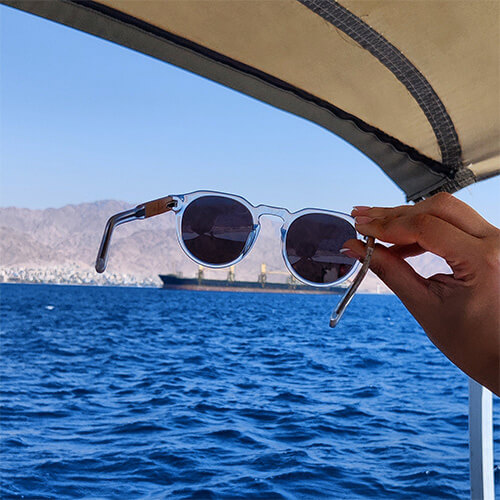
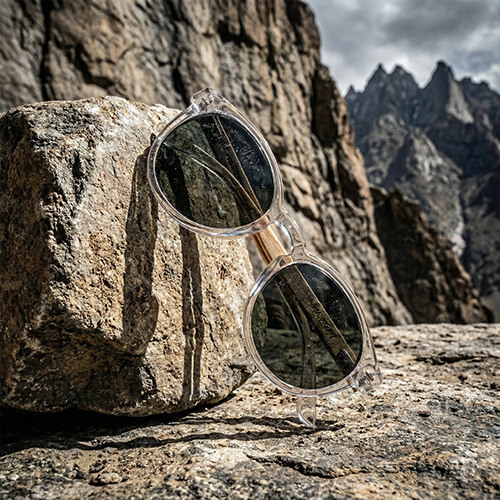
Void – a strong acetate frame with recycled wood temples. The same combination of quality material and considered shape that appears in virtually every iconic pair on this list.
Browse the full best sellers collection for frames built from genuine materials.
Mr. Woodini was founded in 2018. We design eco-accessories built from materials with a story – recycled wood temples, natural stone beads, handcrafted construction. Our guides are written from direct experience: testing frames daily, sourcing materials, and building pieces by hand. Learn more about us.
Questions About Iconic Sunglasses Styles
Wayfarers, aviators, round frames and classic rectangulars have all been in continuous production for decades. They work because their proportions are fundamentally balanced – not because they follow any particular trend. Cat-eye and oversized shapes cycle back regularly rather than staying permanently.
Proportional balance, material quality and cultural adoption at a significant moment. Iconic designs tend to be associated with specific wearers or moments, but their longevity comes from being genuinely well-designed – not just fashionable at the time.
Classic shapes are a safer long-term investment – you won’t look dated in three years. Trend pieces work if you rotate accessories frequently. For a quality pair you intend to wear for years, go classic. Every shape on this list has proven its longevity over decades.
The ones that lasted had functional optically correct lenses, proportions that work on real faces, and quality materials. Novelty shapes like shutter shades were memorable but couldn’t sustain everyday wear. Frames that lasted were actually comfortable and useful to wear.