


Reading time: approximately 6 minutes
Acetate frames perform well in most outdoor conditions, but they have limits. Heat warps them; direct impact cracks the hinges. For high-intensity activity, the question isn’t whether acetate is durable – it’s whether it’s the right tool for that use.
Why Does Frame Material Matter in the Field?
When you’re outdoors for extended periods, sunglasses take a different kind of wear than they do in everyday city use. Frames get compressed into bags, exposed to sweat and sunscreen, dropped on hard surfaces and left in hot vehicles. A frame that breaks mid-activity leaves you without eye protection when you need it. Lenses that fog, scratch easily or lack proper UV filtering can actually impair performance rather than support it.
Acetate with wooden temples is one of the more underrated combinations for demanding outdoor use. It’s not the lightest sport option (that’s polycarbonate) and it’s not the ultra-minimal tactical look (that’s wire metal). But for versatility, durability and comfort in varied conditions, it holds up extremely well – without the skin irritation risks that come with cheaper metal alloys.
What Is the Acetate Advantage for Outdoor Use?
Flexibility under stress. Unlike polycarbonate or nylon – which are petroleum-based – acetate has a molecular structure that gives it more flexibility. When a frame comes under stress, acetate bends. A rigid material snaps. A flexible one absorbs the force and returns to shape. In practice, this means an acetate frame that gets sat on, compressed in a bag or dropped from a reasonable height will typically survive intact. For a full technical explanation, see the acetate frames guide.
Heat and cold comfort. Metal frames conduct heat efficiently. In direct sun, metal temples can become genuinely hot against the skin. In cold weather, the same conductivity means metal feels cold immediately on contact. Acetate stays much closer to ambient temperature and never reaches the uncomfortable extremes that metal can – a real comfort factor over the course of a long day outdoors.
Hypoallergenic. A significant portion of the population reacts to nickel, which is present in most metal eyewear alloys. Acetate contains no metals and has no known sensitization potential, making it reliable for anyone wearing sunglasses for long, sweaty periods.
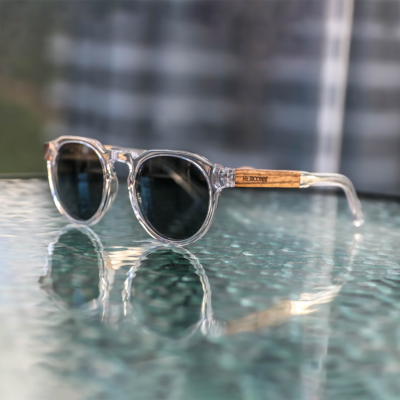
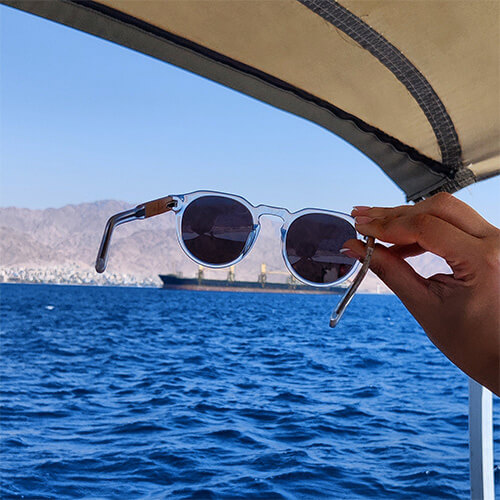
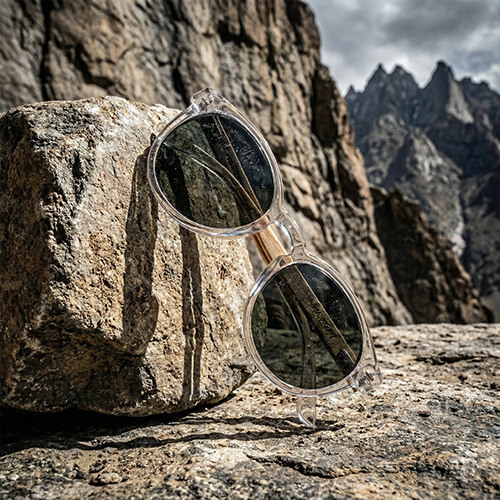
Sumatra – acetate frame with natural wood temples
Why Do Wooden Temples Work in Demanding Conditions?
The temples are often where frames fail first in outdoor use. Standard plastic arms flex and eventually fatigue at the hinge connection. Metal arms bend and hold the bend, gradually losing proper fit over time. Wooden temples behave differently from both.
Wood is naturally rigid without being brittle in the way plastic is. A wooden temple holds its shape under normal stresses without the progressive deformation that affects metal. It also doesn’t develop the hinge-area stress fractures that eventually appear in thin plastic arms under repeated flex. The wood used in quality eyewear is finished and sealed to resist moisture absorption – preventing swelling and warping from extended sweat exposure.
What Do the UV Protection Numbers Mean?
UV400 is the standard to look for. It means the lenses block all UV radiation up to 400 nanometers – covering both UVA and UVB completely. Cheaper lenses labeled only as “UV protection” or “UV380” leave a gap in UVA coverage. In high UV environments – high altitude, open water, snow, desert – incomplete UV protection causes real long-term eye damage. Dark lens tint alone does not indicate UV protection. A dark lens without proper UV coating actually causes more harm than no sunglasses at all.
Polarization vs impact resistance. These are two separate properties that are often confused. Polarization reduces glare from reflective surfaces – water, roads, snow. It doesn’t make lenses stronger or more shatter-resistant. Impact resistance is a separate specification.
| Property | Acetate + Wood | Metal | Polycarbonate |
|---|---|---|---|
| Impact resistance | High – flex absorbs force | Moderate – dents, can snap | Moderate – brittle under point impact |
| Heat / cold comfort | Excellent – low conductivity | Poor – conducts extremes | Good |
| Hypoallergenic | Yes – no metals | Varies – nickel risk | Generally yes |
| Sweat / moisture | Good – sealed wood, acetate unaffected | Poor – oxidation risk at screws | Good |
| Weight | Light to moderate | Moderate to heavy | Very light |
What Should You Look for in a Durable Outdoor Frame?
Spring hinges are the single most important structural feature for outdoor durability. They flex beyond the standard open position – surviving being pushed into bags or sat on – rather than stressing the metal barrel at its fixed stop point. Stainless steel barrel construction prevents corrosion from sweat exposure. For more on hinge mechanics, see the spring hinges guide.
Frame thickness matters too: 4-6mm for acetate front frames gives enough material to absorb stress at the lens groove. Thin frames have less tolerance before the lens groove cracks. A thick keyhole or saddle bridge distributes nose pressure and handles impact better than thin bar bridges.
How Do You Care for Sunglasses in Demanding Conditions?
The single most important thing you can do to extend frame life in outdoor conditions is consistent storage. A hard case prevents the compression damage, lens scratches and hinge stress that accumulate when sunglasses are tossed into bags without protection.
Second: rinse sweat and sunscreen off the frames regularly. Sunscreen can cloud acetate surfaces if left for extended periods. Sweat is mildly acidic. Neither will immediately damage quality frames, but routine rinsing with water prevents buildup that becomes a problem over months of active use.
For wooden temples specifically: avoid prolonged immersion in water. The wood handles sweat and light rain without issue, but soaking can compromise the seal over time. One thing to avoid with both acetate and wood: leaving frames in a closed hot car. Interior temperatures can reach 60-80°C on hot days – enough to warp acetate and loosen hinge adhesives. For a full breakdown, see the heat damage guide. If frames do warp slightly, see the frame adjustment guide.
Worth Considering
Sumatra – classic round acetate front with zebrawood temples, sized for a secure fit during movement. Stainless steel spring hinges and UV400 polarized lenses standard.
Browse the full sunglasses collection – most shapes available in multiple colorways including tortoiseshell, solid black and lighter acetate tones with different wood combinations.
Mr. Woodini was founded in 2018. We design eco-accessories built from materials with a story – recycled wood temples, natural stone beads, handcrafted construction. Our guides are written from direct experience: testing frames daily, sourcing materials, and building pieces by hand. Learn more about us.
Questions About Durable Acetate Sunglasses
Acetate is more flexible than rigid plastic, which means it bends under stress rather than snapping. It also handles temperature changes better and is less prone to surface cracking over time. The plant-based molecular structure gives it different mechanical properties from petroleum-based plastics.
In a hard case when not in use. Away from heat – never on a car dashboard or in direct sunlight for extended periods. Heat is the primary cause of frame warping in both acetate and wood. Rinse off sweat and sunscreen regularly – mild acid and oil buildup degrades surfaces over time.
Minor bends can often be corrected by an optician using gentle heat – acetate softens predictably and holds a new shape as it cools. Significant warping is harder to reverse. Prevention is more effective than repair: proper storage and avoiding heat prevent most field damage.
No – these are two separate properties. Polarization reduces glare from reflective surfaces (water, snow, roads). Impact resistance is a separate lens specification relating to shatter resistance. For activities with significant impact risk, verify that lenses meet ANSI Z87.1 or EN 166 impact standards in addition to being polarized.