



Reading time: approximately 6 minutes
Prescription lenses can go into almost any frame – but not every frame is built to hold them well. Lens thickness, frame depth, and bridge width all affect whether the finished pair is comfortable and optically correct.
What Does Rx-Ready Actually Mean?
Rx-ready – short for prescription-ready – refers to eyewear frames specifically designed to accept prescription lenses. It describes a set of structural characteristics that determine whether a standard optician can fit corrective lenses into the frame.
A frame has to meet certain dimensional requirements for prescription fitting to work. The lens aperture needs to be large enough for the optician’s edging equipment to cut and seat the lens correctly. The lens groove needs to be the right depth. The frame material needs to withstand the heating process used to open the groove. And the frame curvature needs to stay within a range that doesn’t introduce optical distortion once the prescription lens is in place. For more on why acetate specifically handles this process well, see the acetate frames guide.
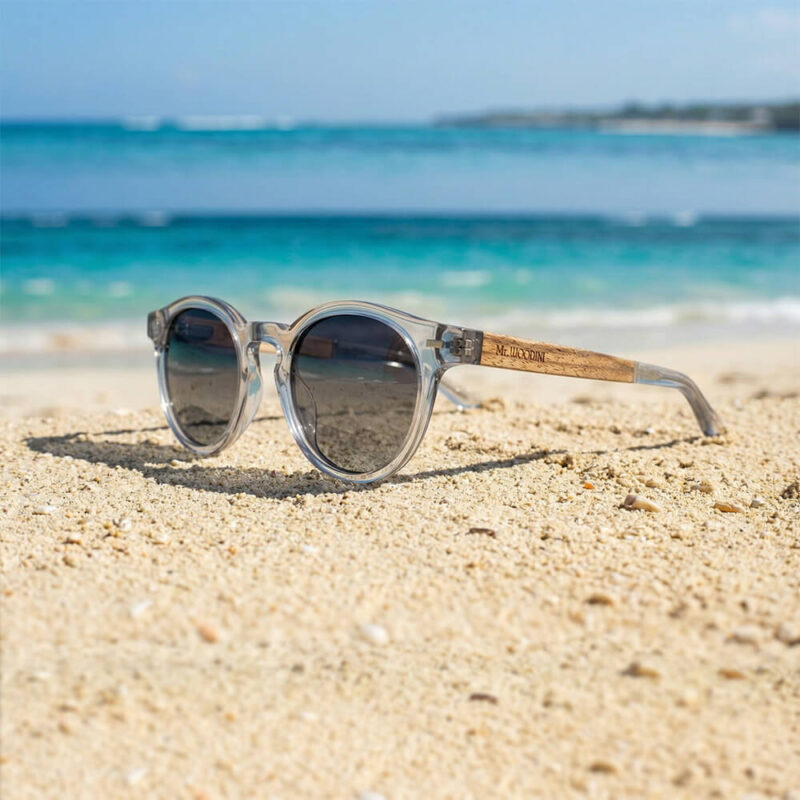
Paloma – bio-acetate frame suitable for prescription fitting
Why Does Rx-Ready Matter for Prescription Wearers?
Before Rx-ready sunglasses became common, people who needed corrective lenses had limited options for sun protection. They could wear their regular prescription glasses (no UV protection, not tinted), use clip-on tinted lenses (added weight, shifted position, optical issues), or invest in fully custom prescription sunglasses – an expensive option with limited frame choice.
Rx-ready changes this entirely. You choose the frame you want based on aesthetics, comfort and quality. You take it to your local optician, who replaces the factory lenses with prescription ones cut to your specification. The result is prescription sunglasses in a frame you actually want to wear, at significantly lower cost than the custom alternative.
What Makes a Frame Compatible with Prescription Lenses?
Lens aperture size. The lens opening needs to be large enough for your prescription lenses to be cut to size with adequate optical centering. Very small lens openings limit which prescription powers can be fitted.
Wrap angle. Highly curved or wraparound frames create optical distortion when prescription lenses are fitted, because the lenses aren’t perpendicular to the line of sight. Most standard frames (up to about 8-10 degrees of wrap) are fine. Extreme sport-style wraparound frames generally aren’t compatible with standard prescriptions.
Frame material. The optician uses controlled heat to open the lens groove and seat the lens. Acetate responds well to this process – it softens predictably at the fitting temperature and holds the lens securely as it cools.
Frame depth for progressives. Progressive lenses require a minimum vertical measurement of at least 28-30mm to fit all viewing zones correctly. If you wear progressives, check frame dimensions before purchasing.

How Does Rx-Ready Compare to the Alternatives?
Clip-on tints: Low cost and use existing frames, but shift position, add weight and create reflections between the two lenses. Custom prescription sunglasses: Purpose-built, but expensive, limited frame selection and long lead time. Photochromic lenses: One pair for indoors and outdoors, but slow transition in cars, less dark than dedicated sunglasses, and expensive. Contact lenses + sunglasses: Total flexibility with frame choice, but not comfortable for everyone and ongoing cost. Rx-ready is the best balance of cost, frame choice and optical quality for most prescription wearers.
| Lens Type | What It Corrects | Notes |
|---|---|---|
| Single Vision | Distance or near vision | Most common – straightforward to fit in any Rx-ready frame |
| Progressive | Distance, intermediate and near | Requires minimum lens height (28-30mm) – check frame dimensions |
| High-Index | Strong prescriptions | Thinner than standard – confirm frame can hold weight |
| Polarized Rx | Distance + glare reduction | Premium option – ideal for driving and water activities |
How Does the Fitting Process Work?
The process is straightforward. Bring the frame to your optician along with your current prescription. The optician assesses whether the frame is compatible with your prescription type and power. If it is, they take a lens measurement from the frame, edge new lenses to match, and fit them using heat insertion for acetate frames. The complete process typically takes a few days for lens fabrication. Important: bring the frame to the optician before purchasing if you’re unsure about compatibility, particularly for progressive or high-power prescriptions.
What Is the Sustainability Advantage of Rx-Ready Frames?
If your prescription changes, only the lenses need replacing – not the entire frame. The frame you invested in continues in use. Over the lifetime of a quality acetate frame, you might replace lenses once or twice as your prescription evolves, but the frame itself lasts many years. This contrasts with custom prescription sunglasses, which are often retired entirely when the prescription changes because the frame and lenses are treated as a single unit. For more on why acetate frames last as long as they do, see the frame care guide.
Worth Considering
Paloma – round bio-acetate frame with recycled wood temples. Acetate construction means it responds well to the heat-insertion fitting process used by most opticians. Frame dimensions listed on the product page.
Browse the full sunglasses collection – dimensions listed for each model. Contact us with your prescription details to confirm compatibility before ordering.
Mr. Woodini was founded in 2018. We design eco-accessories built from materials with a story – recycled wood temples, natural stone beads, handcrafted construction. Our guides are written from direct experience: testing frames daily, sourcing materials, and building pieces by hand. Learn more about us.
Questions About Rx-Ready Sunglasses
Rx-ready frames are designed to accommodate prescription lenses – the frame dimensions, groove depth and material all support the fitting process used by standard opticians. Not all fashion sunglasses can take prescription lenses; frames that are too curved, too thin or made from unsuitable materials aren’t compatible.
Ask your optician with the frame in hand – they can assess whether the lens shape and frame structure work for your prescription strength and type. High prescriptions and progressive lenses require certain minimum lens depths. If possible, check before purchasing the frame.
Integrated prescription lenses sit correctly at the right distance from the eye and move with the frame. Clip-ons can shift position, create reflections between the two lenses and add weight. A purpose-built pair performs significantly better for extended wear, driving and outdoor activities.
With an Rx-ready frame, only the lenses need replacing – the frame itself continues in use. Take the frame back to your optician with the new prescription and they’ll fit updated lenses using the same process. This is one of the main sustainability advantages of the Rx-ready approach over custom prescription sunglasses.