


Reading time: approximately 5 minutes
Lava beads are porous basalt – the same material that forms when volcanic rock cools. That porosity is what makes them absorbent. Whether you use that for essential oils or ignore it entirely, the texture and weight are distinct.
What Is Lava Stone?
Lava stone – also called basalt – forms when volcanic magma reaches the surface and cools rapidly. The rapid cooling traps gas bubbles in the solidifying rock, creating the characteristic porous surface that distinguishes lava from other dark stones. The result is a rock with the visual weight of a heavy stone but a lighter actual mass due to the air pockets in its structure.
The natural color is always a deep, uniform matte black – there’s no color variation between pieces the way there is with onyx or obsidian. This consistency in color combined with uniqueness in texture makes lava beads particularly effective in combination with polished stones.
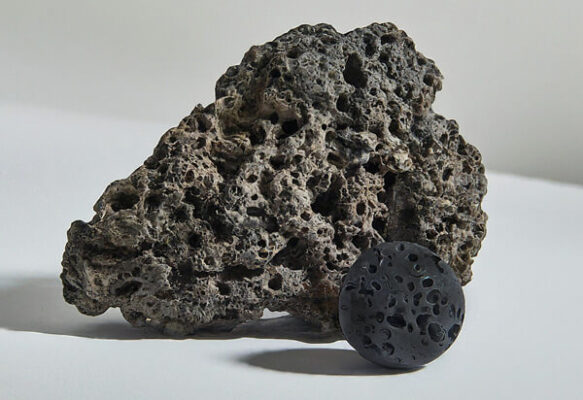
What Makes Lava Stone Interesting for Jewelry?
Texture contrast. The matte, rough surface is the most obvious property. In a bracelet combining lava with polished onyx, the eye moves between the smooth gloss of the onyx and the textured matte of the lava. Both stones are black, but they read completely differently because of surface quality. For more on how black onyx pairs with other materials, see the black onyx bracelet guide.
Visual weight without actual weight. Lava beads look substantial – the porous, dark surface reads as heavy and rugged. But the actual weight is lower than comparable polished stone beads because of the air pockets throughout the material.
Oil absorption. The porous surface absorbs essential oils, releasing them gradually throughout the day as the bead warms from body heat. This turns the bracelet into a passive diffuser – a functional feature built into the material itself.
How Do You Style Lava Bead Bracelets?
Lava rock reads as earthy, rugged and organic. It suits styles that have some outdoor or natural element – casual wear, workwear with natural fabrics, beach contexts. It’s not a stone that works well with very formal or polished clothing. The most versatile approach is a mixed bracelet that includes lava alongside polished stones. Adding 3-4 black onyx beads alongside lava creates a bracelet with both visual depth (the smooth onyx reflects light) and texture (the lava absorbs it).
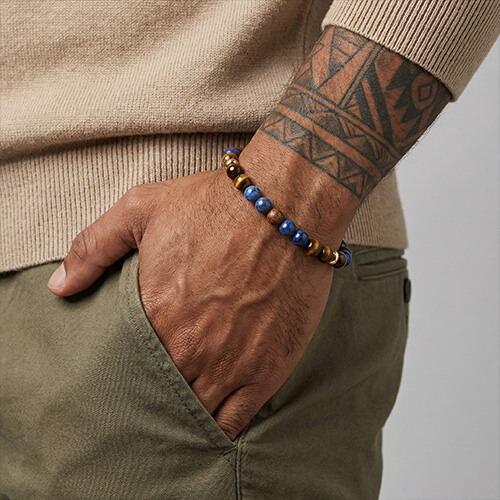
Color palette: lava is always black-to-dark-grey. It fits naturally into dark-neutral color schemes but also works as an anchor for warmer combinations. Lava with tiger eye (golden-brown) creates a warm-earth contrast where the lava grounds the warmer stone – the Mars bracelet (red tiger eye + lava) and the Tiger Eye, Lava and Wood both demonstrate this pairing well.
| Pairing | Visual Effect | Best For |
|---|---|---|
| Lava + Black Onyx | Texture contrast within dark palette | Everyday wear, versatile |
| Lava + Tiger Eye | Dark matte against warm gold | Casual, outdoor, earthy style |
| Lava + Wood Beads | Two organic textures, both natural | Natural, eco-conscious aesthetic |
| Lava + Metal Spacers | Rough stone against smooth metal | Urban, contemporary, slightly formal |
How Do You Use Lava Beads with Essential Oils?
Apply 1-2 drops of essential oil directly to the lava beads and allow 30 seconds to absorb before putting on the bracelet. The oil soaks into the surface pores and is released gradually over several hours as the bead warms from body heat. Common choices include lavender (calming), eucalyptus (refreshing) or sandalwood (grounding). The scent typically lasts 2-6 hours depending on the oil and ambient temperature.
Clean the beads every few weeks if using oils regularly to prevent buildup that can clog the pores and reduce absorption. A very dilute soap solution followed by a water rinse clears the pores effectively. For general bracelet care guidance, see the bracelet care guide.
Mr. Woodini Lava Bracelets
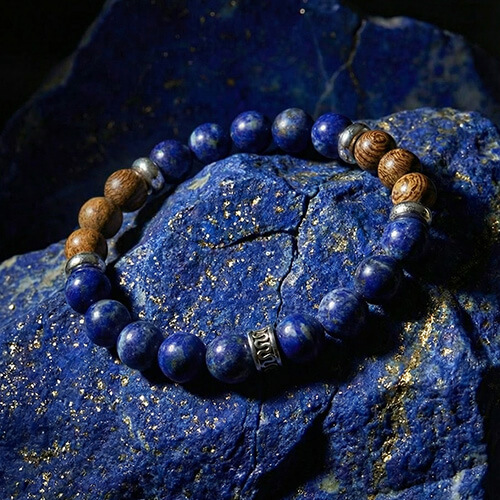
Mr. Woodini’s lava bead bracelets combine volcanic basalt with black onyx and dark metal spacers. All pieces use 8mm beads across all materials so the size is consistent while the surface varies. Specific combinations: the Lava and Ebony Wood bracelet for the darkest, most minimal look; the Tiger Eye, Lava and Wood for a warmer earth-tone contrast; and the Mars bracelet (red tiger eye and lava) if you want warmth in a primarily dark palette.
Browse all lava options in the men’s bracelet collection. For the symbolism behind lava rock and other stones, see the meaning behind beaded bracelets.
Mr. Woodini was founded in 2018. We design eco-accessories built from materials with a story – recycled wood temples, natural stone beads, handcrafted construction. Our guides are written from direct experience: sourcing stones, testing daily wear, and building pieces by hand. Learn more about us.
Questions About Lava Bead Bracelets
Solidified volcanic basalt – actual rock formed when lava cools rapidly. The porous texture comes from gas bubbles trapped during cooling. Each bead is unique in surface texture because the pore structure varies naturally. It’s one of the few bracelet materials with a literal geological origin story built into it.
Yes. Lava stone is relatively hard and its porous surface doesn’t show minor scratches the way polished stones do. It handles daily wear well. Avoid soaking – water can penetrate the pores and affect the elastic cord. Rinse and dry rather than submerge.
Yes – the porous surface absorbs a drop of essential oil, turning the bracelet into a passive diffuser. Apply 1-2 drops directly to the lava beads and let absorb for 30 seconds before wearing. The scent fades gradually over several hours. Clean the beads every few weeks if using oils regularly to prevent buildup.
The porous structure – gas bubbles trapped during rapid cooling – means lava rock has significant air space within its structure. This makes it less dense than a comparable solid stone. The visual weight comes from the dark color and rough surface rather than actual mass.