


Reading time: approximately 5 minutes
Some men don’t wear jewelry because they’ve decided against it. Most just never started. They don’t know what would suit them, they’re worried it’ll look like trying too hard, and nobody has ever handed them something that felt right.
The first bracelet matters more than any after it. If it looks natural, it becomes part of how he dresses. If it looks like a costume, it goes in a drawer and stays there. This guide covers how to choose a first bracelet for a man who doesn’t wear jewelry – whether that’s you or someone you’re buying for.
Table of Contents
Why Most First Bracelets Fail
Usually for one of three reasons:
- Too much. Bright colors, big charms, multiple strands. It draws attention before he’s comfortable with any attention at all.
- Wrong size. Too tight and it’s annoying; too loose and it slides over the hand and catches on everything.
- Wrong material. Shiny plated metal or plastic beads look cheap quickly, and he’ll notice before anyone else does.
A good first bracelet solves all three: muted, well-fitted, made from materials that look better over time rather than worse.
Five Rules for a First Bracelet
1. Start dark and matte
Black, charcoal, dark brown and deep wood tones read as neutral on a man’s wrist – the same way a black belt or brown shoes do. Matte surfaces look more natural than glossy ones.
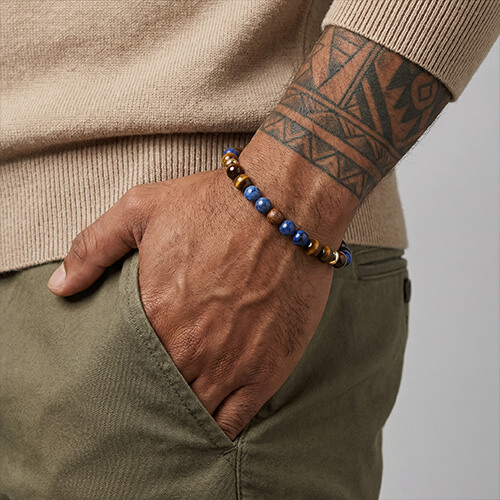
2. Choose 8mm beads
8mm is the standard men’s size: substantial enough to look intentional, small enough not to dominate. 6mm can look delicate on a larger wrist; 10mm is a statement. The bead size guide explains proportions in more detail.
3. One bracelet, not a stack
Stacks come later. A single bracelet is easy to get used to and easy to wear with a watch.
4. Natural materials
Stone and wood have weight, texture and variation. They look like objects rather than accessories – which is exactly what a hesitant wearer needs. We go into why in why so many men end up wearing beaded bracelets.
5. A fit that stays put
Snug enough that it doesn’t slide over the hand, loose enough to roll slightly on the wrist. Measure just below the wrist bone and use the bracelet size guide; with 8mm beads, size up if in doubt.
The Best Stones to Start With
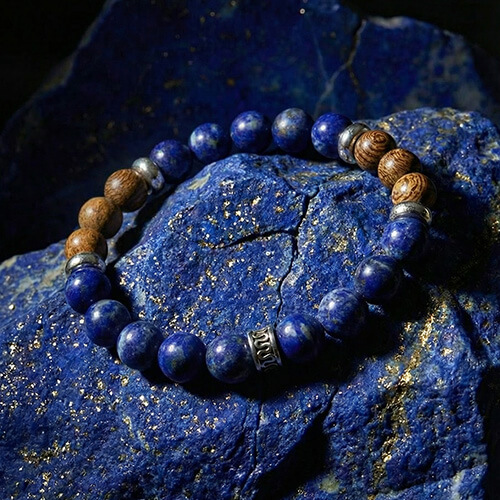
Black onyx with wood. The classic first bracelet. Black goes with everything and wood keeps it from looking severe. The Blackout black onyx and rosewood bracelet is about as easy to wear as a bracelet gets.
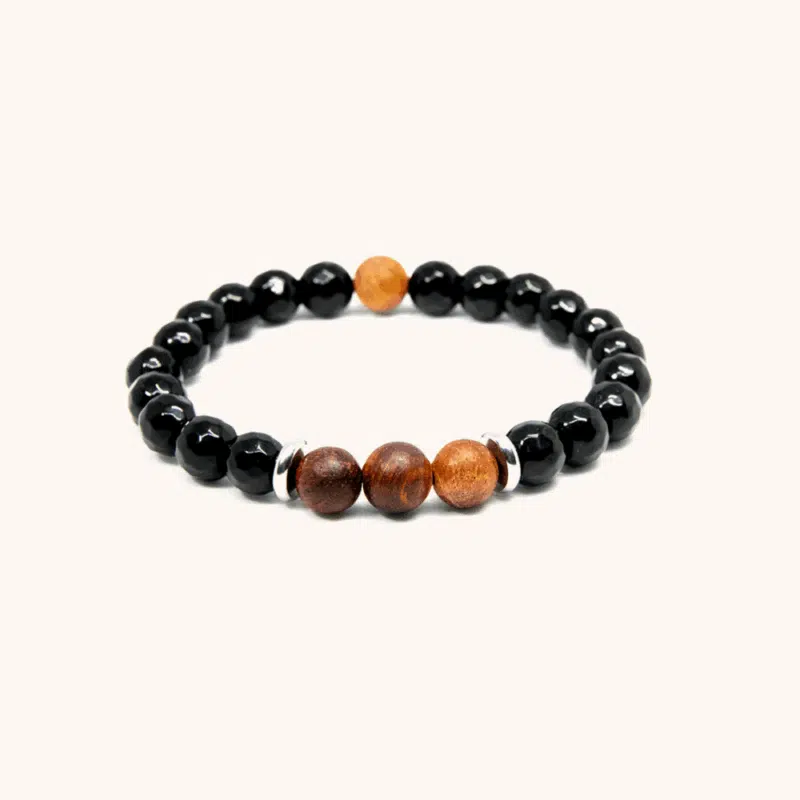
Matte onyx. If glossy feels too much, matte onyx looks almost like dark slate. The matte black onyx and wenge wood bracelet is the most understated option we make.
Lava stone. Porous, light, rough to the touch – it feels more like a natural object than jewelry. Try the lava stone and zebrawood bracelet. Our lava bracelet guide covers how it wears.
Tiger eye. If he’ll accept one step toward color, tiger eye is the one. Its gold-brown tones work like a leather jacket – warm and masculine. The gold tiger eye with an engraved steel bead pairs well with a steel watch.
Black tourmaline. Deep black, less glossy than onyx, with a slightly raw look. A good choice for someone who dislikes anything shiny – see the tourmaline and ebony bracelet.
For a wider overview of what makes black bracelets so wearable, read our guide to black beaded bracelets.
What to Avoid (For Now)
- Bright, saturated colors – turquoise, bright jade and multicolor mixes are great second or third bracelets.
- Charms and symbols – skulls, crosses and eyes carry meaning; let him choose those himself.
- Very small beads – under 6mm can look delicate on a man’s wrist.
- Anything shiny and plated – it ages badly and looks cheap fast.
Making It Stick
- Wear it every day for two weeks. After that, the wrist feels bare without it.
- Put it on with the watch. Same routine, same moment – it becomes part of getting dressed.
- Non-dominant wrist first. Less in the way while typing. See which wrist to wear a bracelet on.
- Don’t explain it. If someone notices, “thanks” is enough.
Once the first one feels normal, the second comes naturally – often in color. Browse the men’s bracelet collection when you get there.
FAQ
What is the best first bracelet for a man?
A single 8mm bracelet in dark, natural materials – black onyx, lava stone or tiger eye, combined with wood. It looks neutral, works with a watch and most clothes, and doesn’t draw attention before the wearer is comfortable. Fit matters as much as the stone: snug, but not tight.
How do I get a man who doesn’t wear jewelry to wear a bracelet?
Choose something understated and well-made rather than decorative, get the size right, and suggest he wears it with his watch as part of his routine. Natural stone and wood feel more like objects than jewelry, which helps. Most men need a week or two before it feels normal.
Is a beaded bracelet too feminine for men?
No. Beaded stone bracelets have a long history in men’s jewelry, from prayer beads to modern menswear. What makes a bracelet read as masculine or feminine is mostly size, color and finish. Dark or matte stones in 8mm beads with wood look clearly masculine.
Should a first bracelet be worn with a watch?
It can be. Wear it above the watch on the same wrist, or on the other wrist for a cleaner look. If he’s hesitant, the opposite wrist is usually easier at first because the bracelet and watch don’t compete, and it’s less likely to knock against the watch case.
What color bracelet should a man start with?
Black is the easiest place to start, followed by dark brown wood and the gold-brown of tiger eye. These colors work like neutral accessories – belts, shoes, watch straps – so they match almost everything. Brighter colors such as green, blue and turquoise make better second bracelets.
Mr. Woodini was founded in 2018. We design eco-accessories built from materials with a story – natural stone beads, real wood and handcrafted construction. Our bracelets are handmade in Israel, and our guides are written from direct experience: sourcing stones, testing daily wear, and building pieces by hand. Learn more about us.