



Reading time: approximately 6 minutes
Bead size changes how a bracelet reads entirely. An 8mm stone on a narrow wrist looks heavy. A 6mm on a broad wrist looks like it belongs to someone else. Getting the proportion right matters more than the stone choice.
What Does Bead Size Actually Mean?
Bead size refers to the diameter of each individual bead, measured in millimeters. A bracelet labeled “8mm” has beads that are 8mm across – roughly the diameter of a pencil eraser. This single number has more influence on the overall look of a bracelet than most buyers realize before they’ve owned a few.
Bead size is separate from bracelet length. You can have a 19cm bracelet in 6mm, 8mm or 10mm beads – the length stays the same but the number of beads and the overall look change significantly. For sizing your wrist length correctly, see the bracelet size guide.
What Are the Common Bead Size Options?
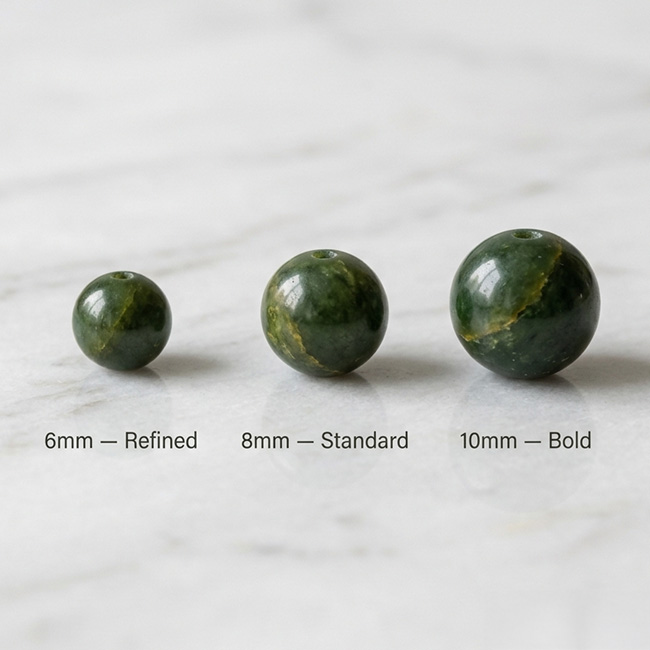
6mm – close to the diameter of a standard pencil. These beads sit low on the wrist and read as fine jewelry rather than bold accessories. Well-suited for stacking because they don’t create bulk when worn alongside other bracelets. Single 6mm bracelets can look too thin on larger wrists.
8mm – the most common size in quality men’s bracelets. Substantial enough to be seen clearly, fine enough to work across most contexts from office to casual. The default choice for a first bracelet and the size that works on the broadest range of wrist sizes.
10mm – a noticeable step up in presence. A single 10mm bracelet reads as a deliberate statement rather than a background accessory. Works best on medium to large wrists and in contexts where the bracelet is intended to be a focal point of the outfit.
12mm – chunky and bold. Makes a strong statement but can overwhelm smaller wrists and doesn’t sit as comfortably in formal or business contexts.
How Do You Match Bead Size to Wrist Proportion?
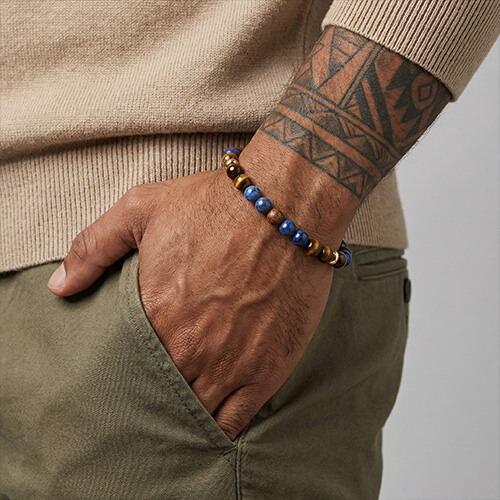
The goal is proportion – the bracelet should look like it belongs on your wrist, neither dwarfing it nor disappearing against it. Wrist circumference is the practical measurement to work from. Wrists under 16cm work best with 6mm beads. Wrists between 16-18cm suit 6mm or 8mm equally well. Wrists between 18-20cm are the natural home for 8mm and can carry 10mm comfortably. Wrists over 20cm can wear 10mm without the bracelet looking disproportionately large.
Scale also affects perceived weight. A bracelet with 10mm lava rock beads looks heavier than a bracelet with 6mm lava rock, even though lava rock is one of the lighter stones by density. The visual mass created by larger beads overrides what the actual weight feels like on the wrist.
| Bead Size | Visual Presence | Best Wrist Size | Best Use |
|---|---|---|---|
| 6mm | Subtle, fine | Under 17cm / 6.7 in | Stacking, minimal style |
| 8mm | Standard, balanced | 16–20cm / 6.3–7.9 in | Everyday wear, first bracelet |
| 10mm | Bold, prominent | 18cm+ / 7.1 in+ | Statement piece, solo wear |
| 12mm | Chunky, strong | 20cm+ / 7.9 in+ | Casual, wooden bead styles |
How Does Bead Size Work When Stacking?
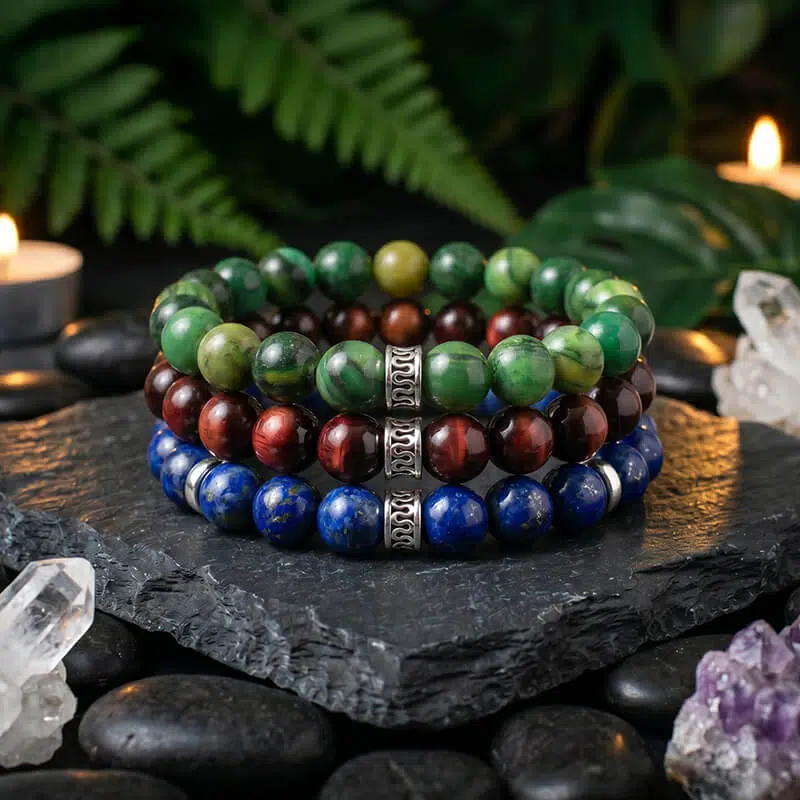
The most common approach is to keep bead sizes consistent across a stack. Three 8mm bracelets together look cohesive because the scale is uniform – the eye reads the group as intentional. Mixing 6mm, 8mm and 10mm in the same stack can look busy or accidental unless the overall color palette holds the combination together strongly. If you want to stack deliberately across sizes, keep to two different sizes at most and make sure both share a color family. For a full stacking guide, see the bracelet stacking guide.
How Does Stone Type Interact with Bead Size?
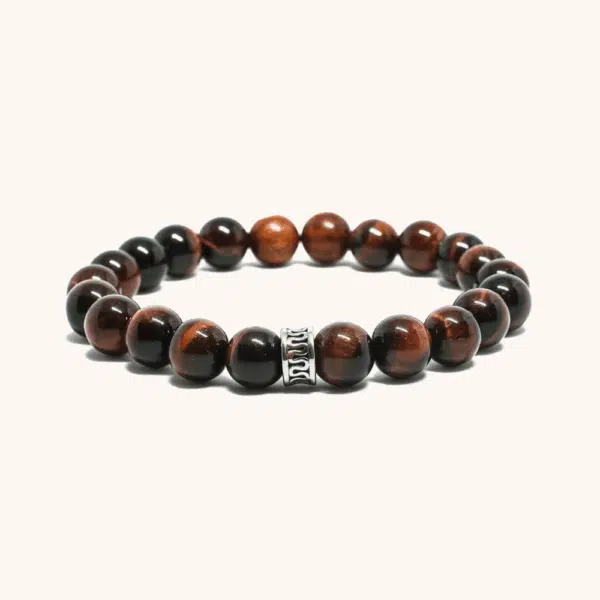
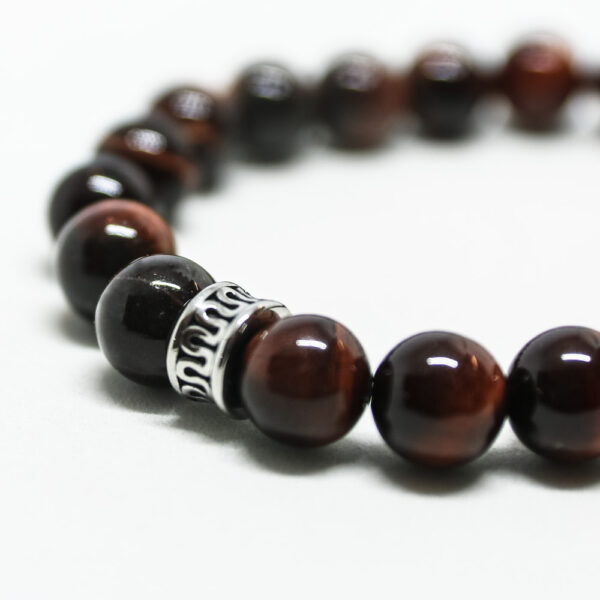
Some stones look better in particular bead sizes because of their surface characteristics. Tiger eye has a chatoyant quality that’s more visible in larger beads – the light-shifting effect is more striking in a 10mm bead than a 6mm one. Howlite, with its fine grey veining, shows that detail better in 8mm and above. Darker, more uniform stones like black onyx read cleanly at any size. For stones with distinctive internal patterns – malachite’s swirling green, lapis lazuli’s gold flecks – larger beads show more of the pattern per bead and are generally worth choosing if you’re buying for the stone’s visual character.
6mm Bracelets in the Collection
The 6mm pieces in the Mr. Woodini collection cover the range of what a finer bead size can do. Dumortierite and Brown Tiger Eye (6mm) – the blue-brown contrast that’s distinctive at any size becomes more subtle and wearable at 6mm. Ocean Mix (6mm) – multi-stone sea-inspired combination where the smaller bead size lets the color variation read without overwhelming the wrist. Red Jasper and Rosewood (6mm) – warm red-brown combination that stacks well. Black Onyx and Yellow Sandalwood (6mm) – the contrast between deep black and warm yellow reads as refined at 6mm.
8mm Bracelets in the Collection
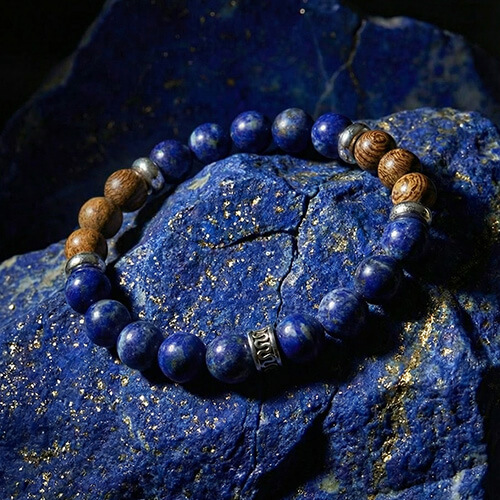
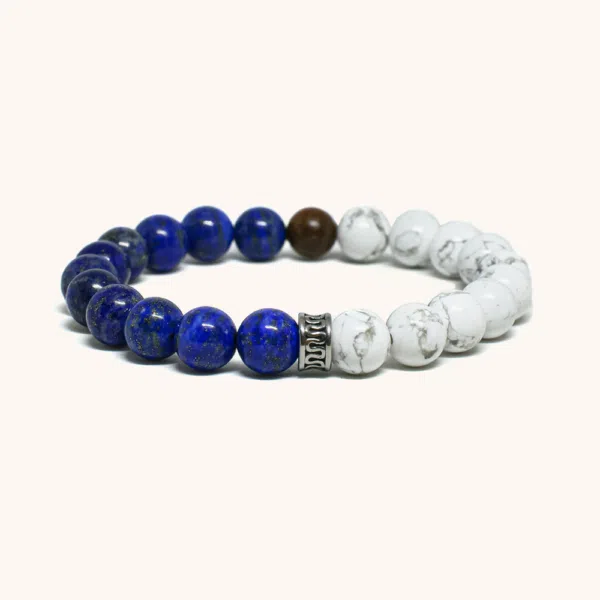
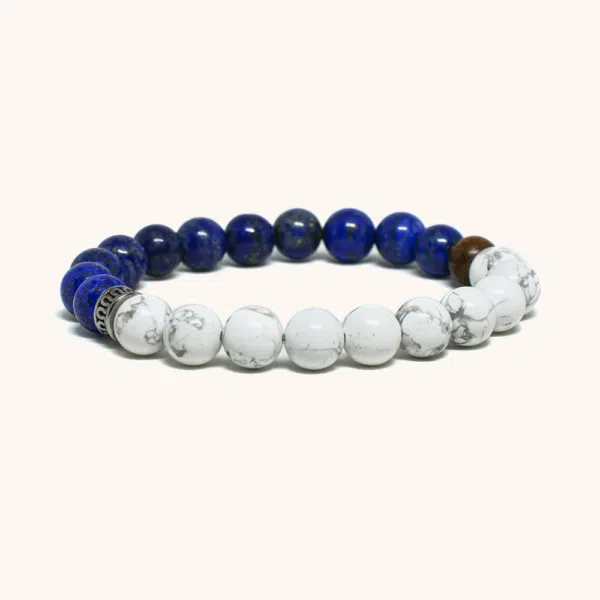
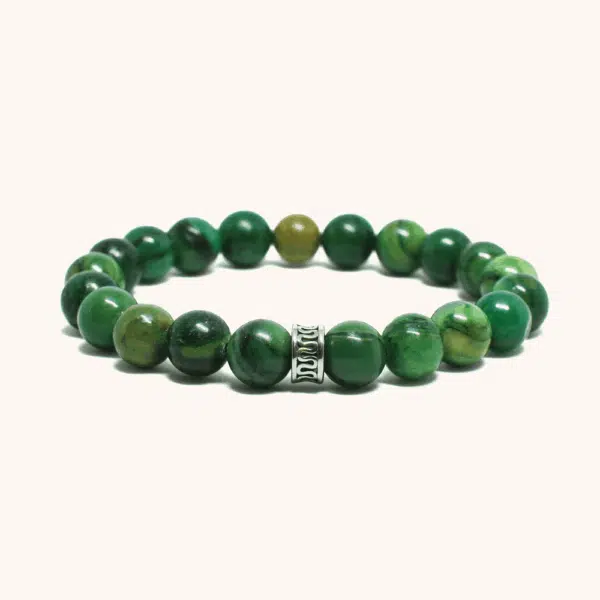
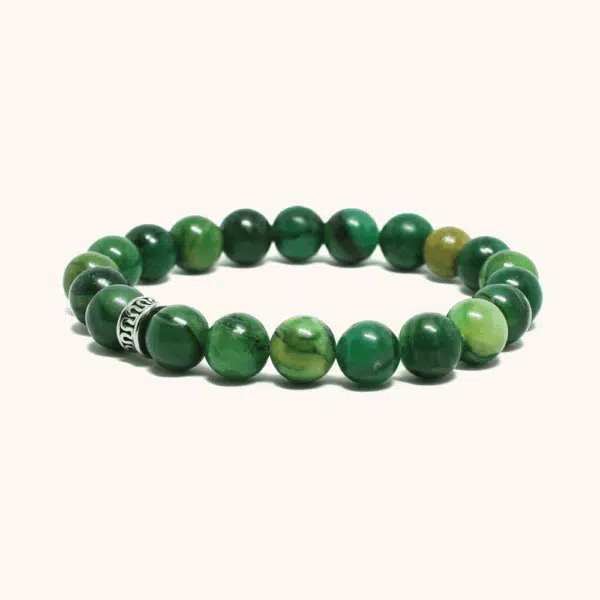
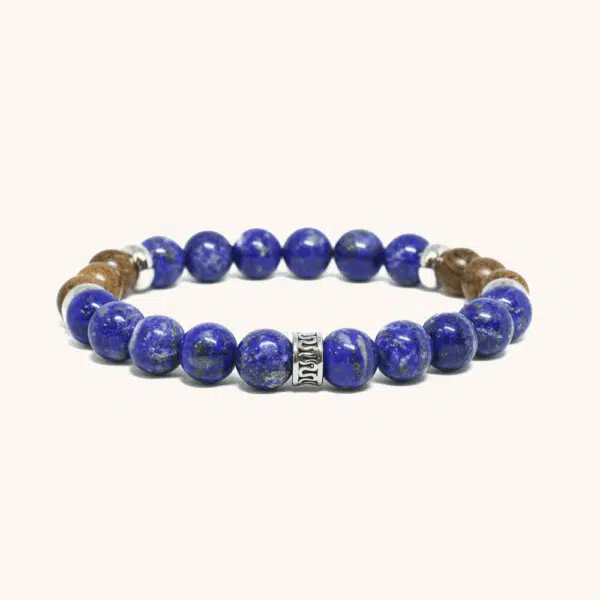
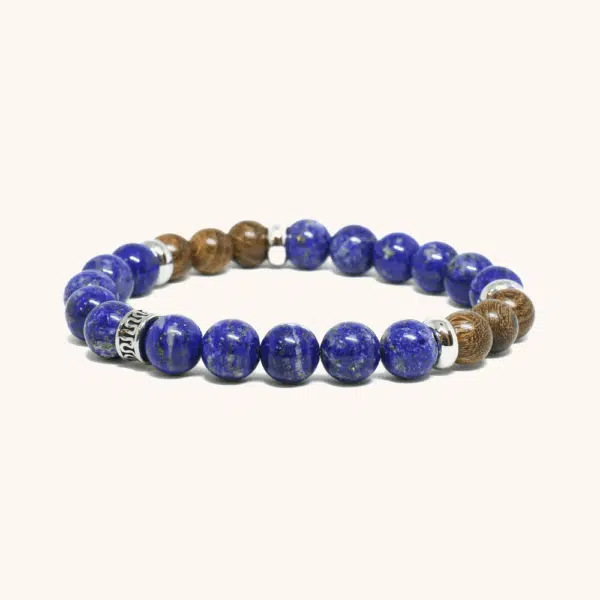
The 8mm pieces represent the standard for everyday wear. Green Africa Jade and Sandalwood (8mm) – the jade’s color variation is visible across the full bead face at this size. Lapis Lazuli and Zebra Wood (8mm) – the gold flecks in lapis read properly at 8mm. Gold Tiger Eye and Zebrawood (8mm) – the chatoyant shimmer of gold tiger eye is at its best here. Malachite and Black Agate (8mm) – the banding pattern in malachite shows clearly at this size.
Shop the Collection
Natural stone · Recycled wood · Handmade in Israel
Mr. Woodini was founded in 2018. We design eco-accessories built from materials with a story – recycled wood temples, natural stone beads, handcrafted construction. Our guides are written from direct experience: sourcing stones, testing daily wear, and building pieces by hand. Learn more about us.
Common Questions
8mm is the standard — balanced proportions that work for most wrist sizes without looking too delicate or too bulky. The safest choice if you’re unsure, and the size most quality brands use as their default.
6mm is subtle and refined — suits smaller wrists or stacking. 10mm is bold and prominent — suits larger wrists or a more statement-forward style. 8mm sits in the middle and works across the widest range of contexts.
Under 6.3 in (16cm): go with 6mm. Between 6.3–7.1 in (16–18cm): 6mm or 8mm both work. Between 7.1–7.9 in (18–20cm): 8mm or 10mm. Over 7.9 in (20cm): 10mm or 12mm. These are starting points — personal style and whether you’re stacking or wearing solo both shift what works.
6mm is the natural choice for smaller wrists — under 6.3 in (16cm). The finer bead size keeps the bracelet proportionate without overwhelming the wrist. If you prefer 8mm, it can still work on a smaller wrist when worn as a single piece rather than stacked.
Larger beads put slightly more tension on the elastic cord due to weight. With quality cord and proper construction, both sizes last well. Stone material and cord quality matter more than bead size for long-term durability.