


Reading time: approximately 6 minutes
Walk through any bead market and you’ll find a dozen kinds of “jade.” African jade. Canadian jade. Southern jade. Olive jade. White jade. Some of them are jade in the gemological sense, most of them aren’t – and the names tell you more about color and trade history than about what the stone actually is.
That doesn’t make them worse stones. It just means that if you’re choosing a green jade bracelet, the useful questions are what each one looks like on the wrist, how it wears, and which suits you. This guide compares the three green jade types you’ll see most often in bracelets, with a short note on the others.
Table of Contents
First: What “True” Jade Means
Gemologists recognise two minerals as true jade:
- Nephrite – a tough, fibrous amphibole, around 6 to 6.5 on the Mohs scale. Traditionally the jade of China and New Zealand, and also mined in British Columbia.
- Jadeite – a pyroxene, slightly harder at 6.5 to 7, and the source of the most valuable translucent green jade, mainly from Myanmar.
Everything else called “jade” is another green stone sold under a trade name that stuck. In the bead world this is normal and widely understood, but it’s worth knowing – especially if a price suggests you’re paying for jadeite.
African Jade
What it looks like: a bright to medium grass green, often with darker green and black flecks or streaks. It’s the most saturated of the three, and the pattern is busy – no two beads match.
What it is: not nephrite or jadeite. The name is used for green stones from southern Africa, and depending on the supplier it can refer to a green garnet (sometimes sold as Transvaal jade) or a quartz-based green stone.
How it wears: durable for daily use. The dark flecks hide minor scuffs well.
Who it suits: anyone who wants green to be the point of the bracelet. With a steel bead it looks modern; with green sandalwood it looks natural and warm. Compare the African jade with an engraved steel bead and the green jade and green sandalwood bracelet to see the difference a material makes.
Canadian Jade
What it looks like: a calmer, more even green, from sage to deep forest. Less flecking than African jade, and a smooth, slightly waxy polish.
What it is: British Columbia is a genuine source of nephrite jade, but in the bead trade “Canadian jade” is also widely used for serpentine-family green stones. We go deeper into this in our Canadian jade stone guide.
How it wears: slightly softer than African jade, so it benefits from being stored away from harder stones. Wipe it, don’t scrub it.
Who it suits: people who want green without pattern – the most versatile of the three, and the easiest to wear to work. See the Canadian jade bracelet with a single zebrawood bead.
Southern Jade
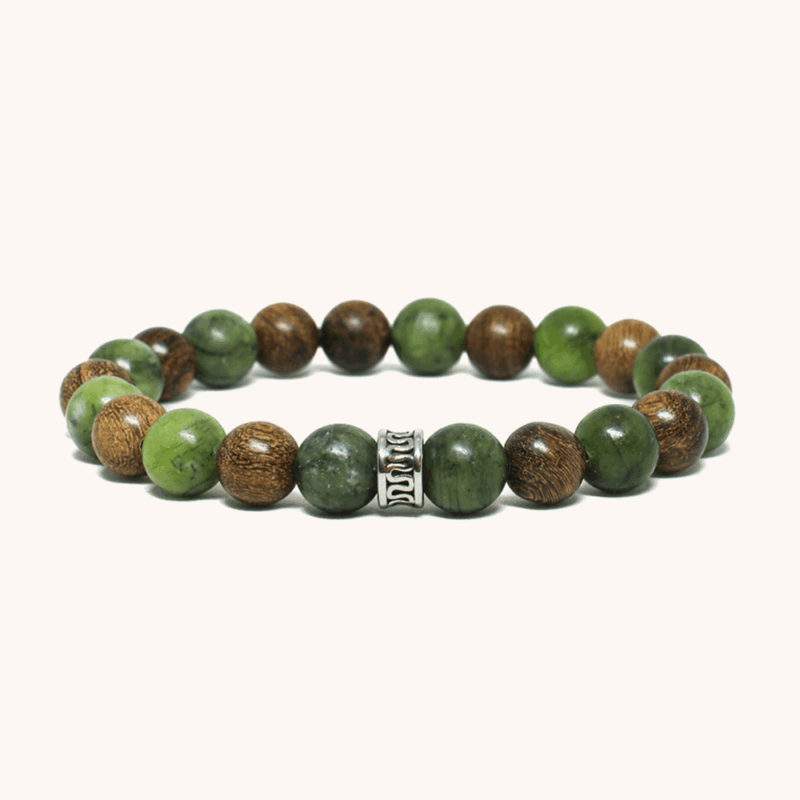
What it looks like: the most varied of the three. Bright leaf green next to deep forest green on the same strand, with natural dark specks and cloudy patches. On a bracelet it reads as “real stone” from across a room.
What it is: a bead-trade name for a mottled green stone, generally from the serpentine family rather than nephrite or jadeite.
How it wears: comparable to Canadian jade – fine for daily wear, best kept away from harder stones and rough surfaces.
Who it suits: people who like texture and earthy combinations. It pairs naturally with dark wood. Our Southern jade and ebony wood bracelet alternates every stone with a wood bead, so the green never feels too bright.
Side-by-Side Comparison
| African Jade | Canadian Jade | Southern Jade | |
|---|---|---|---|
| Color | Bright grass green, dark flecks | Even sage to forest green | Mixed light and deep green, mottled |
| Pattern | Busy | Minimal | Medium to busy |
| Polish | Glossy | Smooth, waxy | Smooth |
| Best with | Steel, green sandalwood | Single wood or steel accent | Dark wood |
| Easiest to wear to work | Medium | Yes | Medium |
Other “Jades” You’ll See
Yellow olive jade – a soft yellow-green, more muted than any of the above. It works well with light woods; see the yellow olive jade and zebrawood bracelet.
White jade – usually a white or cream stone sold under the jade name. Clean and neutral, good as a base for color – like the playful Balagan white jade bracelet.
As with any trade name, treat the word “jade” as a description of look rather than a guarantee of mineral. Our guide on how to tell if a gemstone bracelet is real covers what to check.
Which Green Jade Should You Choose?
- You want a quiet, everyday green: Canadian jade.
- You want the bracelet to be noticed: African jade.
- You like natural texture and wood: Southern jade.
If you’re still deciding whether green is your color at all, read why green stones work on more people than you’d expect – then browse the full bracelet collection.
FAQ
Is African jade real jade?
Not in the gemological sense. True jade is either nephrite or jadeite, and African jade is neither. It’s a trade name for green stones from southern Africa, such as green garnet or quartz-based stone. It’s still a natural stone and a durable, attractive bracelet choice – just priced and described differently from true jade.
What is the difference between Canadian jade and African jade?
Canadian jade is a calmer, more even green with a smooth, waxy polish, while African jade is brighter, glossier and heavily flecked with darker green and black. Canadian jade is easier to wear with everything; African jade is the more visible, statement green. Both work well with wood and steel accents.
What is southern jade?
Southern jade is a bead-trade name for a mottled green stone, generally from the serpentine family rather than true nephrite or jadeite. It shows a mix of light leaf green and deep forest green with natural dark specks, which gives bracelets a varied, earthy look that pairs well with dark wood.
Can I wear a jade bracelet every day?
Yes. All three common green jade types are durable enough for daily wear. Avoid knocks against hard surfaces, store the bracelet apart from harder stones, keep it away from chemicals, and clean it with a soft damp cloth. Remove it for swimming and heavy exercise to protect the elastic cord.
Which jade bracelet is best for men?
Canadian jade is the most versatile because its even green works with almost any outfit. Southern jade paired with dark wood is the most natural and rugged option. African jade with a steel bead suits men who want a brighter, more noticeable color with a modern accent.
Mr. Woodini was founded in 2018. We design eco-accessories built from materials with a story – natural stone beads, real wood and handcrafted construction. Our bracelets are handmade in Israel, and our guides are written from direct experience: sourcing stones, testing daily wear, and building pieces by hand. Learn more about us.