



Reading time: approximately 5 minutes
Most people know tiger eye as a golden-brown stone. Red tiger eye is the same mineral with a different thermal history – and the result is a stone with a distinctly warmer, deeper character. The same chatoyant shimmer, the same fibrous quartz structure, but a color range that runs from deep auburn to copper to reddish-brown depending on the light and the angle.
Five reasons it’s worth choosing over the standard variety – or alongside it.
1. The Color Is Genuinely Rare in Natural Stone
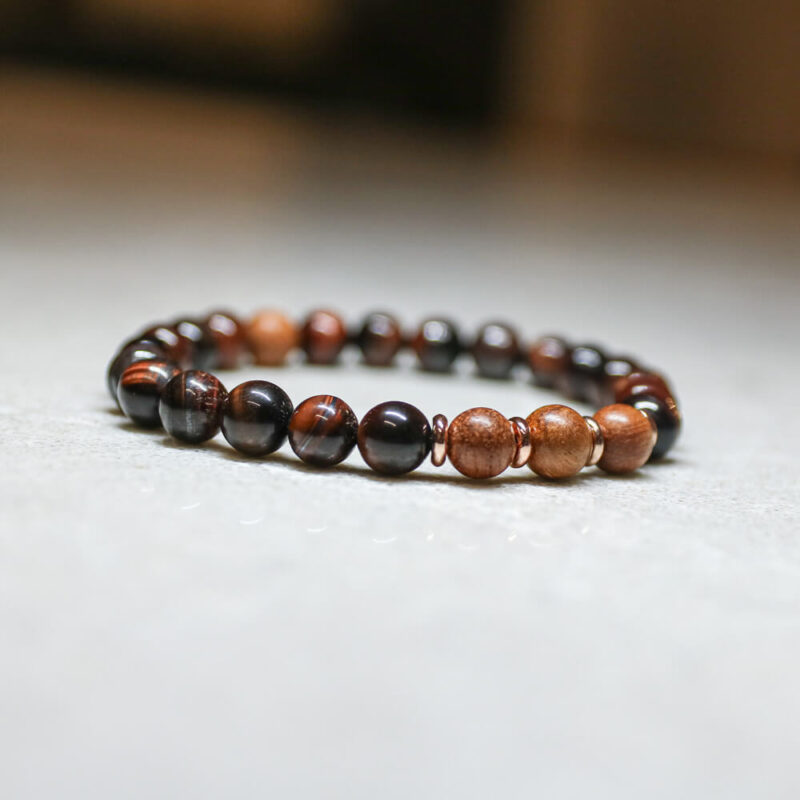
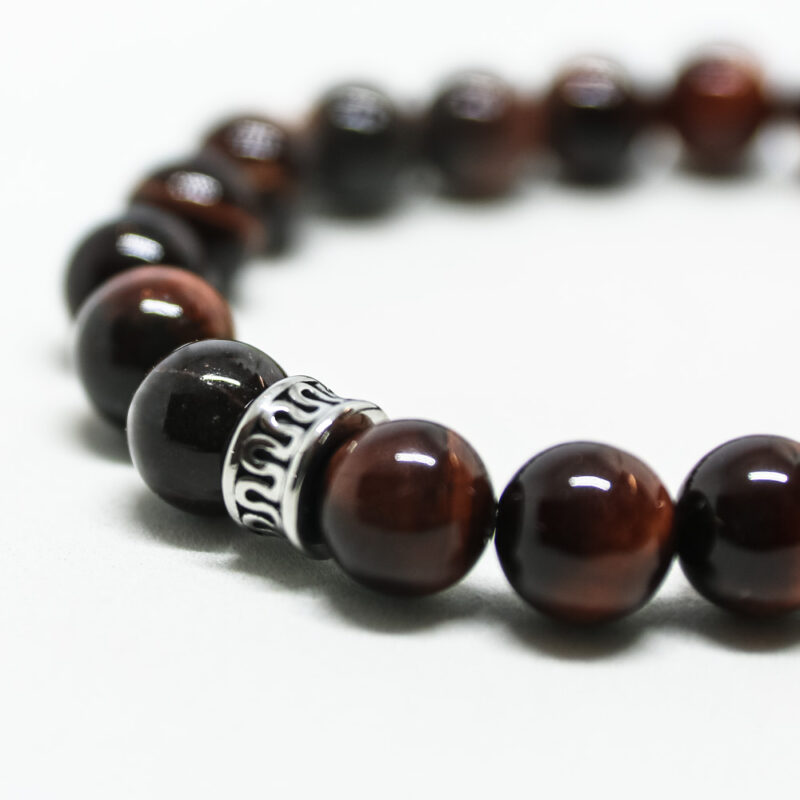
Red-brown as a color in natural gemstones is less common than people expect. The options are limited: red jasper, carnelian, and red tiger eye are the three most accessible. Of those, red tiger eye is the only one with chatoyancy – the moving band of light that makes the stone visually alive rather than static. That combination of warm reddish-brown color and optical movement is unusual enough that a red tiger eye bracelet is visually distinct from most other natural stone jewelry.
The color also reads differently in different light. In warm indoor light it shifts toward amber. In cool daylight it pulls toward reddish-brown. That responsiveness to light is part of what makes chatoyant stones interesting to wear daily – the bracelet looks slightly different depending on where you are, which gives it a quality that photographed images rarely capture accurately.

2. It’s the Same Stone as Golden Tiger Eye – With More Heat
Red tiger eye and golden tiger eye share identical mineral composition: quartz with silicified crocidolite fibers oriented in parallel. The difference is the degree of iron oxidation during formation. In golden tiger eye, iron oxidation produces the characteristic golden-brown color. In red tiger eye – sometimes called bull’s eye – the iron has oxidized more completely, producing a deeper reddish-brown range. Some red tiger eye is also produced by heat treatment of golden tiger eye, which completes the oxidation process artificially. Both natural and treated red tiger eye are legitimate materials with the same Mohs hardness (7) and the same durability for daily wear.
This matters practically: it means red tiger eye handles wear as well as the golden variety. It resists surface scratching, holds its polish over time, and doesn’t require the careful handling that softer stones demand. The tiger eye stone guide covers the full mineralogy and formation for anyone interested in the detail.
3. The Warm Palette Opens Up Styling Combinations the Golden Version Doesn’t
Golden tiger eye pairs naturally with earth tones – olive, tan, khaki, brown. Red tiger eye extends that palette in a specific direction: toward burgundy, rust, terracotta, wine and deep red. These are autumn-winter colors in British and Northern European style, which means red tiger eye has a seasonal relevance that golden tiger eye doesn’t quite hit. A red tiger eye bracelet worn with a burgundy roll-neck or a rust-toned jacket creates a tonal relationship that’s harder to achieve with the golden version.
With dark neutrals
Black and charcoal let the red-brown read clearly without competing. This is the most versatile combination – the bracelet provides warm color against a cool dark background, and the contrast is clean rather than busy.
With warm autumn tones
The combination of red tiger eye with burgundy, rust and camel is the most natural pairing for the stone’s color register. It creates a warm, earthy look that suits the British autumn-winter wardrobe particularly well.
With natural wood
Rosewood is the ideal wood pairing for red tiger eye – its warm pinkish-brown tone sits in exactly the same color register as the stone, creating a monochromatic natural look where both materials reinforce rather than contrast each other. The Red Tiger Eye and Rosewood bracelet is built on exactly this pairing.
4. It Distinguishes Itself From the Default Tiger Eye Choice
Tiger eye is one of the most widely worn natural stone bracelet materials – which means it’s also one of the most common. Golden tiger eye is a reliable, excellent choice. Red tiger eye is the same quality of stone with a personality that’s less frequently seen. For men who already own a golden tiger eye piece and want to expand their collection, red tiger eye is the natural next step – same material family, different expression.
The red variety also reads as more mature and deliberate than the golden. Where golden tiger eye can skew casual, red tiger eye has a depth of color that holds up in smart-casual contexts. It’s a stone that rewards closer inspection – the reddish-brown color and the chatoyant shimmer are more striking in person than in photographs, which means it consistently exceeds expectations when someone first handles it.
5. It Works As a First Stone for Men Who Find Golden Tiger Eye Too Subtle
Some men want a natural stone bracelet with more presence than black onyx but less visual drama than lapis lazuli. Red tiger eye sits in that gap. It has more color intensity than golden tiger eye without being saturated or bold in the way that lapis or malachite are. The reddish-brown warmth is strong enough to register clearly but natural enough that it doesn’t draw the kind of attention that makes some men uncomfortable with jewelry.
The 6mm version in Red Tiger Eye and Rosewood 6mm is the more refined option for men who want color with restraint. The standard 8mm delivers more presence. For something with a modern edge, the Red Tiger Eye with 316L Steel Engraved Bead introduces a steel accent that bridges natural stone and contemporary hardware.
Red Tiger Eye in the Collection
Three versions to match different preferences: Red Tiger Eye and Rosewood (8mm) for the classic natural pairing, Red Tiger Eye and Rosewood (6mm) for a finer, more refined look, and Red Tiger Eye with Steel Engraved Bead for a modern stone-and-metal combination. Browse the full tiger eye collection and men’s bracelets.
Mr. Woodini was founded in 2018. We design eco-accessories built from materials with a story – recycled wood temples, natural stone beads, handcrafted construction. Our guides are written from direct experience: sourcing stones, testing daily wear, and building pieces by hand. Learn more about us.