


Reading time: approximately 7 minutes
British men’s relationship with bracelets has shifted over the past five years. What was once considered peripheral to men’s style is now a settled part of how a significant number of men in the UK dress – from creative professionals in Shoreditch to outdoor enthusiasts in the Cotswolds. The styles that have gained traction reflect something consistent about British taste: restraint, material quality, and a preference for pieces that age well rather than pieces that make a statement.
This guide covers the bracelet categories that are performing well in 2026, with a focus on what distinguishes each type and where beaded natural stone bracelets sit within that landscape.
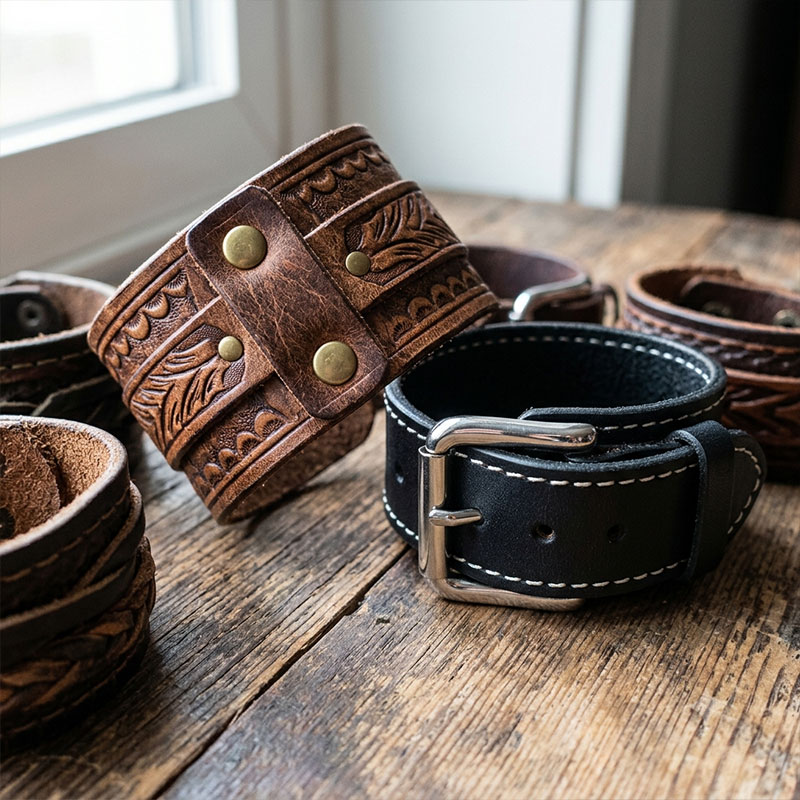
Leather Cuff Bracelets
Leather remains one of the most popular bracelet materials for British men, particularly in the 25-45 age range. The appeal is straightforward: leather ages visibly, patinas with wear, and carries a material honesty that synthetic alternatives don’t replicate. Dark brown and black are the dominant choices, often with minimal metal hardware – a single clasp, no excessive stitching or embossing.
The limitation of leather in 2026 is saturation. It’s the most commonly given men’s bracelet gift, which means it often reads as the default rather than the considered choice. For men who already own several leather pieces, a different material category offers more personal distinction.
Chain and Metal Bracelets
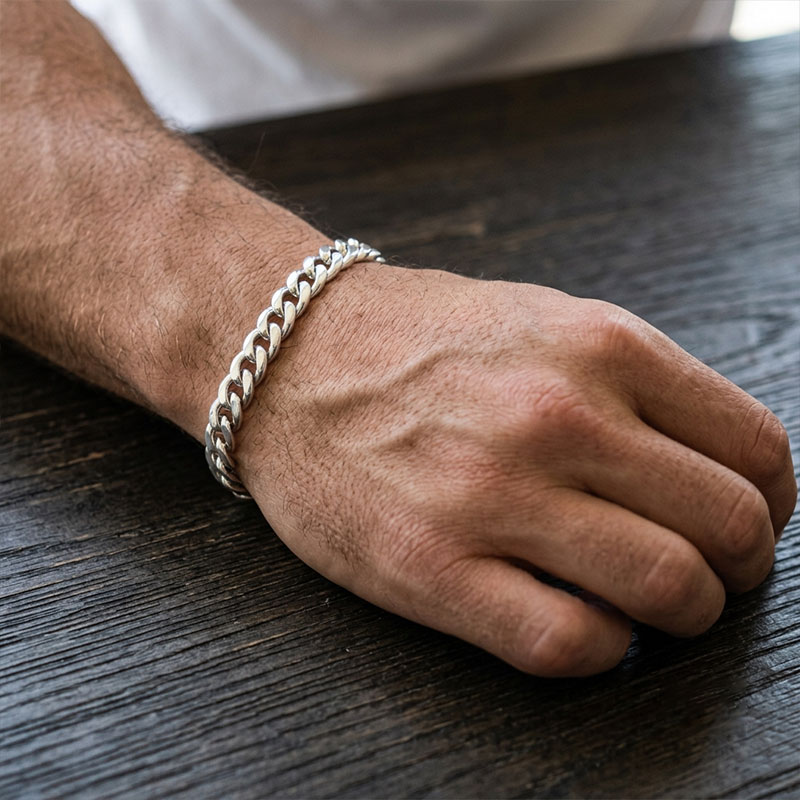
Steel and silver chain bracelets have maintained a consistent following in the UK, particularly among men who already wear metal watches. The appeal is durability – stainless steel handles water, heat and physical activity without degrading – and the clean, industrial quality that pairs naturally with the dressed-down formal look common in British office environments.
Cuban link chains and figaro styles have both declined in cultural currency from their peak in the early 2020s. What’s performing in 2026 is more minimal: thin box chains, flat cable links, and pieces that sit closer to fine jewellery than streetwear. The aesthetic shift is toward understatement, which tracks with the broader direction of British men’s style.
Woven and Cord Bracelets
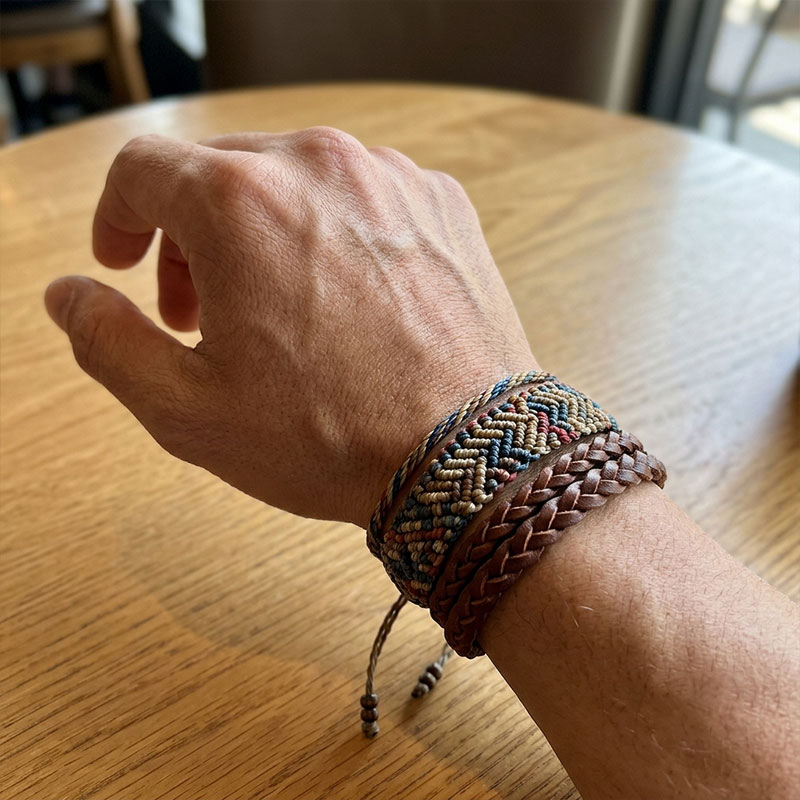
Woven bracelets – particularly those with a nautical or surf-adjacent reference – have an enduring following among British men who spend time outdoors or near water. Their lightness, water-resistance and relatively low price point make them the most casual end of the bracelet market. They function as seasonal accessories for many men who don’t otherwise wear bracelets year-round.
The limitation here is longevity and material quality: most woven cord bracelets are disposable by design, and the growing appetite for quality over quantity works against that category among older or more considered buyers.
Natural Stone Beaded Bracelets: The Category Gaining Ground
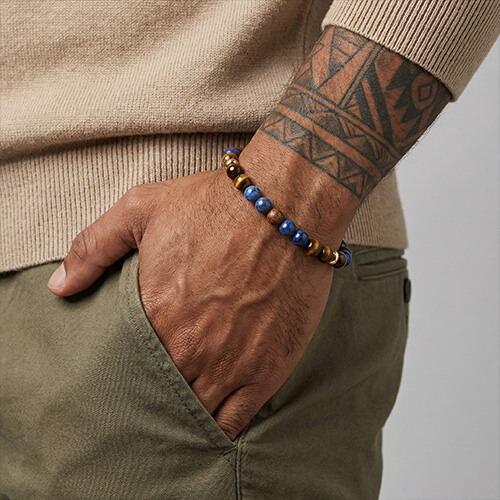
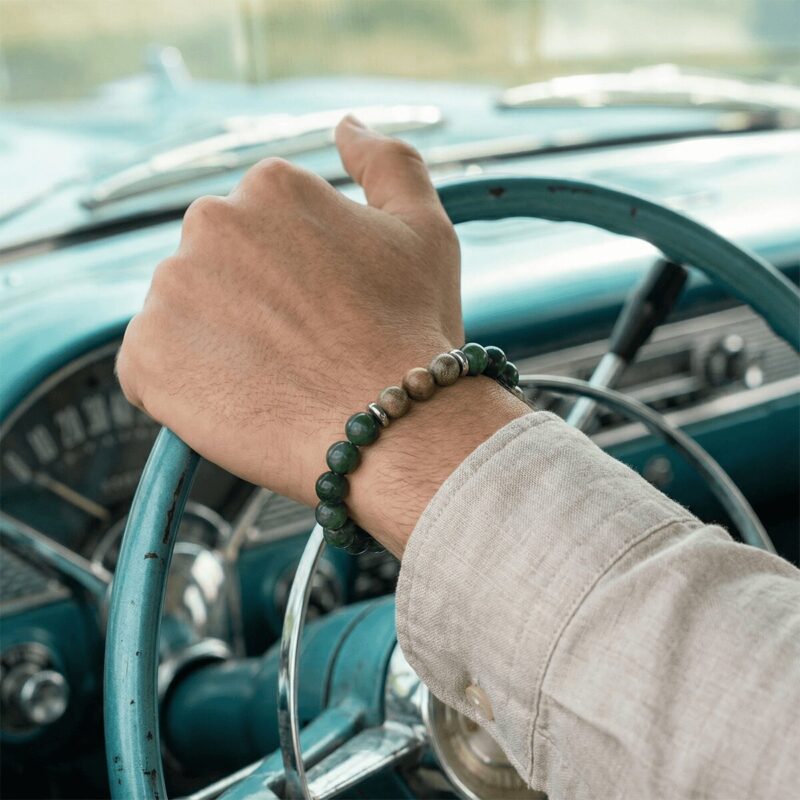
The category showing the most significant growth in the UK men’s bracelet market in 2026 is natural stone beads – specifically, bracelets that combine gemstone beads with natural wood in a handcrafted construction. The reasons track directly with shifts in British consumer values: material authenticity, craft provenance, and pieces that don’t require a brand name to communicate quality.
Why the stone-and-wood combination works for British taste
British style has always had a particular affinity for natural materials – tweed, leather, wool, oak. The combination of genuine gemstone beads with recycled wood speaks to that sensibility in a way that fully synthetic alternatives don’t. When a bracelet is made from real tiger eye stone paired with natural zebrawood, both materials have visible provenance: the stone formed over geological time, the wood has grain structure that reflects its growth. That kind of material honesty resonates with the segment of British buyers who have moved away from fast fashion and disposable accessories.
The restrained colour palette of most natural stone bracelets also aligns with the British preference for understated accessories. Black onyx, tiger eye, dark wood – these are colours that complement the navy, grey and earth-tone wardrobes common across British men’s everyday dress without competing with them.
Mr. Woodini: designed for this aesthetic
Mr. Woodini bracelets are built on exactly this combination: natural gemstone beads paired with recycled wood beads, handcrafted to order. Every piece in the collection brings together stone and wood in a proportion and pairing chosen for visual coherence – not just stone listed alongside wood as an afterthought, but combinations where the two materials create a specific visual relationship.
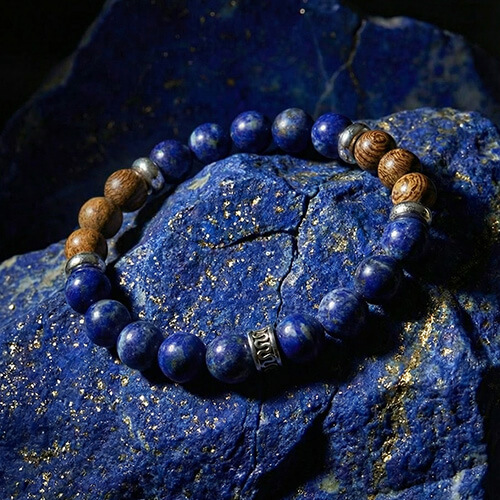
The Black Onyx, Tiger Eye and Wood is the most versatile starting point for men who want a single piece that works across contexts – the dark onyx provides a neutral anchor, the tiger eye adds warm golden variation, and the wood grounds the combination in natural material. The Lapis Lazuli and Zebrawood Premium is the choice for men who want a more deliberate colour statement: deep blue against the distinctive striped grain of zebrawood, a combination that reads as considered and specific rather than generic. For a more minimal approach, the Black Onyx and Rosewood is a single dark-stone-and-wood pairing that suits every context from office to weekend without requiring any adjustment.
All pieces are available in sizes 17-22cm, handmade in Israel from natural materials. Browse the full men’s bracelet collection.
What British Men Are Moving Toward in 2026
The direction of travel in UK men’s accessories is consistent with what’s happening in clothing: quality over quantity, natural over synthetic, individual over branded. The bracelet that gets worn every day for three years is more appealing to this buyer than the branded piece that sits in a drawer after six months.
Stacking is mainstream but restrained
Wearing two or three bracelets together has moved from subcultural to mainstream in the UK, but the British interpretation of stacking is characteristically quiet. Two pieces, same wrist, complementary materials – not the maximalist approach more common in Southern European style. A leather cuff alongside a natural stone bracelet is a common combination. Two natural stone bracelets in the same colour register is another. The rule that holds across British stacking is that each piece should look like it was chosen rather than collected. For the principles behind building a coherent stack, see the bracelet stacking guide.
The watch pairing
The combination of a watch on one wrist and a bracelet on the other is particularly common among British men aged 30-50 – a generation that still wears mechanical or dress watches but wants to add personal texture alongside them. The bracelet provides material character; the watch provides function and formality. The two elements don’t compete when kept on separate wrists, which is the standard British approach.
Material quality as the primary driver
Across all bracelet categories, the buyers who are most satisfied with their purchases in 2026 are those who chose for material quality rather than price or trend. A genuinely handcrafted natural stone bracelet will outlast and outlook a mass-produced alternative in every context, and the difference is visible to anyone paying attention. In a British style context where understatement and quality are the primary signals, that’s exactly the right register. The comparison between natural stone and metal bracelets covers the material differences in detail for anyone weighing the two categories.
Mr. Woodini was founded in 2018. We design eco-accessories built from materials with a story – recycled wood temples, natural stone beads, handcrafted construction. Ships internationally to 40+ countries including the UK. Learn more about us.