





Reading time: approximately 5 minutes
Polarized lenses filter light waves that travel in a specific direction. LCD screens emit light in that same direction. Put the two together and the screen goes dark – not because the lenses are defective, but because the physics works exactly as intended.
What Is Polarization?
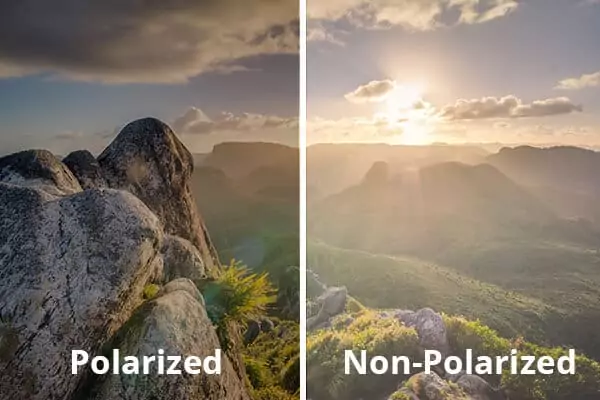
Light travels as a wave – an electromagnetic oscillation that vibrates in all directions simultaneously. Unpolarized light, like sunlight, vibrates in every possible plane perpendicular to its direction of travel. This is why direct sunlight or glare off water is so visually overwhelming.
Polarization is the process of filtering light so that only waves oscillating in a single plane pass through. A polarizing filter is essentially a molecular grating with parallel slots – only light waves aligned with those slots pass; all others are blocked. Polarized sunglasses lenses contain a thin laminate of polyvinyl alcohol (PVA) that has been stretched and infused with iodine molecules, creating precisely aligned molecular chains that act as the polarizing filter. The standard orientation is vertical polarization – blocking horizontally polarized light, which is the dominant component of surface glare. For a full overview of how polarized lenses perform in different conditions, see the polarized sunglasses guide.
One of the most frequent questions from Mr. Woodini customers: “I tested my lenses and the screen went dark – are they fake?” The answer is always the same: the fact that the screen goes dark is proof your lenses are genuine. Non-polarized lenses show no screen darkening at all.
How Do LCD Screens Use Polarization?
A liquid crystal display (LCD) works by sandwiching a layer of liquid crystals between two polarizing filters. The back and front polarizers are typically oriented at 90° to each other – they would normally block all light. The liquid crystals, when electrically stimulated, rotate the polarization angle of light passing through them by exactly 90°, allowing it to pass through the front filter. This is how LCD pixels are turned “on” and “off”.
Every LCD display – your phone, your laptop, your car’s navigation screen, ATMs, digital fuel pump displays – uses this polarization-based mechanism. Most LCD screens emit light that is linearly polarized, typically at 45° to the horizontal. This is the critical detail that explains why you experience darkening with polarized lenses.
Why Do Polarized Lenses and Screens Conflict?
When two polarizing filters are oriented at 90° to each other – called “crossed polarizers” – they block virtually all light. Your polarized sunglass lens is one filter; the LCD screen’s front polarizer is the other. When you look straight ahead at a horizontal screen with polarized lenses, the screen appears black because these two filters are crossed.
This is not a malfunction. It proves both your lens and your screen are using genuine polarization technology. A quick test: if you rotate your head or the phone 45-90°, the screen brightens again – because you’ve changed the relative angle between the two polarizing filters, reducing the cancellation effect. Many people unconsciously develop the habit of slightly tilting their head when checking their phone while wearing polarized sunglasses.
| Screen Type | Affected? | Why | Workaround |
|---|---|---|---|
| LCD (standard) | Yes – most affected | Linear polarization at fixed angle | Tilt head ~45° |
| OLED / AMOLED | Partially | Uses circular polarizer – less angle-dependent | Usually minimal issue |
| E-Ink (Kindle etc.) | Not affected | Reflective, not transmissive – no polarization | No workaround needed |
| Car GPS / Dashboard | Yes, often severely | LCD at fixed landscape angle – worst case | Keep non-polarized glasses for driving |
| ATM / Payment terminals | Sometimes | Varies by screen type and orientation | Tilt head or remove glasses briefly |
What Are the Practical Solutions?
For smartphone use: modern iPhones and many Android flagships use OLED or AMOLED displays, which are significantly less affected than older LCD phones. If you have an LCD phone: a 45° head tilt is the fastest and most effective solution. Increasing screen brightness to maximum can partially compensate for the light loss.
For car navigation: car GPS and dashboard displays are the most problematic use case because they’re at a fixed angle and you can’t easily tilt your head while driving. The practical solution is keeping non-polarized glasses in the car for driving contexts where dashboard visibility is critical. Aviation professionals face a similar issue – pilots are advised by aviation authorities against wearing polarized sunglasses in the cockpit for exactly this reason.
For everything else: despite the screen interaction, polarized lenses remain the superior choice for most outdoor activities. The glare reduction from water, snow, wet roads and horizontal reflective surfaces is dramatic and genuinely improves both comfort and safety.
Mr. Woodini Polarized Sunglasses
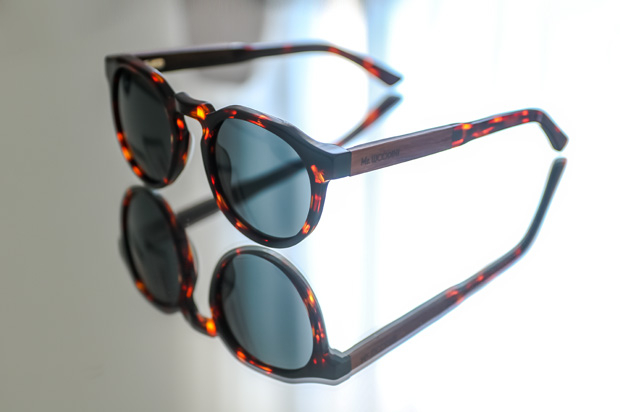
Sumatra (round acetate, zebrawood temples) and Fuji (rectangular, olive colorway) for outdoor and active use; Void for a darker, more versatile daily frame. All Mr. Woodini sunglasses use TAC polarized lenses with UV400 certification.
Browse the full sunglasses collection.
Mr. Woodini was founded in 2018. We design eco-accessories built from materials with a story – recycled wood temples, natural stone beads, handcrafted construction. Our guides are written from direct experience: testing frames daily, sourcing materials, and building pieces by hand. Learn more about us.
Questions About Polarized Lenses and Screens
LCD screens emit polarized light. When you look at an LCD through polarized lenses at certain angles, the polarization filters cancel each other out – a phenomenon called “crossed polarizers” – making the screen appear dark or completely black. This is physics, not a defect.
No. OLED screens are less affected than LCD screens. E-Ink displays (Kindle) are not affected at all. Car GPS and dashboard displays are often the most severely affected because they’re LCD at a fixed angle you can’t easily change while driving.
Only if you spend a lot of time looking at LCD screens outdoors without being able to tilt your head – like driving with an LCD dashboard display. For water sports, fishing, skiing, beach and most outdoor activities, polarized lenses remain significantly better than non-polarized alternatives.
Look at an LCD screen (like a phone or laptop) through your lenses while tilting your head slowly. If the screen darkens significantly at certain angles and brightens when you tilt further, your lenses are genuinely polarized. No darkening effect means the lenses are not polarized, regardless of what the label says.