



Reading time: approximately 7 minutes
Natural stone bracelets have moved out of the wellness aisle and into everyday menswear – and it happened faster than most people noticed. Walk through Amsterdam, Milan or Barcelona on any given weekend and you’ll see men in their twenties wearing beaded bracelets as a standard part of how they dress. Not as a subcultural marker. Just as an accessory that makes sense.
The reasons behind the shift are less about trend cycles and more about what natural materials actually offer – variation you can see, origin you can trace, and a look that ages better than synthetic alternatives.
Why Did Natural Stone Bracelets Take Off?
Over the past five years, natural stone bracelets moved from specialty jewelry and wellness markets into mainstream menswear across Europe. Search volume for men’s natural stone bracelets has grown every year since 2020. The shift came from three directions at once: a broader turn toward material honesty in menswear, a generation of buyers who grew up with fast fashion and wanted something different, and a style aesthetic – neutral palettes, quality basics, no logos – where natural stone fits cleanly.
What Makes Natural Stone Different From Other Materials?
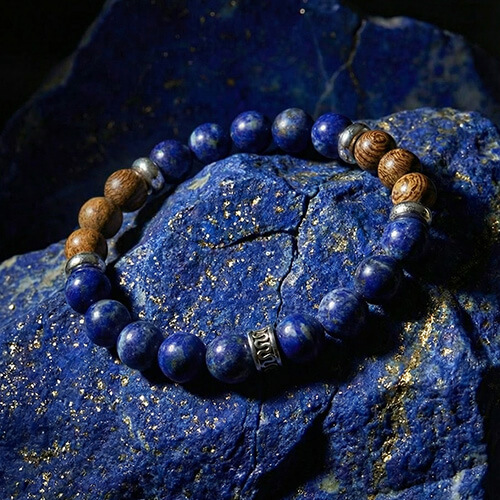
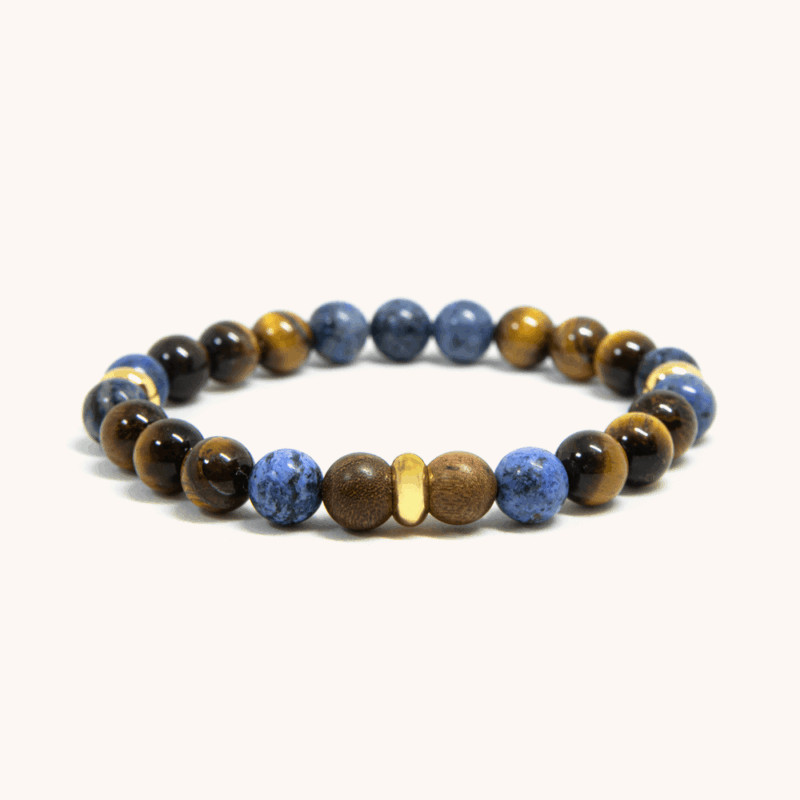
Each stone bead is slightly different from the next. You can see it in the color shift within tiger eye, the individual pore structure of lava rock, the banding in malachite. No two bracelets look exactly alike – and no manufacturing process can replicate that variation. For buyers who’ve spent years surrounded by algorithm-optimized aesthetics and identical products, this matters. A natural stone bracelet has a material story that’s visible and verifiable. You’re not taking the brand’s word for it. You can see the variation in the stone itself.
Does Sustainability Actually Drive Purchases?
Honestly, it’s secondary. Aesthetics and personal style come first. But sustainability functions as a quiet reinforcement: natural stone and wood have traceable origins, no petroleum-based plastics, no synthetic dyes. When a bracelet reaches the end of its life, the stone and wood don’t add to microplastic pollution. The buyers who care about this are also the ones who do research – vague sustainability claims get dismissed quickly. What works is material specificity. Concrete information builds credibility.
Why Are Men Wearing Bracelets as Identity Markers?
A bracelet used to signal status or group membership. Now it signals something more personal – what you value, what materials you’re drawn to, where you’ve been. A handcrafted black onyx bracelet from a specific maker says something about your relationship to materials and craft. For buyers who’ve grown up in an environment where authenticity is more valuable than display, that signal is more appealing than a brand logo. Stacking has become common for the same reason: a two-piece stack tells a more layered story than a single branded item.
What Does the European Style Context Look Like?
European men’s street style has settled into a specific look: neutral palettes, quality basics, minimal branding, carefully chosen accessories. Dominant colors are navy, black, white, olive and earth tones. Natural stone bracelets slot into this aesthetic precisely – a black onyx bracelet worn with a white shirt and dark jeans adds material texture without competing color or visible branding. It reads as deliberate and low-key, which is exactly the register that dominates right now. That’s part of why the trend spread across different European countries despite real differences in local style traditions.
How Do Men Actually Wear These Bracelets?
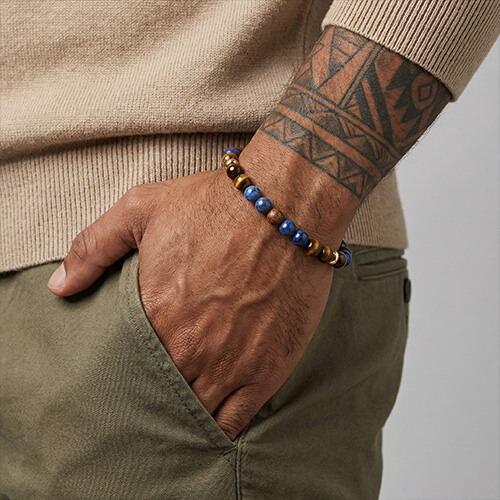
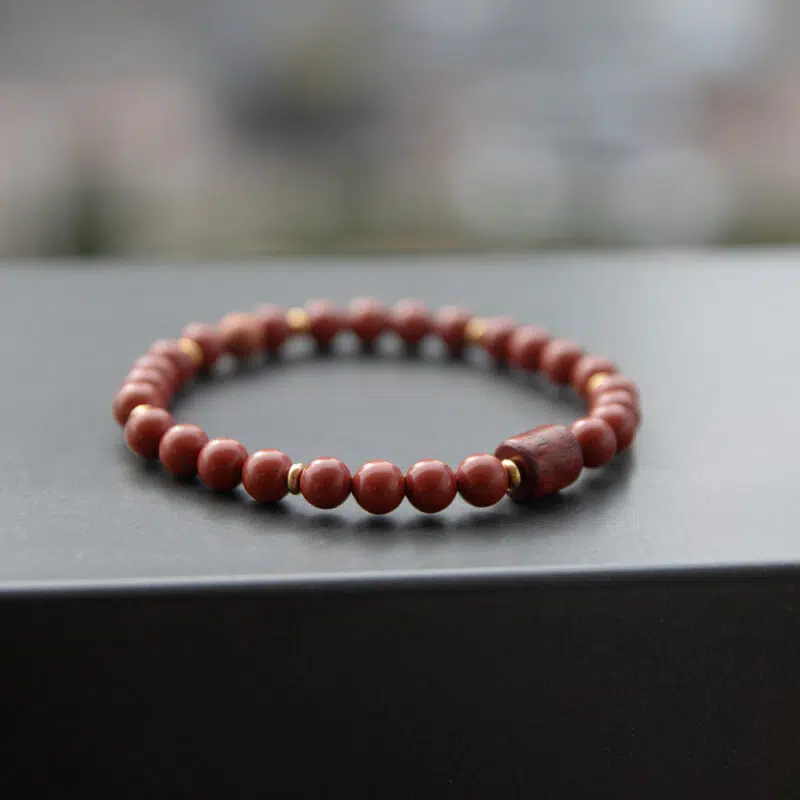
The most common approach is a single bracelet or a two-piece stack on the non-dominant wrist, opposite a watch or with no watch at all. The split-wrist combination – watch on one wrist, bracelet on the other – is particularly common. The watch handles formality and function. The bracelet adds material character without visual crowding. For a full guide to building a stack, see the bracelet stacking guide.
“Ordered the tiger eye and zebrawood bracelet. The quality is genuinely excellent – the stone beads have real variation and the construction feels solid. Been wearing it daily for three months.”
How Does Gen Z Approach Bracelets Differently From Millennials?
Millennial men who wear natural stone bracelets often came to them through wellness culture – meditation, yoga, interest in crystal properties. Gen Z tends to approach the same bracelets from a style angle. Material appeal, visual aesthetic and identity expression are the primary drivers. This shift moved natural stone bracelets out of wellness retail and into mainstream menswear – which is why the category grew beyond its original customer base.
| Factor | Gen Z Men | Millennial Men |
|---|---|---|
| Primary driver | Aesthetic, identity | Wellness, personal meaning |
| Preferred stones | Black onyx, lava rock, tiger eye | Varied, often chosen for attributed properties |
| Wearing frequency | Daily, integrated into regular outfits | More occasional, context-specific |
| Brand preference | Independent makers, clear craft story | Mixed – wellness brands to mainstream |
Products Worth Considering
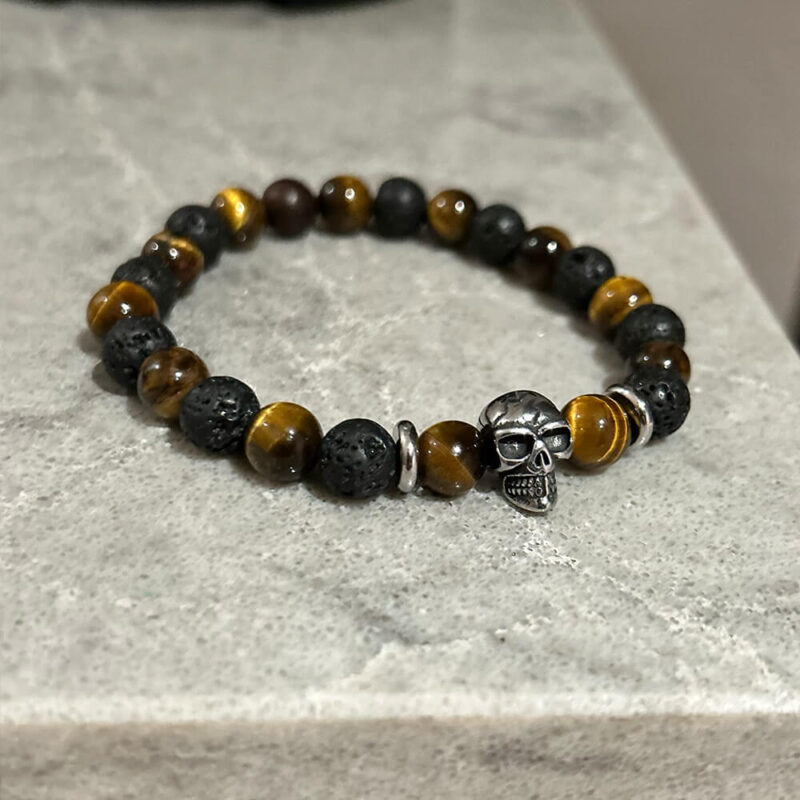
Black Onyx and Rosewood – the most versatile entry point: a dark neutral that works across all contexts. Silver Skull with Tiger Eye and Lava Stone for a fuller expression of the dark-earth palette. Browse the full men’s bracelet collection – all handmade in Israel from natural materials, sizes 17-22cm.
Mr. Woodini was founded in 2018. We design eco-accessories built from materials with a story – recycled wood, natural stone beads, handcrafted construction made in Israel. Learn more about us.
Questions About Natural Stone Bracelets for Men
Natural stone feels more personal – no two pieces are identical, and the variation is visible in the stone itself. It’s also lighter, hypoallergenic, and carries a material story that metal doesn’t. The shift is part of a broader move toward intentional, specific accessories over branded ones.
Black onyx is the most versatile – works across casual and smart-casual and holds up well to daily use. Lapis lazuli has stronger visual impact and suits neutral palettes well. Tiger eye adds earthy warmth. All three are hard enough for regular wear without special maintenance.
Yes. Handmade means quality control is personal and the materials are genuine. Factory-produced stone bracelets often use dyed or synthetic stones. With handmade pieces, you can see the natural variation in each bead – uniform coloring is usually a sign of dyed or synthetic stone.
Natural stones have slight color variation within each bead – no two are perfectly uniform. Dyed or synthetic stones look consistent throughout. You can also ask the brand directly about their sourcing. Reputable makers are specific about stone origin; vague answers are a signal.