




Reading time: approximately 6 minutes
Acetate is the standard material for quality eyewear frames – not because it’s fashionable, but because it holds shape, takes color well, and lasts. Most premium frames are made from it for a reason.
What Is Acetate?
Acetate frames are often described simply as “plastic” – which is technically accurate but misleading. Standard frame plastic is injection-molded from petrochemical feedstocks: cheap, fast to produce, and with a uniform, slightly artificial appearance. Acetate is different in origin, production process, and final material properties.
Cellulose acetate is produced from cellulose – the structural compound found in plant cell walls. Most quality eyewear acetate uses wood pulp or cotton fibers as the cellulose source. The cellulose is chemically treated to produce acetate flakes, which are then combined with plasticizers and pigments and pressed into solid sheets. Those sheets are milled into frame shapes rather than injected into molds – a fundamentally different manufacturing process that produces a denser, more consistent, more complex material. According to the American Academy of Ophthalmology, frame material quality is one of the key factors in long-term comfort and UV protection retention.
How Does Acetate Compare to Standard Plastic?
The practical differences between acetate and standard injected plastic are significant across every dimension that affects the wearing experience. Acetate is denser than most injected plastics, which gives frames a solidity and weight that reads as quality. Color goes through the full depth of the material rather than sitting on the surface, which means scratches don’t reveal a different color underneath and the material maintains its appearance over years of wear.
Standard injected plastic shows its limitations over time. Colors fade. Surfaces scratch to reveal a different underlying material. The frame becomes brittle with UV exposure and temperature cycling. Hinges often fail at the junction with the plastic because the material doesn’t hold screws or inserts as firmly as acetate.
How Durable Are Acetate Frames?
Acetate frames, when properly maintained, last considerably longer than injected plastic frames. The material doesn’t become brittle with UV exposure the way standard plastic does. The color doesn’t fade because it’s through the full material depth, not a surface treatment. Scratches can often be polished out of acetate surfaces – an impossible repair on most standard plastics. Well-constructed acetate frames with quality hinges can be worn daily for years without structural degradation. One legitimate durability consideration is sustained high heat – above approximately 60°C – which softens acetate. Under normal use conditions, this is rarely a practical problem as long as frames aren’t left in a hot car.
Can Acetate Frames Be Adjusted?
One of acetate’s most practically useful properties is its adjustability. When warmed – either with a professional heat gun or with warm water – acetate becomes pliable enough to reshape. Opticians use this to adjust frames for individual fit: widening the temple spread, adjusting the angle of the temples, or correcting minor warping. This means an acetate frame that fits slightly wrong can be corrected. For buyers who have an unusual face geometry – a very narrow or very wide face, a high nose bridge, or asymmetric features – this is a genuine practical advantage.
Is Acetate More Sustainable Than Plastic?
Cellulose acetate made from sustainably sourced wood pulp or cotton is a more environmentally considered material than standard petrochemical-derived plastic. The raw material is renewable and the production process doesn’t rely on fossil fuel feedstocks for the base material. It’s worth being precise about what “sustainable” means here: acetate is not biodegradable in standard conditions and is still a chemically produced material. The sustainability claim is relative – it’s a better-sourced and more durable material than standard plastic, not an environmentally neutral one. Bio-acetate, which uses a higher proportion of plant-based plasticizers, takes this further. For more on eco-materials in eyewear, see the ecological fashion guide.
Acetate vs. Metal Frames: Which Is Right?
Acetate and metal are the two main premium frame material categories, and they represent genuinely different wearing experiences. Metal frames – particularly titanium – are thinner and lighter than acetate. They create a more minimal visual presence on the face, which suits people who want the glasses to recede rather than be a design statement. Titanium is extremely durable and corrosion-resistant. The trade-off is that metal frames offer very limited color range and can’t be adjusted in the same way acetate can.
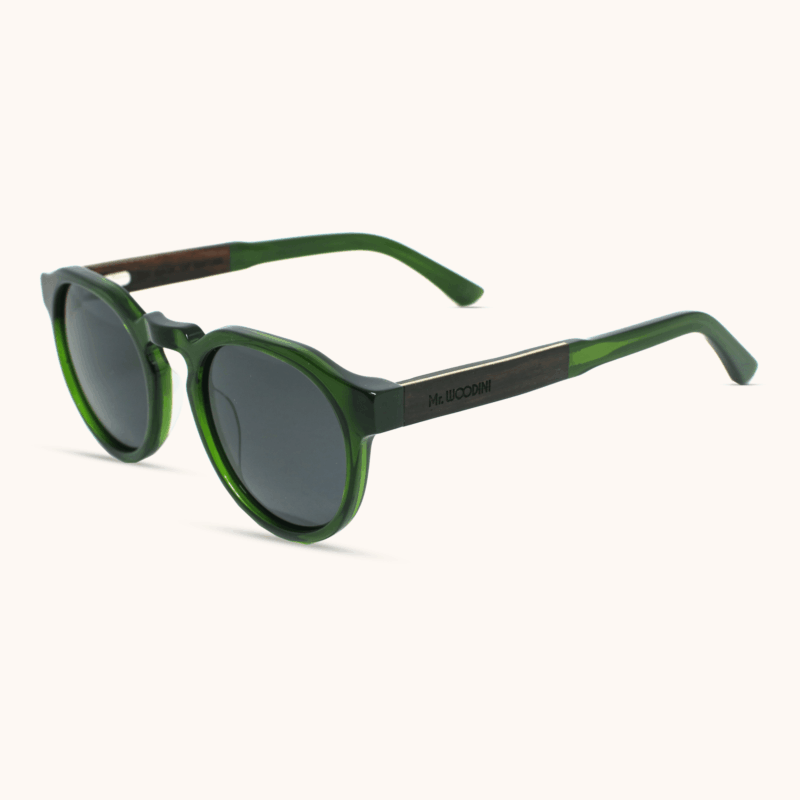
Acetate frames have more visual presence, more design range, and more adjustability. They’re better suited to people who want the frame to be a visible style element. The combination of acetate fronts with natural wood temples – as in Mr. Woodini’s construction – adds warmth and material texture that neither pure acetate nor metal alone provides.
| Property | Premium Acetate | Injected Plastic | Titanium |
|---|---|---|---|
| Weight | Medium | Light to medium | Very light |
| Adjustability | High (with heat) | Low | Medium (cold bend) |
| Color range | Very high | Medium | Low |
| Durability | High | Low to medium | Very high |
| Sustainability | Better (plant-based) | Poor (petrochemical) | Medium (mining) |
Bio-Acetate in the Mr. Woodini Collection
All Mr. Woodini frames use bio-acetate fronts combined with recycled wood temples and stainless steel spring hinges.Sumatra (Olive) and Paloma (clear round) are the clearest examples of what quality bio-acetate looks like in practice – color depth, surface richness, and material weight that standard plastic can’t replicate.
Browse the full sunglasses collection – UV400 TAC polarized lenses standard on all frames.

Cotton fibers and wood pulp – the plant-based source materials for bio-acetate
Mr. Woodini was founded in 2018. We design eco-accessories built from materials with a story – recycled wood temples, natural stone beads, handcrafted construction. Our guides are written from direct experience: sourcing materials, testing frames daily, and building pieces by hand. Learn more about us.
Questions About Acetate Sunglasses
Acetate is derived from plant fibers (cotton and wood pulp), making it more flexible, more durable and richer in color depth than petroleum-based plastics. The color runs through the full material depth rather than sitting on the surface, which means it doesn’t fade or scratch to reveal a different color underneath.
More so than standard plastic – acetate is plant-based rather than petrochemical-derived. Bio-acetate takes this further by using a higher proportion of plant-based plasticizers. Combined with recycled wood temples, it represents a significantly better environmental choice than standard synthetic frames.
They can in extreme heat – like a car dashboard in summer above approximately 60°C. Store your sunglasses in a hard case and avoid leaving them in direct sun in a hot car. With basic care, acetate frames hold their shape for years. The heat-pliability is actually useful: it allows opticians to adjust the fit.
A microfiber cloth with lukewarm water. Avoid alcohol, acetone or abrasive materials – they can affect the surface finish. For recycled wood temples, use a dry cloth only.