




Reading time: approximately 7 minutes
A handcrafted bracelet and a mass-produced one can look identical in a product photo. The difference shows up later – in how the finish holds, how the piece ages, and what it feels like to wear something made by a specific person.
What Do the Terms Actually Mean?
The distinction between handcrafted and mass-produced jewelry is straightforward in principle but often obscured in marketing. “Handcrafted” is used loosely by many retailers to mean almost anything – touched by a human hand at some point in the manufacturing process. Used accurately, it means the piece was constructed by a person from start to finish, with individual decisions made at each step.
Mass-produced jewelry is manufactured using automated or semi-automated processes designed to produce consistent, identical units at volume. Machines cut, cast or stamp components to precise specifications. Human workers may assemble or finish pieces, but the process is designed to eliminate variation rather than allow it. Understanding both helps you evaluate what you’re buying rather than relying on marketing language.
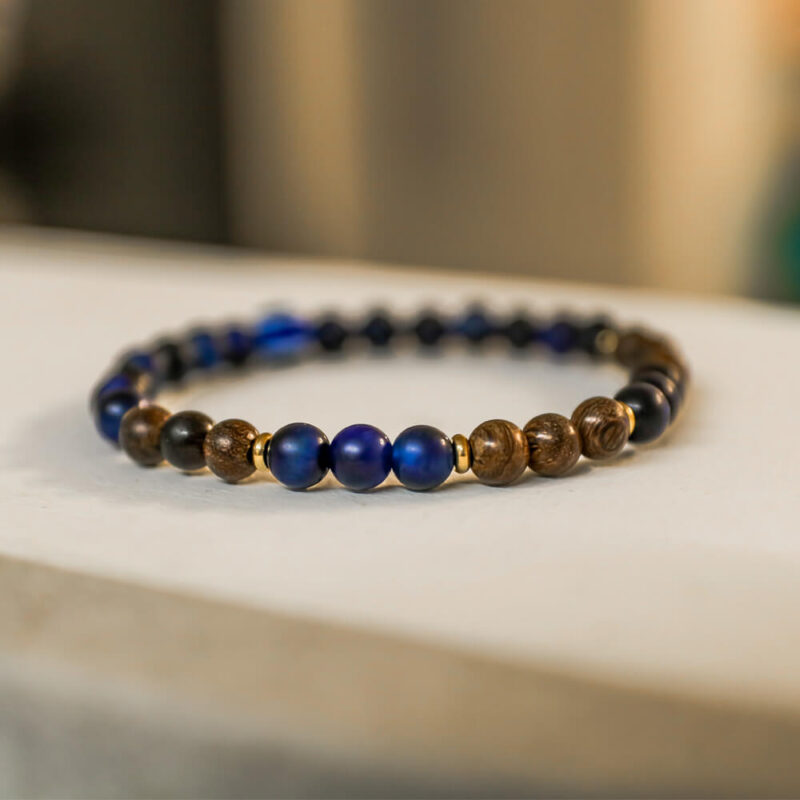
Evil Eye Blue Tiger Eye and Sandalwood Bracelet
How Does Material Selection Differ?
Material selection is where the difference between handcrafted and mass-produced pieces is most significant and least visible to the buyer at first glance. For handcrafted natural stone jewelry, the maker selects stone beads individually, choosing for color consistency, surface quality and polish. Stones that don’t meet the standard are set aside. Mass-produced pieces use stone beads purchased in large volumes at negotiated prices – the buyer gets a representative sample of a grade, which includes the full range of quality within it.
The result is that two bracelets labeled “black onyx” can look quite different in person. One was assembled bead by bead from individually selected material; the other was strung from whatever came out of the batch. At the point of purchase, especially online, the difference isn’t always obvious from photos. It becomes obvious when you hold both pieces.
How Does Construction Quality Affect Longevity?
The cord and knotting in a beaded bracelet determines how long it lasts. Handcrafted bracelets tied by a skilled maker use consistent tension, proper knot placement at each bead, and quality cord selected for the application. The maker can feel when tension is wrong and correct it. A machine cannot. Mass-produced bracelets often have knots placed at consistent intervals by machine, but with no adjustment for the actual tension of the specific piece. Over time, uneven tension causes cord to fail at the stress points – wherever one bead is pulled against another when the bracelet is flexed. These failures are often invisible until the bracelet snaps.
This construction difference is why two bracelets that look identical at purchase can behave very differently over a year of regular wear. The handcrafted piece, well-made, will maintain its shape and fit. The mass-produced piece may loosen, stretch unevenly, or fail at a poorly tensioned knot. For more on cord care, see the bracelet care guide.
What Is Natural Variation and Why Does It Matter?
One of the clearest markers of a genuinely handcrafted natural stone bracelet is the presence of natural variation between pieces. Because the stone varies – no two tiger eye beads have exactly the same pattern, no two onyx beads are identically polished – each bracelet assembled from individually selected beads is slightly different from the next. This variation is often misread as inconsistency or defect by buyers accustomed to mass-produced goods, where uniformity is the quality signal. In handcrafted natural stone jewelry, the reverse is true: perfect uniformity in a natural stone piece is a sign of synthetic material or batch production that didn’t select beads individually. A slight variation in the chatoyant pattern across tiger eye beads – these are signs you’re holding natural material assembled by a person who handled each bead.
| Factor | Handcrafted | Mass-Produced |
|---|---|---|
| Material selection | Individual bead inspection | Batch-grade selection |
| Construction | Made by hand, inspected throughout | Machine-assisted, statistical QC |
| Consistency | High quality, natural variation in stone | Identical units, variable bead quality |
| Longevity | Generally higher with proper care | Variable – depends on cord and QC |
How Do You Tell the Difference When Buying?
Brand transparency is the first signal. Handcrafted producers can tell you where their materials come from and how their pieces are made. Mass producers often have anonymous supply chains and generic branding. Photography is another signal: handcrafted pieces photographed individually will show the natural variation between pieces. Stock photos of multiple identical units are a sign of volume production. Sizing options matter too – a handcrafted bracelet producer who makes pieces in specific sizes has control over the production process; a producer who offers only “one size” has likely outsourced production entirely.
Is Handcrafted Worth the Higher Price?
Handcrafted jewelry costs more for straightforward reasons: the labor is slower, the material selection is more rigorous, and the production volume is lower. The relevant question isn’t whether it’s more expensive – it is – but whether the price difference reflects real value. Better stone selection means the piece looks better. Better construction means it lasts longer. The comparison to make is lifetime cost rather than purchase price: a handcrafted bracelet at twice the price of a mass-produced one that lasts three times as long is the better value.
Mr. Woodini’s Handcrafted Collection
Mr. Woodini handcrafts natural stone and wood bracelets in Israel, using 8mm beads assembled individually and available in sizes 17-22cm. The Evil Eye Blue Tiger Eye and Sandalwood demonstrates what individual bead selection looks like in a finished piece. Browse the full men’s bracelet collection.
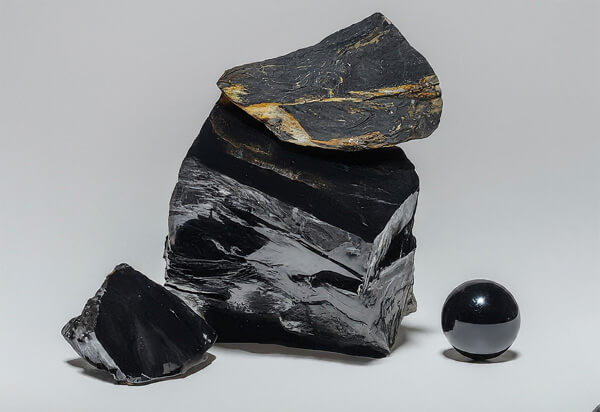
Black Onyx – natural variation is a sign of authentic stone, not a flaw
Mr. Woodini was founded in 2018. We design eco-accessories built from materials with a story – recycled wood temples, natural stone beads, handcrafted construction. Our guides are written from direct experience: sourcing stones, testing daily wear, and building pieces by hand. Learn more about us.
Questions About Handcrafted vs Mass-Produced Jewelry
Handmade means a person assembled your bracelet – checking bead quality, cord tension and finish at each step. Factory-made means a machine did it at scale with statistical quality control. The quality gap shows in longevity and material authenticity.
Often yes – because quality control is personal rather than statistical. Each bracelet is checked individually before shipping, so uneven tension and poor cord placement get caught. Factory production doesn’t allow for that level of individual attention per unit.
Minor bead-to-bead variations in color or size, slight irregularities in spacing, natural stone patterns that aren’t perfectly uniform – these are signs of real handcrafted work. Uniform perfection in a natural stone piece is actually a red flag, not a quality signal.
Yes, for two reasons: material authenticity and longevity. A bracelet made with real stones and proper cord, assembled by hand, will outlast a factory-produced equivalent by years. The lifetime cost comparison usually favors the handcrafted piece despite the higher purchase price.