


Reading time: approximately 7 minutes
Most sunglasses marketed as eco friendly are eco friendly the way a paper straw is: a small gesture wrapped around a product that’s still mostly plastic. If you spend real time outside, hiking, cycling, or just walking at noon, the frame needs to survive sweat and sun, not just carry a green label.
Why Most “Eco Friendly” Sunglasses Fall Short
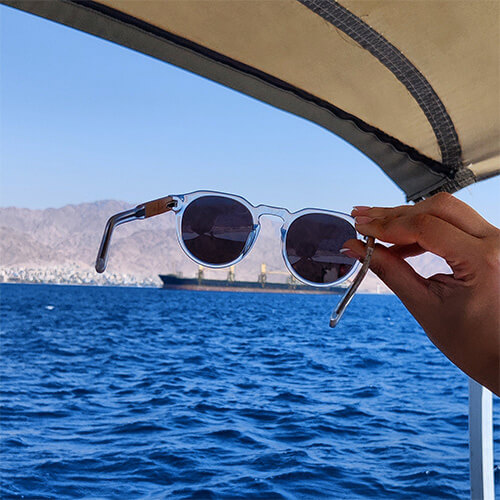
Most sunglasses labeled eco friendly use a small percentage of recycled material in an otherwise standard plastic frame, without changing the lens quality or the durability of the product. The best sustainable sunglasses for everyday outdoor wear share three traits: a frame material that doesn’t degrade in heat, lenses rated for real UV protection, and a design light enough to forget you’re wearing them. Since 2018, Mr. Woodini has built its entire sunglasses line around exactly these three principles.
What Sustainable Actually Means in a Pair of Sunglasses
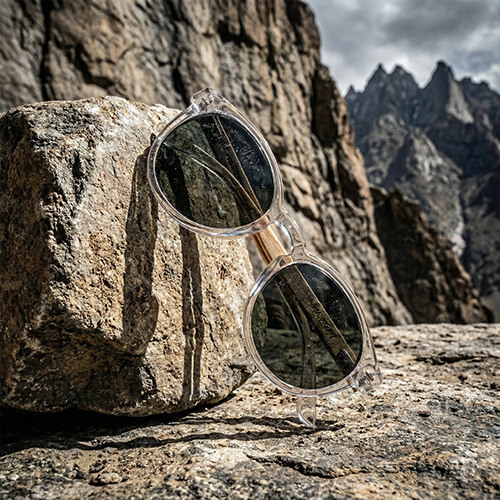
Two components determine whether a pair of sunglasses is genuinely lower impact: the frame and the lens. Bio-acetate, made partly from plant based plasticizers like cotton and wood pulp, breaks down faster than standard petroleum based plastic and draws less on virgin fossil fuel. Frames that pair an acetate front with real reclaimed or sustainably sourced wood temples go a step further, since wood is a renewable material and using offcuts avoids new logging entirely.
Lens quality is the part people skip past, but it’s the part that protects your eyes. TAC polarized lenses with UV400 protection block both UVA and UVB rays completely, unlike a partial tint that only darkens vision without filtering harmful light. According to the American Academy of Ophthalmology, UV rating is what actually determines whether a lens protects the eye, regardless of tint depth or lens color. CE certification confirms the lens passed a recognized safety standard rather than a marketing claim.
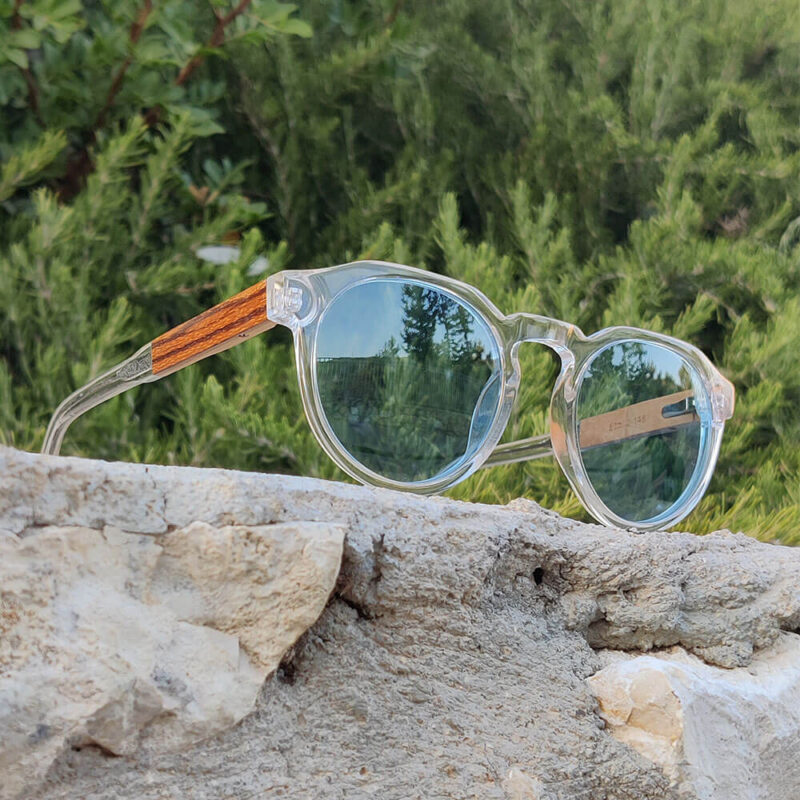
Why Wood Frame Sunglasses Hold Up Outdoors
Wood is naturally lightweight and does not retain heat the way some plastics do when left on a dashboard or in direct sun. Frames that pair an acetate front for structural durability with wood temples combine the flex of acetate where the frame needs it with the warmth and lightness of wood where it sits against the skin.
Fit matters as much as material for all day wear. A frame that’s too tight will pinch after a few hours of hiking or cycling, and one that’s too loose will slide during activity. Checking a size guide before buying, measuring face width against the frame’s dimensions, avoids most of the discomfort people associate with sunglasses that look good but aren’t built for movement.
What to Check Before You Buy
Four questions narrow the field quickly. Is the lens UV400 rated and polarized, since polarization cuts glare off water and pavement and is genuinely useful outdoors rather than a premium upsell? What is the frame actually made of, since “eco friendly” without a named material like bio-acetate or reclaimed wood is usually a claim without substance behind it? Does the brand disclose where it’s made, since transparency builds more trust than vague sustainability language? And is there a real return policy, since sunglasses are one of the few accessories that can’t be judged from a photo alone?
Sustainable Sunglasses in the Collection
Sumatra – an oversized round frame built for all day outdoor wear, with the widest range of colorways in the line. Malibu – a classic wayfarer shape, lighter weight and suited to daily rotation. Browse the full sunglasses collection.

Mr. Woodini’s Approach
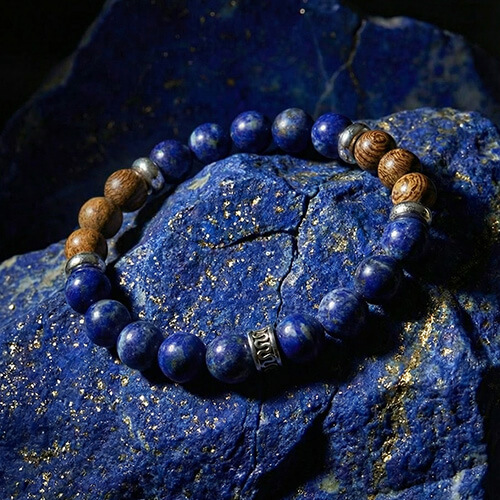
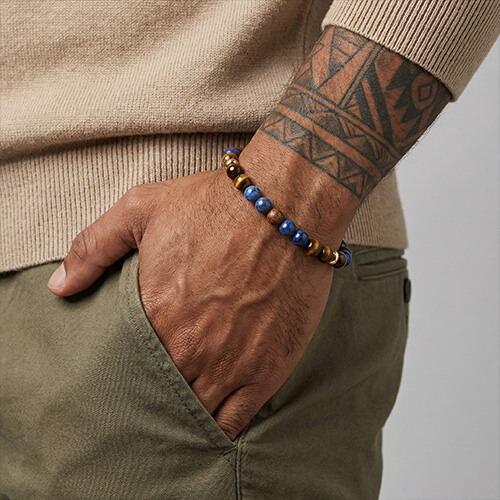
Mr. Woodini builds sunglasses around acetate frames with recycled wood temples, paired with TAC polarized, UV400, CE certified lenses across every model. The Sumatra and Malibu are the two most worn styles for daily outdoor use, both light enough for a full day outside and durable enough for regular handling. In the interest of full transparency, the sunglass frames are manufactured internationally rather than in a single small workshop, while the brand’s gemstone and wood bracelets are handmade in Israel. Both product lines use the same sourcing standard for wood: natural material, not synthetic imitation.
Caring for Wood Temple Sunglasses
Wood temples need slightly different care than an all plastic frame. Avoid leaving them in direct heat for extended periods, since a hot car dashboard can dry out and warp wood over time the same way it would a wooden cutting board. Wipe with a soft, slightly damp cloth rather than harsh cleaning sprays, and store them in a case rather than tossing them in a bag, where wood temples are more prone to nicks than acetate only frames.
Mr. Woodini was founded in 2018. We design eco-accessories built from materials with a story – recycled wood temples, natural stone beads, handcrafted construction. Our guides are written from direct experience: sourcing materials, testing daily wear, and building pieces by hand. Learn more about us.
Common Questions
Yes, when the wood is paired with an acetate frame front for structural support. The wood temples handle regular wear well. The main care difference is avoiding prolonged heat exposure, which can dry and warp any wood material over time.
UV400 refers to protection level, blocking UVA and UVB rays up to 400 nanometers. Polarization is a separate feature that reduces glare from reflective surfaces like water and pavement. The best outdoor sunglasses have both, not just one.
Bio-acetate uses plant based plasticizers instead of purely petroleum based ones, reducing reliance on virgin fossil fuel and allowing faster breakdown compared to standard plastic. It’s a meaningful improvement, though not a fully biodegradable material on its own.
Measure your face width at the temples and compare it to the frame’s width measurement, usually listed in millimeters on the product page or a dedicated size guide. Frames within a few millimeters of your face width typically fit comfortably.