


Reading time: approximately 6 minutes
Sunglasses shopping in Australia looks the same as anywhere else on the surface, but the sun overhead is not the same. Australia sits closer to the equator than most of the countries where “UV400” sunglasses are designed and marketed, and the ozone layer above the country is measurably thinner than it is over Europe or North America. That combination means the UV numbers Australians deal with in summer are some of the highest recorded anywhere in the world.
Why Australian UV Levels Are Genuinely Different
Australia experiences some of the highest levels of ultraviolet radiation in the world, largely due to its proximity to the equator combined with a thinner ozone layer over the southern hemisphere. According to the Australian Radiation Protection and Nuclear Safety Agency (ARPANSA), the UV Index across most of the country regularly averages 11 or higher on clear days in January, a level classified as extreme. In northern parts of the country, peak summer readings can climb even higher.
The physical reason comes down to two overlapping factors: Earth’s orbit brings the southern hemisphere slightly closer to the sun during its summer months than the northern hemisphere is during its own summer, and the ozone layer, which filters out much of the sun’s UV-B radiation, is thinner toward the South Pole. Both effects stack on top of Australia’s low latitude, which is already closer to the sun’s most direct angle than most of Europe or North America.
What a Higher UV Index Actually Means for Your Eyes
The UV Index is not a temperature reading. A cool, overcast day can still carry a high UV Index, since cloud cover filters visible light more than it filters UV radiation. What the number measures is the potential for skin and eye damage from unprotected exposure, and in Australia that potential is unusually high for most of the year, not just in the height of summer.
For the eyes specifically, this matters because UV exposure is cumulative. A lens rated UV400 blocks UVA and UVB radiation up to 400 nanometers, which is the standard measure of full-spectrum UV protection regardless of where in the world the sunglasses are sold. What changes in Australia is not the protection a good lens provides, but how often and how intensely that protection actually gets tested by the environment.
What to Actually Look For in Sunglasses for Australian Conditions
Lens rating matters more here than lens darkness. A dark tint says nothing about UV filtering on its own, and a lighter lens with proper UV400 and polarization can protect the eyes better than a heavily tinted lens without it. Frame coverage also matters more in a high-UV environment, since UV radiation reaches the eyes from the sides and from reflected light off pavement, water and sand, not only from directly ahead.
Buyers in Australia should also check for local labelling requirements before purchasing, since sunglasses sold in Australia are subject to specific testing and labelling rules that differ from the CE marking used in Europe. It is worth confirming with any brand, including this one, what certification a specific pair carries before relying on it as a primary form of sun protection.
Mr. Woodini’s Approach
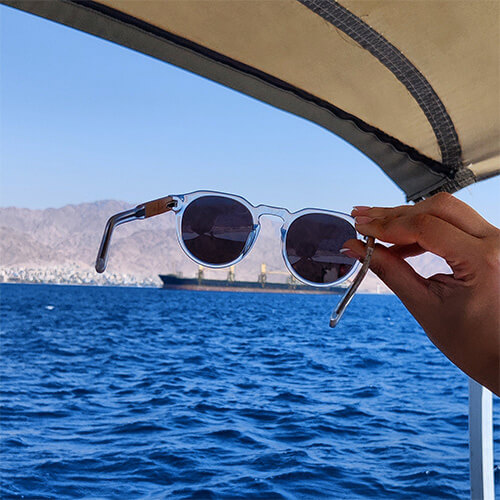
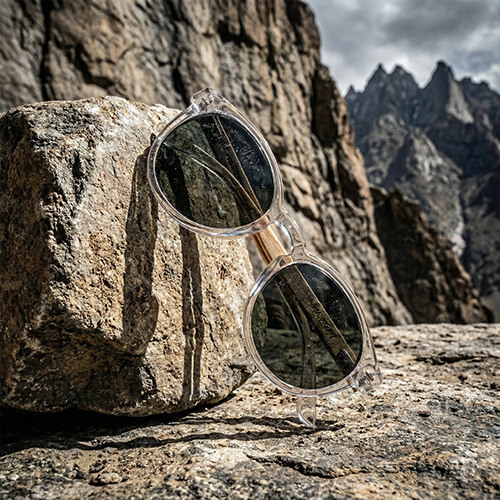
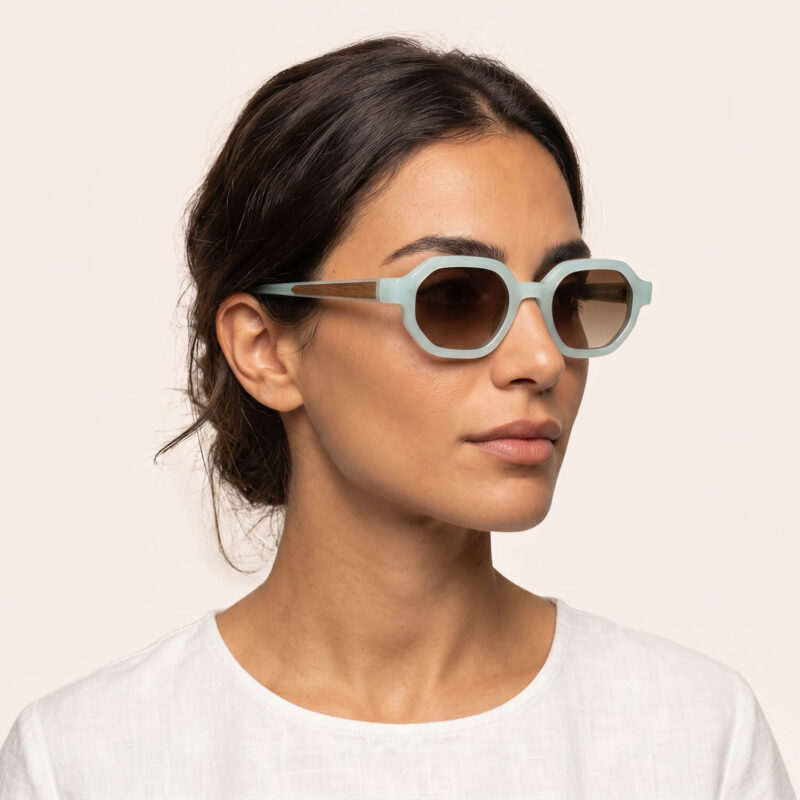
Mr. Woodini’s sunglasses use TAC polarized lenses rated UV400 and CE certified, paired with acetate frames and recycled wood temples, across every model in the range. The Sumatra‘s oversized round shape and the Malibu‘s wayfarer silhouette both offer wider lens coverage suited to high glare conditions like beach days and open water. CE certification is a European standard, and buyers shipping to Australia should check current local labelling requirements separately, since they are not identical to CE.
Sunglasses Built for Strong Sun
Sumatra – an oversized round frame with wide lens coverage, suited to beach days and long hours outdoors. Malibu – a classic wayfarer shape, lightweight for daily wear in strong sun. Browse the full sunglasses collection.
Sunglasses Are One Part of Sun Protection, Not the Whole Answer
Public health guidance in Australia consistently frames sunglasses as one of several sun protection measures, alongside protective clothing, broad spectrum sunscreen, a broad brimmed hat and seeking shade during peak hours. No single measure, including a good pair of sunglasses, replaces the others. Two in three Australians will be diagnosed with some form of skin cancer by the age of 70, according to Cancer Council Australia, which reflects the cumulative effect of UV exposure over a lifetime rather than any single sunny afternoon.
Mr. Woodini was founded in 2018. We design eco-accessories built from materials with a story – recycled wood temples, natural stone beads, handcrafted construction. Our guides are written from direct experience: sourcing materials, testing daily wear, and building pieces by hand. Learn more about us.
Common Questions
Australia’s low latitude puts it closer to the sun’s most direct angle for more of the year, and the ozone layer over the southern hemisphere is thinner than over much of the northern hemisphere. Earth’s orbit also brings the southern hemisphere slightly closer to the sun during its own summer months. Together these factors push Australian summer UV readings into the extreme range on the international UV Index scale.
No. Lens darkness affects visible light and comfort in bright conditions, but UV filtering depends on the lens coating and material, not the tint depth. A lighter lens rated UV400 can offer better protection than a dark lens without a real UV rating.
Mr. Woodini sunglasses carry CE certification and UV400 rated lenses, which is a European testing standard. Australia has its own separate labelling requirements for sunglasses sold locally. Buyers in Australia should check current local requirements directly before relying on any pair of sunglasses as a primary form of sun protection.
No. UV radiation is present every day of the year and is not tied to temperature, so a cool or overcast day can still carry a meaningful UV Index. Summer months bring the highest peaks in Australia, but sun protection guidance applies whenever the UV Index reaches 3 or above, which occurs across most of the year in much of the country.