


Reading time: approximately 5 minutes
Vacation sunglasses get worn harder than everyday pairs – salt water, heat, sand, and hours of direct sun. The frame material and lens quality that’s fine for a commute may not hold up through two weeks in coastal light.
Why Is UV400 Protection Non-Negotiable?
Every pair of sunglasses you wear on vacation should carry UV400 certification. This means the lenses block all light with wavelengths up to 400 nanometers – covering both UVA (315-400nm) and UVB (280-315nm) radiation. Without adequate UV protection, dark tinted lenses can actually harm your eyes more than no sunglasses at all: the tint causes your pupils to dilate while the lens lets damaging UV radiation pass through unimpeded.
The WHO estimates that up to 20% of cataracts are caused by UV exposure – a figure that strongly motivates proper eye protection, especially in high-UV environments like beaches, mountains and equatorial destinations. UV400 is not a premium feature; it’s the minimum standard worth wearing. For a full breakdown, see the UV protection guide.
How Do You Choose Sunglasses by Activity?
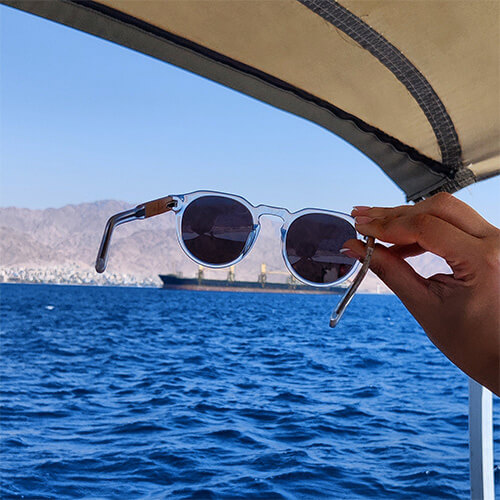
Beach and water sports. The beach environment is among the most optically demanding: intense sunlight, high UV index, water surface glare (horizontal polarization) and reflective sand. The minimum specification is UV400 + polarized lenses. The frame should sit securely without slipping. For more on polarization specifically, see the polarized sunglasses guide.
City sightseeing. Urban tourism demands a different balance: you’ll spend time indoors and outdoors, possibly in variable light, and you want sunglasses that look good in photos. A lighter tint (category 2-3 rather than 4) allows comfortable indoor use without constant removal. A classic full-frame design with a mid-curve looks better in photos than wraparound sports frames.
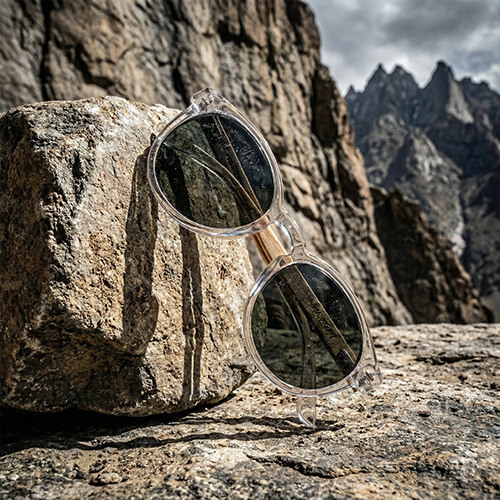
Mountain and hiking. UV intensity increases approximately 10% per 1,000 meters of elevation, meaning a 3,000m peak receives 30% more UV than sea level. Snow and glacial surfaces reflect 80-90% of UV radiation. Category 4 lenses and full frame coverage are essential.
Which Lens Type Should You Choose?
Polarized: Best for beach, water, driving, snow. Reduces horizontal glare from reflective surfaces. Minor limitation: LCD screen interference (tilting your head fixes it). Photochromic: Good for variable indoor/outdoor conditions, but slow to transition and less effective in cars (windshield blocks UV activation). Mirror coating: Primarily aesthetic; actual UV protection comes from the base lens, not the mirror. Category 4 (very dark): Ski resorts, glaciers, equatorial beach – but too dark for driving and illegal in many countries.
| Material | Weight | Durability | Heat Resistance |
|---|---|---|---|
| Natural wood temples | Very light | High – scratch-resistant | Good – doesn’t heat against skin |
| TR90 / Nylon | Very light | Very high – flexible, impact-resistant | Good |
| Titanium | Light | Very high | Excellent |
| Acetate | Medium | Moderate – can warp in car heat | Moderate – softens above 60°C |
Wood doesn’t conduct heat or cold the way metal does, making it uniquely comfortable in Mediterranean and tropical environments. For more on how frames handle heat specifically, see the heat damage guide.
What Sunglasses Work Best by Destination?
Mediterranean / Middle East. High UV index (8-11 in summer), intense reflected light from white buildings and water. Polarized UV400 is essential. Medium to dark tint (category 3). Wood-temple sunglasses work particularly well – they don’t heat up against the skin the way metal frames do.
Tropical / equatorial. Maximum UV exposure, frequent rain, high humidity. Category 3-4 lenses, wraparound coverage for rain and wind, hydrophobic lens coating. If snorkeling or near water: consider a sport strap to keep glasses on your head.
Northern Europe / city breaks. Lower UV intensity but still important for driving and bright days. Fashion-forward frames work well here – a category 2-3 polarized lens handles variable conditions comfortably.
How Do You Protect Sunglasses While Traveling?
The most common cause of vacation-related sunglass damage: packing them without a hard case in a bag that gets compressed. Always pack sunglasses in a rigid hard case and carry them in your carry-on rather than checked luggage. A microfiber cloth in the case doubles as an in-destination cleaning solution.
For beach days, a clip-on carabiner case that attaches to a bag strap provides instant accessible storage and keeps glasses off sandy surfaces. For a full care guide, see the cleaning guide.

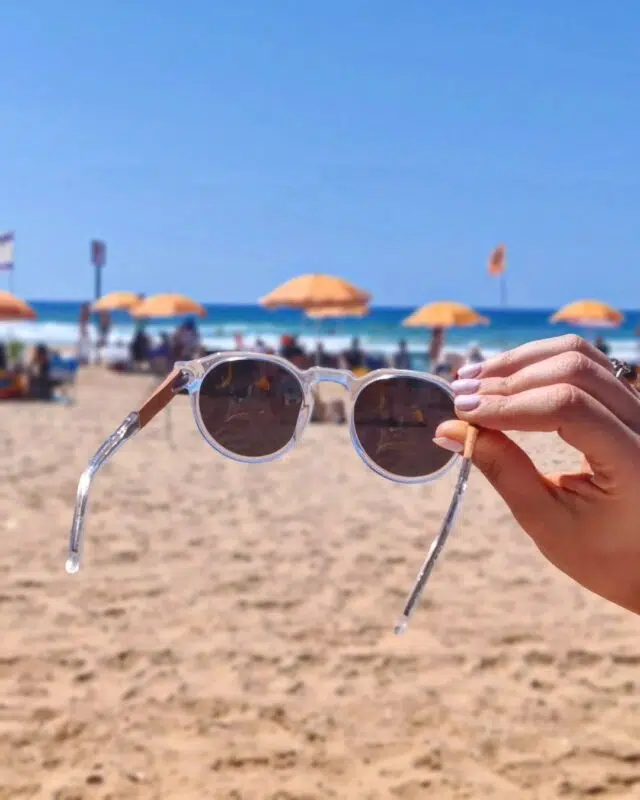
Malibu – clear transparent acetate with zebrawood temples
Travel Frames Worth Considering
Sumatra (round acetate, zebrawood temples) for outdoor-heavy trips. Fuji (rectangular, olive colorway) for city travel. Miamii (angular black tortoise) for a versatile dark frame that suits both casual and dressed-up contexts. Akira in clear green for Mediterranean and beach destinations.
Browse the full sunglasses collection – dimensions and lens specs listed on each product page.
Mr. Woodini was founded in 2018. We design eco-accessories built from materials with a story – recycled wood temples, natural stone beads, handcrafted construction. Our guides are written from direct experience: testing frames daily, sourcing materials, and building pieces by hand. Learn more about us.
Questions About Vacation Sunglasses
UV400 protection is non-negotiable. After that: polarized lenses if you’ll be near water or driving; durability (frames that won’t warp in heat or crack if dropped); and a hard case to protect them in your bag.
If you’re spending time near water, on beaches or driving – absolutely. The glare reduction makes a significant difference in those environments and reduces eye fatigue over long outdoor days. For predominantly indoor city travel, standard UV400 lenses are sufficient.
Hard case in your carry-on, not your checked bag. Never leave them on a car dashboard – heat warps both acetate and plastic frames. At the beach, keep them in a closed case when not on your face rather than on a towel or table.
Yes, with the right choice. A polarized UV400 lens in category 3 (medium-dark) works acceptably in both environments – dark enough for beach glare, not so dark that indoor use becomes uncomfortable. A mid-curve acetate frame with wood temples is versatile enough for both contexts.